

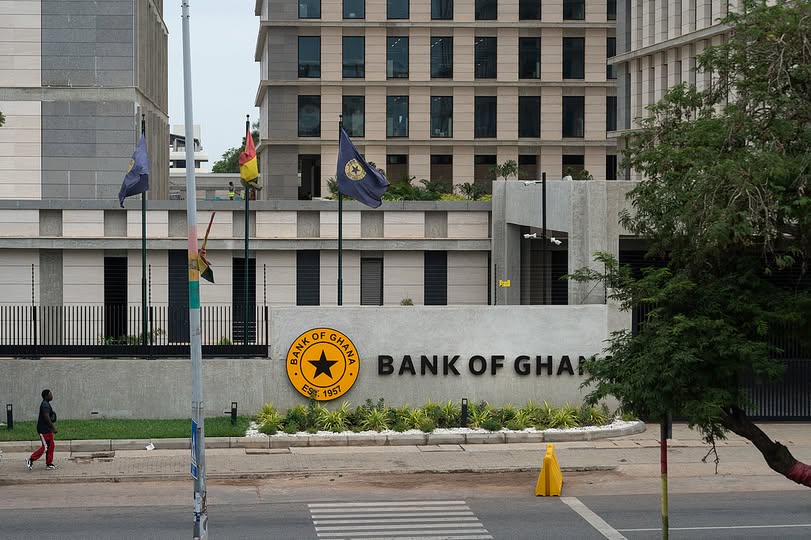
Ghana’s ambition to raise its international reserves to 8.6 months of import cover by the end of 2026 is facing mounting pressure, with the latest available figures showing a significant gap between the target and the country’s actual reserve position.
The Bank of Ghana’s September economic and financial data put gross international reserves at US$12.05 billion as of September 22, equivalent to 4.5 months of import cover, against the government’s broader objective of building a 15-month import buffer by the end of 2028.
The Ghana Accelerated National Reserve Accumulation Programme (GANRAP) seeks to increase reserves from 5.7 months of import cover at the end of 2025 to 8.6 months by December 2026, before exceeding 11.8 months in 2027 and reaching 15 months in 2028.
Achieving the 2026 milestone would require a substantial acceleration in reserve accumulation, even as falling international gold prices, rising domestic foreign-exchange demand and substantial external debt obligations complicate the outlook.

The policy estimates that Ghana must generate an average net addition of US$9.5 billion annually over the three-year period after accounting for debt servicing, energy-sector payments, foreign-exchange operations and other outflows.
GoldBod has nevertheless demonstrated its capacity to generate substantial foreign exchange. In September, the Ghana Gold Board reported US$1.871 billion in foreign-exchange proceeds from artisanal and small-scale mining gold trading, exceeding its US$1.4 billion target by US$471 million.
Of the proceeds, US$1.170 billion was transferred to the Bank of Ghana to support reserve accumulation, while US$701.3 million was sold to authorised commercial banks.
This represented an increase from the US$646.59 million GoldBod supplied to the central bank in August, when total foreign-exchange generation reached US$1.315 billion.
However, the October programme envisages a more balanced distribution of foreign exchange, with US$1.5 billion targeted in receipts, of which US$1 billion is earmarked for commercial banks and US$500 million for the central bank.
The arrangement highlights the challenge of simultaneously strengthening reserves and meeting domestic demand for dollars.
Foreign exchange supplied to commercial banks helps importers and businesses meet their obligations, while transfers retained by the central bank strengthen reserve buffers.
With gold prices weakening and external payments remaining substantial, the authorities face pressure to coordinate GoldBod’s operations, central bank interventions and government debt management.
The 2026 milestone is therefore increasingly challenging, making stronger non-gold inflows, improved programme efficiency and disciplined management of foreign-exchange outflows critical to Ghana’s longer-term reserve ambitions.
By: Toma Imirhe / businesspostonline