

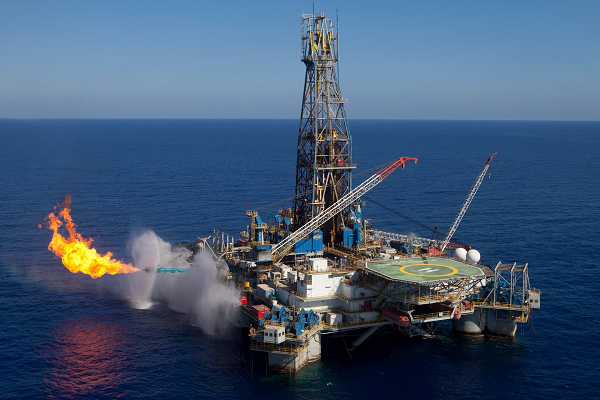
The Public Interest and Accountability Committee (PIAC) has published its 2026 Semi-Annual Report on the management and use of petroleum revenues, reporting stronger crude oil production, significantly higher petroleum receipts and reduced gas flaring during the first six months of the year.
The report, which covers the period January to June 2026, indicates that total petroleum receipts increased by 52 percent to US$561.41 million from US$370.34 million recorded during the same period in 2025.
According to PIAC, the increase was largely driven by higher crude oil prices and a 37 percent rise in Corporate Income Tax collections.
PIAC said crude oil production rose by 11.73 percent, increasing from 18.42 million barrels in the first half of 2025 to 20.58 million barrels during the corresponding period of 2026.

The growth was attributed mainly to higher output from the Jubilee and Sankofa Gye Nyame (SGN) fields.
The Committee also reported a substantial reduction in gas flaring across Ghana’s three producing fields, describing the development as evidence of improved compliance with Environmental Protection Agency-approved flaring limits.
It commended operators for the progress recorded during the period.
Despite the positive developments, PIAC highlighted a number of concerns within the petroleum sector.
The report noted that surface rental arrears remained outstanding at approximately US$2.41 million at the end of the first half of 2026, excluding an additional US$1.73 million owed under terminated petroleum agreements.
PIAC said this persisted despite efforts by the Ghana Revenue Authority (GRA) to recover outstanding liabilities.
The Committee also expressed concern about the financial position of the Ghana National Gas Company Limited (GNGLC).
According to the report, although settlements by the Volta River Authority and regular Clean Welding Mechanism (CWM) receipts improved cash-flow predictability, a 17.53 percent year-on-year decline in total CWM value and only marginal improvements in collections continue to threaten the company’s financial sustainability and the long-term reliability of gas infrastructure and supply.
PIAC further raised concerns over the utilisation of funds by the Ghana National Petroleum Corporation (GNPC). The report stated that GNPC received US$85.98 million, representing 39.9 percent of the Corporate Allocation to Public Interest (CAPI), during the review period.
However, it disclosed that only US$23.45 million of the US$40.14 million received as Jubilee Equity Financing was applied to Jubilee production and development costs.
According to PIAC, the remaining US$16.69 million, together with GNPC’s Level B receipts, was used to finance non-field expenditures, including staff costs and the construction of the corporation’s head office.
The Committee also revealed that a chapter on the utilisation of petroleum revenues was omitted from the report because the Ministry of Finance did not provide the requested data.
As part of its recommendations, PIAC urged the Environmental Protection Agency, the Petroleum Commission and the Energy Commission to establish a system for monitoring and reporting gas venting volumes across all producing fields.
It also called on government to develop a framework through the Petroleum Commission to improve investment in existing producing fields, particularly the TEN field, while strengthening regulatory and fiscal regimes and enhancing data acquisition in new basins.
PIAC further advised the Ministry of Finance to treat the recent increase in petroleum receipts as potentially volatile because it was driven largely by favourable crude oil prices rather than sustained production growth.
Any revenue earned above the benchmark should be transferred promptly to the Ghana Petroleum Funds in accordance with the Petroleum Revenue Management Act, it said.
The Committee also urged the GRA to intensify enforcement actions against operators with persistent payment defaults and recommended that settlement of all outstanding arrears be made a prerequisite for the renewal, renegotiation or reallocation of petroleum contract areas.
PIAC encouraged the public and the media to access and review the full report and contribute to discussions on the management and use of Ghana’s petroleum revenues.
The Committee, established under the Petroleum Revenue Management Act, is mandated to monitor and evaluate compliance with the law governing the management and utilisation of Ghana’s petroleum revenues. Since its establishment in 2011, PIAC has published 30 reports.
Source: businesspostonline