

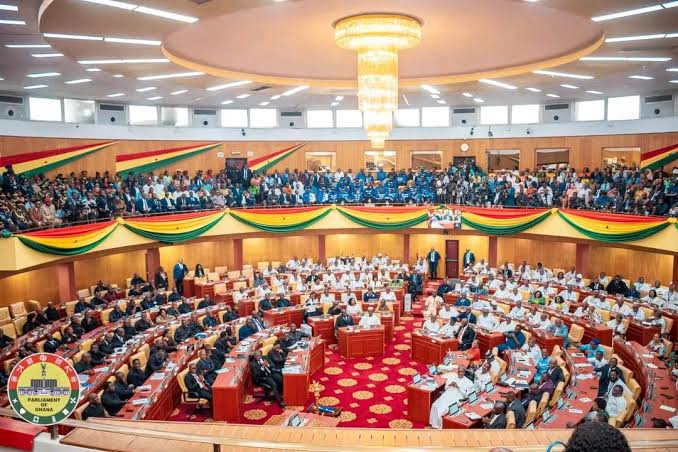
A bipartisan parliamentary demand for government to insure its fleet of vehicles has triggered fresh discussions within government over how to finance and implement the policy, with the 2027 Budget emerging as a possible starting point.
The call, led by Minority Chief Whip Frank Annoh-Dompreh and Majority Chief Whip Rockson-Nelson Dafeamekpor on November 5, seeks to end the state’s longstanding exemption from compulsory vehicle insurance and ensure that public assets and accident victims are adequately protected.
First Deputy Speaker Bernard Ahiafor subsequently directed the Clerk of Parliament to transmit the proposal to the Attorney-General and the Minister for Finance, Dr Cassiel Ato Forson, for consideration.
The parliamentary leadership is urging the Ministry of Finance to make provision for the premiums in the 2027 Budget, scheduled for presentation on November 12. However, the Ministry had not issued a formal response to the demand as of November 5.The proposal presents a significant policy shift for successive governments, which have traditionally relied on self-insurance, arguing that covering premiums for the country’s large fleet of vehicles would be more expensive than meeting accident-related costs directly.

Under that arrangement, government has generally paid for repairs, replacements and compensation on a case-by-case basis rather than commit public funds to recurring commercial insurance premiums.
But the approach has come under increasing pressure amid concerns about inefficiencies in managing damaged or written-off public vehicles and delays in securing funds to replace them or compensate accident victims. The Ministry of Health, for instance, has moved to insure the national ambulance fleet after recognising the growing costs associated with repairing crashed emergency vehicles.
Financial analysts and policy commentators, however, consider it unlikely that comprehensive insurance for the entire government fleet can be fully incorporated into the November 12 Budget, given the short timeframe and the scale of the exercise.
Estimates based on regulated National Insurance Commission (NIC) rates and available state fleet data put annual third-party premiums for approximately 18,000 government vehicles between GH¢10 million and GH¢16.5 million.
Parliament’s demand, however, goes beyond third-party cover. Lawmakers favour comprehensive insurance to protect the state against losses arising from theft, extensive damage and vehicle write-offs.
At an estimated five per cent of a vehicle’s purchase value, comprehensive cover could impose a substantially higher financial burden. Annual premiums for a single Land Cruiser SUV, for example, could reach about US$4,000, equivalent to nearly GH¢48,000.
To contain the cost, some MPs, including Dr Kingsley Agyemang, have proposed that government leverage its majority stake in SIC Insurance to establish a dedicated Government Fleet Captive Window.
Under the proposed arrangement, the Ministry of Finance would work with SIC to provide cover at cost, potentially avoiding some of the marketing expenses, brokerage commissions and commercial profit margins associated with conventional private insurance arrangements.
Government could also explore linking part of its premium payments to dividends due to it as SIC’s majority shareholder.
The immediate challenge, however, is the timing. The 2027 Budget is only days away, while determining appropriate premiums would require a comprehensive audit of the estimated 18,000 vehicles across ministries, departments and agencies (MDAs), as well as actuarial assessments of their values and risks.
One option is for the Finance Minister to announce a policy commitment in the Budget and provide an initial allocation through contingency or unallocated expenditure provisions. A joint task force involving the Finance Ministry, NIC and SIC could then audit the fleet in the first quarter of 2027, with priority coverage for high-risk sectors.
A second option is to use the first half of 2027 to establish the proposed SIC insurance framework, complete the fleet audit and negotiate reinsurance arrangements. The government could subsequently seek a dedicated appropriation through the mid-year budget review, paving the way for phased coverage across MDAs.
A third possibility is to allow financially autonomous agencies and state-owned enterprises to insure their vehicles immediately using internally generated funds, while centrally funded ministries and agencies are brought into the arrangement later.
Potential participants include the National Petroleum Authority, Ghana Revenue Authority and Ghana Ports and Harbours Authority.
For now, however, government has yet to formally accept the parliamentary demand or settle on a financing model, implementation timetable or preferred insurance arrangement.
By: Toma Imirhe / businesspostonline