

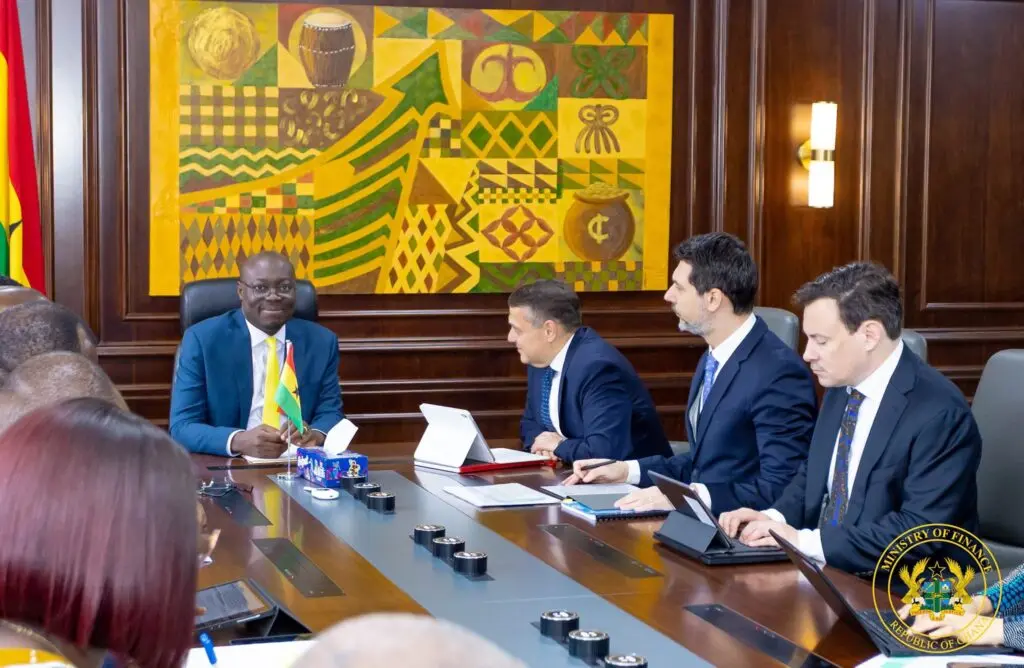
The International Monetary Fund (IMF) and the Government of Ghana have reached a staff-level agreement on the first review of Ghana’s 36-month Policy Coordination Instrument (PCI), with the Fund saying the economy continues to demonstrate resilience despite heightened global uncertainty.
The agreement, announced at the conclusion of an IMF mission to Accra, remains subject to approval by IMF Management and the Fund’s Executive Board.
According to the IMF, Ghana’s macroeconomic performance has remained strong, supported by robust economic growth, low inflation and sustained fiscal consolidation.
Real Gross Domestic Product (GDP) expanded by 6.2 percent year-on-year in the first half of 2026, driven largely by investment activity. Growth for the full year is projected at 5.7 percent.

Inflation eased to 5.5 percent in October, remaining below the Bank of Ghana’s target range of 8±2 percent, while the country’s fiscal position remains on track to meet programme targets.
The IMF noted that public debt has continued to decline rapidly in recent years, creating room for the authorities to absorb some of the economic pressures arising from ongoing geopolitical tensions, including the conflict in the Middle East.
“Macroeconomic stability is becoming entrenched,” IMF mission chief Ruben Atoyan said in a statement issued after the mission, which took place from October 22 to November 4.
Programme performance broadly satisfactory
The Fund said performance under the PCI has been broadly satisfactory, with most quantitative targets for the review successfully met.
However, it highlighted concerns over a recent decline in foreign exchange reserves and welcomed corrective actions introduced by the authorities. These measures include transferring foreign exchange intermediation responsibilities from the Bank of Ghana to GoldBod and implementing higher gold sale requirements for large-scale mining companies.
The IMF stressed that continued implementation of these measures, combined with greater exchange rate flexibility, will be critical to rebuilding reserve buffers.
Reforms advancing
The review also found that structural reforms remain largely on track.
Among key achievements cited were the publication of the Fiscal Strategy Document, parliamentary approval of a new Cocoa Board Act aimed at strengthening governance and financial discipline in the cocoa sector, and the continuation of quarterly electricity tariff adjustments.
The authorities also completed, ahead of schedule, a comprehensive review of customs and excise legislation.
Progress is continuing on reforms to the Bank of Ghana’s liquidity management framework, the rollout of the Integrated Tax Administration System, operationalisation of the Fiscal Council and preparation of a Fiscal Risk Statement.
The IMF, however, noted that publication of an audit of the Electricity Company of Ghana’s collection accounts remains delayed and should be completed promptly.
2027 budget targets surplus
Looking ahead, the Fund said the 2027 Budget is aligned with programme objectives and targets a primary surplus of 0.5 percent of GDP on a commitment basis.
The surplus will be supported by revenue-enhancing measures already approved by Parliament in July and is expected to create fiscal space for investments linked to the government’s “New Economy” agenda, including job creation and infrastructure development.
The IMF urged authorities to maintain rigorous project evaluation, competitive procurement processes and strict expenditure controls to ensure value for money and safeguard debt sustainability.
Non-oil revenues are projected to rise further in 2027, bolstered by tax policy measures, customs reforms and ongoing improvements in revenue administration systems.
Risks remain
Despite positive economic indicators, the IMF cautioned that Ghana remains vulnerable to external shocks.
The country continues to depend heavily on exports of gold, cocoa and oil, leaving it exposed to fluctuations in commodity prices. Other risks include geopolitical tensions, tighter global financing conditions, domestic debt rollover pressures and challenges within the energy, cocoa and financial sectors.
The Fund said prudent monetary policy, increased exchange rate flexibility, stronger reserve accumulation and the continued buildup of a sinking fund for future debt repayments would be essential to preserving macroeconomic stability.
Governance remains key
The IMF also emphasised the importance of governance reforms in sustaining investor confidence and promoting inclusive growth.
It pointed to the planned adoption of the Conduct of Public Officers Bill, publication of the second National Ethics and Anti-Corruption Action Plan and strengthened oversight of state-owned enterprises as important measures for improving transparency and accountability.
The Fund reaffirmed its commitment to supporting Ghana’s economic reform agenda, describing itself as a “committed partner” in the country’s efforts to achieve stronger, more inclusive and job-rich growth.
Source: businesspostonline