

Revenue collected by the Customs Division of the Ghana Revenue Authority (GRA) has increased from about US$350 million to as much as US$450 million per month following the introduction of artificial intelligence and other modernisation measures, Commissioner-General Anthony Kwasi Sarpong has disclosed.
The improvement represents an increase of approximately US$100 million in monthly collections, which the GRA says reflects the impact of reforms targeting the valuation and classification of imported goods.
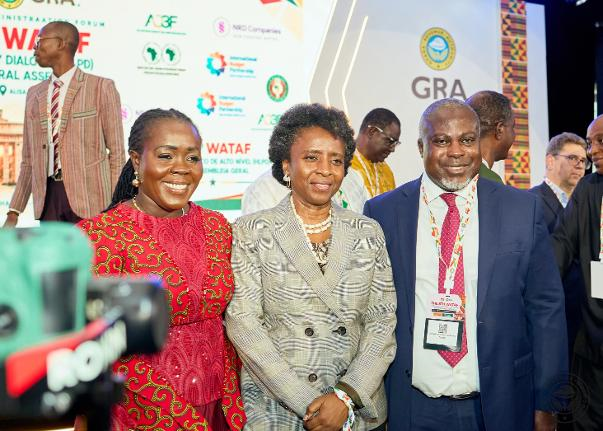
Mr Sarpong disclosed this on the sidelines of the 8th High-Level Policy Dialogue and 23rd General Assembly of the West African Tax Administration Forum (WATAF) being held in Accra.
He said the Authority had embarked on a comprehensive modernisation of Customs operations, particularly to improve the accuracy of import valuation and the classification of goods.

“The Ghana Revenue Authority has recently embarked on a comprehensive modernisation of our Customs operations, particularly in the critical areas of valuation and classification, and the results have been immediate and striking,” he said.
According to him, the reforms have enabled Customs to apply existing rules more accurately, resulting in a significant improvement in revenue without introducing new taxes or increasing existing rates.
“That is the power of administrative reform: no new taxes, no higher rates—simply the fair and accurate application of the rules, supported by modern systems and professional integrity,” he said.
AI at the ports
The improvement in Customs revenue follows the government’s decision to introduce an artificial intelligence system to support the valuation of goods at the country’s ports.
The system, which began supporting Customs operations in April 2026, is intended to strengthen the assessment of imported goods and reduce potential revenue leakages arising from inaccurate declarations and valuations.
Mr Sarpong described the technology-driven reform as a “game changer”, saying its impact demonstrates the potential of digital tools to improve revenue administration.
He said the experience also showed that African tax administrations could generate significant improvements in domestic resource mobilisation through better administration and technology rather than relying solely on higher tax rates.
He said the results were evidence that when administrative reform, digital innovation and institutional commitment came together, revenue authorities could significantly improve their fiscal performance.
The development comes as Ghana intensifies efforts to expand domestic revenue mobilisation amid growing public financing needs.
Regional cooperation
The disclosure formed part of discussions at the WATAF meeting, which brings together tax administrators from across West Africa to exchange experiences and explore strategies for strengthening revenue mobilisation.
The 8th High-Level Policy Dialogue and 23rd General Assembly also coincides with WATAF’s 15th anniversary.
Executive Secretary of WATAF, Jules Tapsoba, said the regional platform had contributed to efforts by member countries to improve their revenue mobilisation since its establishment.
The forum provides an avenue for tax administrations to share knowledge, build technical capacity and develop common approaches to emerging challenges in taxation and revenue collection.
This year’s forum is being held under the theme: “Building Stronger Tax Administrations for Revenue Mobilisation and Sustainable Development.”
The discussions are expected to focus on strengthening tax administration, digitalisation, regional cooperation and other measures to improve domestic revenue mobilisation across West Africa.
Source: businesspostonline