

The government has announced that Ghana will stay away from the international capital market for the rest of 2026 as it exits its three-year International Monetary Fund (IMF) bailout programme.
The decision signals a major policy shift by the administration, which says it wants to avoid a return to heavy external commercial borrowing after the country’s recent debt crisis.
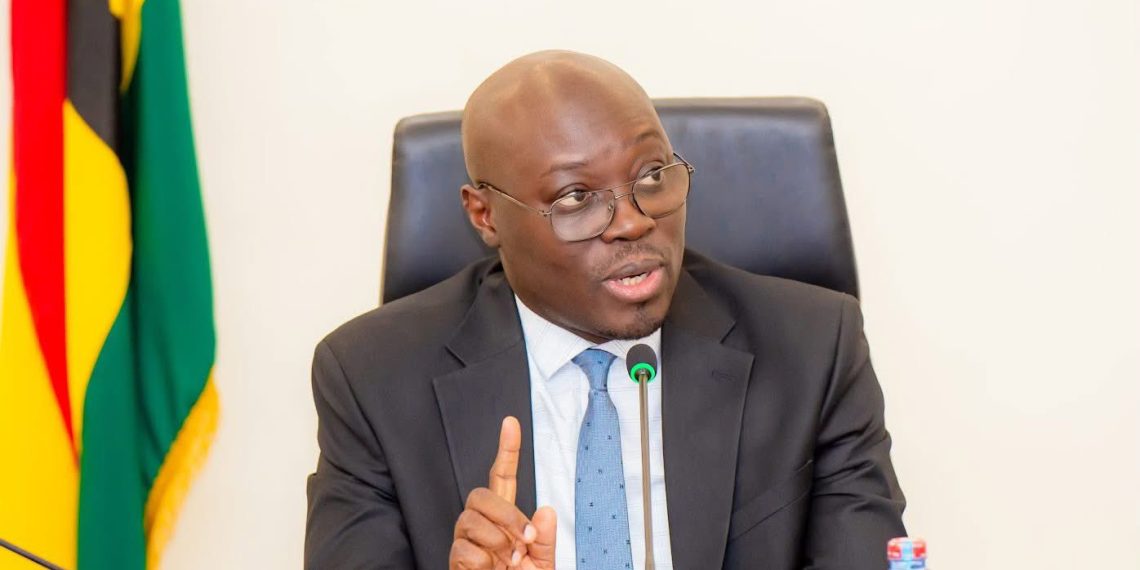
Addressing journalists at a joint briefing with the IMF in Accra, Finance Minister Dr Cassiel Ato Forson said the government has no immediate plans to issue Eurobonds or seek fresh financing from global markets.
According to him, the 2026 national budget was prepared without factoring in any funding from the international capital market.

“We are not in a hurry to go onto the international capital markets,” Dr Forson stated, adding that any future decision to borrow externally would be communicated to the public.
Rather than pursuing another IMF bailout arrangement, the government intends to move onto the IMF’s Policy Coordination Instrument (PCI), a non-financing programme aimed at helping countries maintain sound economic policies and macroeconomic stability.
The PCI does not provide direct financial support but serves as a framework for monitoring reforms and strengthening policy credibility with investors and development partners.
Government officials believe the move reflects growing confidence that Ghana has emerged from the most difficult phase of its economic crisis.
The country’s economy came under severe pressure in 2022 after rising public debt, rapid depreciation of the cedi and declining investor confidence shut Ghana out of international financial markets. The crisis forced the government to undertake painful debt restructuring negotiations with domestic and external creditors before securing a US$3 billion IMF Extended Credit Facility programme.
Since then, authorities have implemented fiscal reforms and debt restructuring measures aimed at restoring economic stability and rebuilding investor trust.
Dr Forson stressed that the government’s current priority is to preserve the gains achieved under the IMF-supported programme rather than accumulate new debt through costly external borrowing.
Although the government has ruled out accessing the Eurobond market this year, the Finance Minister indicated that future borrowing decisions would depend on economic conditions and the country’s financing needs in the medium term.
IMF Mission Chief to Ghana, Dr Ruben Atoyan, also noted that any decision regarding a return to the capital market ultimately rests with the Ghanaian authorities.
For now, the government appears focused on maintaining fiscal discipline and strengthening the economy through internal reforms instead of relying on fresh commercial loans from abroad.
Source: businesspostonline