

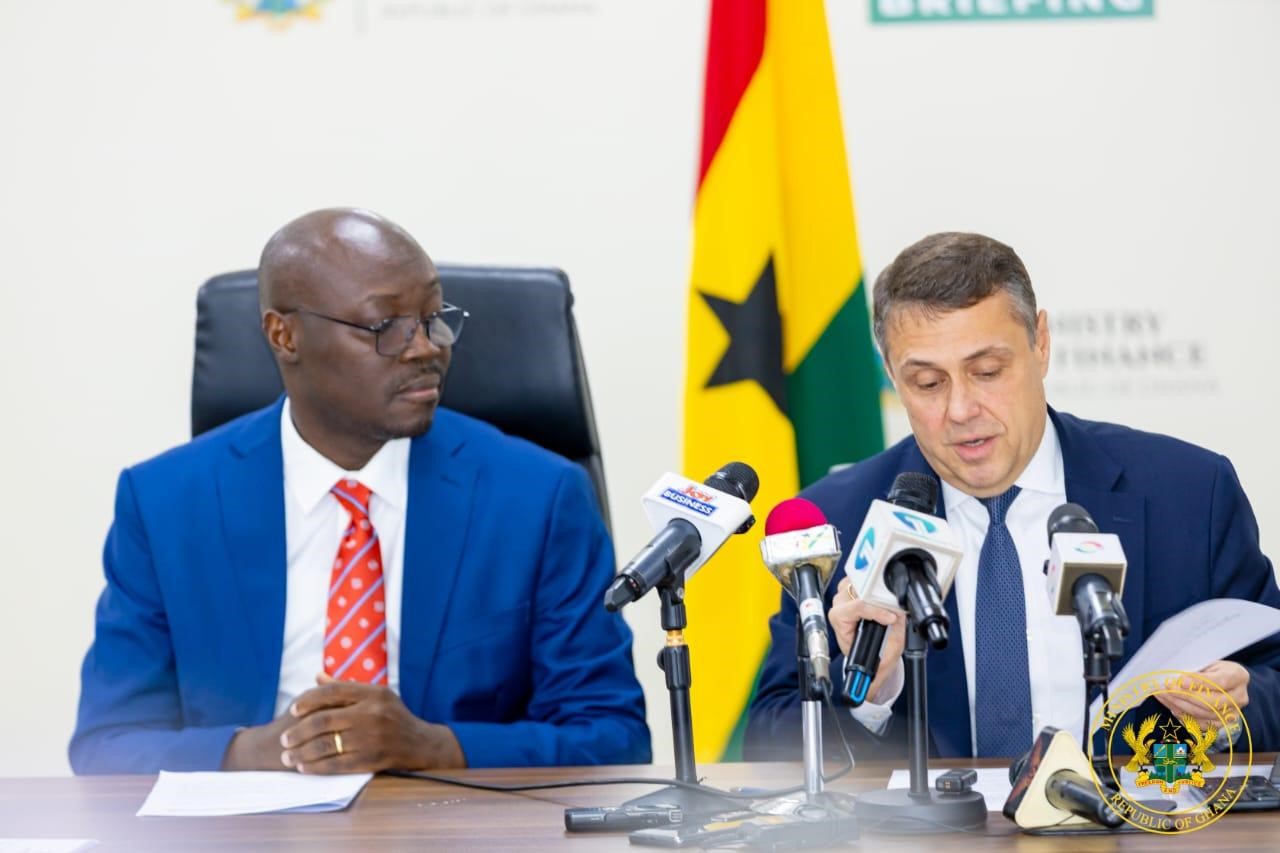
Ghana has officially concluded its Extended Credit Facility (ECF) programme with the International Monetary Fund (IMF), bringing to an end its financial bailout arrangement and marking a significant turning point in the country’s economic recovery efforts.
In a statement issued by the Presidency Communications Office on Friday, May 15, 2026, government announced that the country will transition to a non-financing engagement with the IMF under a Policy Coordination Instrument (PCI), signaling a move away from dependence on external financial support.
Early completion signals economic turnaround
According to the statement, the successful completion of the ECF programme was achieved ahead of schedule and reflects what authorities describe as the restoration of macroeconomic stability and debt sustainability.

The government credited the turnaround to decisive policy measures implemented in 2025 following setbacks that disrupted the programme at the end of 2024. These measures included aggressive fiscal consolidation, expenditure rationalisation and structural reforms aimed at stabilising the economy.
Officials say the reforms have delivered measurable gains across key macroeconomic indicators. Inflation has eased significantly, the cedi has strengthened against major currencies, and public debt levels relative to GDP have declined. Economic growth, which had slowed sharply during the crisis period, has also rebounded.
Improved investor confidence
Ghana’s renewed economic outlook is further reflected in its sovereign credit ratings, which have improved from restricted default status to a ‘B’ rating with a positive outlook. This marks a notable progression across multiple rating tiers and suggests improving confidence among investors and creditors.
The statement attributes the ratings upgrade to stronger fiscal performance, improved relations with creditors, and the rebuilding of external buffers.
Gross international reserves have also surged, reaching an estimated US$14.5 billion by February 2026—equivalent to nearly six months of import cover. Government says this provides a critical cushion against external shocks and enhances the country’s financial resilience.
“This marks the definitive end of Ghana’s financial bailout relationship with the IMF,” the statement emphasised, describing the development as a milestone in the country’s economic management.
Transition to non-borrowing IMF programme
Going forward, Ghana will engage the IMF through the Policy Coordination Instrument (PCI), a framework designed to support reform implementation without providing direct financial assistance.
Under the PCI, the IMF offers technical support and policy guidance while assessing a country’s economic performance. Unlike the ECF, it does not involve disbursement of funds.
Government said the PCI will help reinforce policy discipline, boost investor confidence, and act as a catalyst for attracting new financing from international markets and development partners.
“The PCI does not provide financial bailout, but will offer continuous capacity development, confidence boost to the market, and deliver a catalytic effect for fresh financing,” the Presidency noted.
Path to investment-grade status
Authorities say the new arrangement aligns with Ghana’s medium-term objective of achieving investment-grade credit status—a target expected to significantly reduce borrowing costs and attract long-term capital inflows.
An upgrade to investment grade would also improve access to cheaper financing for infrastructure projects, stimulate private sector activity, and increase foreign direct investment.
Government believes these gains will ultimately translate into job creation, sustainable growth, and improved living standards.
Stakeholder acknowledgements
The Presidency expressed gratitude to Ghanaians for their resilience during the reform period, which involved difficult fiscal adjustments and economic sacrifices.
It also acknowledged the role of bilateral creditors, the Official Creditor Committee (OCC), and both domestic and external investors in supporting the restructuring process.
President John Mahama’s administration reaffirmed its commitment to prudent economic management, fiscal discipline and strengthening the investment climate.
Outlook
While the exit from the IMF bailout marks a positive shift, analysts note that sustaining the gains will depend on continued adherence to fiscal discipline and structural reforms under the PCI framework.
For now, the transition represents a symbolic and practical step toward restoring economic sovereignty—placing Ghana on a path to finance its development priorities with reduced reliance on emergency external support.
Source: businesspostonline