

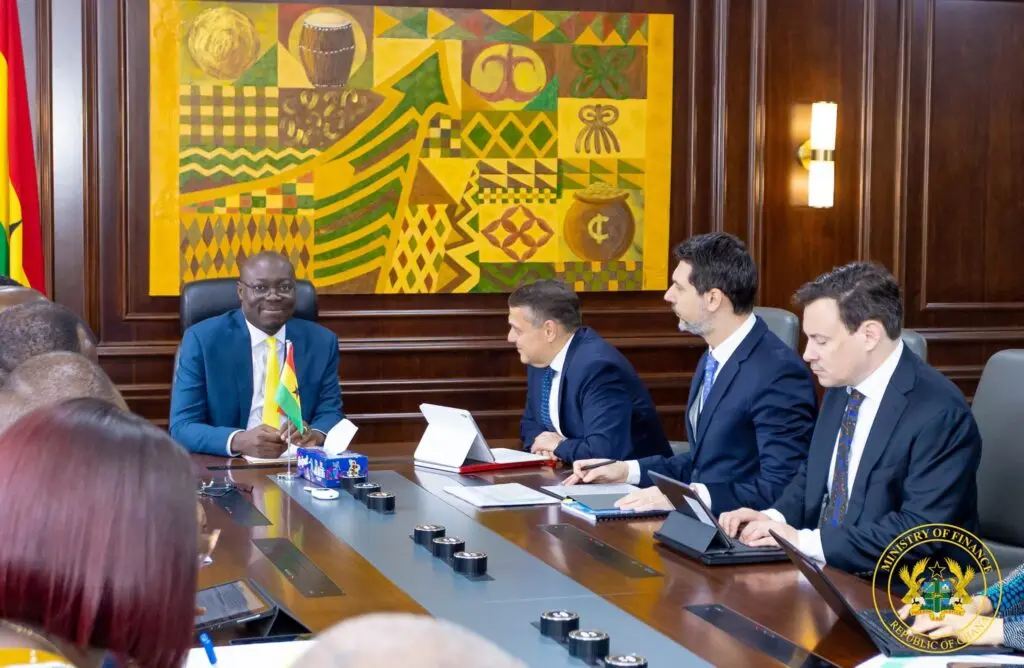
Ghana’s sixth review under the International Monetary Fund (IMF) programme has ended in Accra with indications of strong progress on key reforms, although some concerns remain unresolved.
The IMF delegation wrapped up weeks of discussions with government officials and other stakeholders as part of the latest assessment of Ghana’s Extended Credit Facility (ECF) programme.
Sources familiar with the negotiations say Ghana performed well on several major programme targets, particularly in the areas of fiscal reforms, debt management, and financial sector stability. However, a few outstanding matters were still under discussion at the close of the mission.
Unlike previous reviews since Ghana joined the IMF programme in 2023, it remained uncertain at the time of reporting whether both sides had reached a Staff-Level Agreement (SLA), which normally signals successful completion of the review process.

Government officials and representatives of the IMF are expected to provide further details during a scheduled press briefing later today in Accra.
There is also uncertainty over whether the IMF will request additional prior actions from Ghana before the programme is presented to the IMF Executive Board in August 2026 for final approval.
Despite the unresolved issues, the IMF is expected to acknowledge Ghana’s commitment to reforms and efforts to maintain economic stability amid ongoing global economic challenges.
Review focused on reforms and fiscal stability
The sixth review examined Ghana’s overall performance under the programme since the fifth assessment earlier this year.
Discussions reportedly centred on delayed structural reforms, fiscal consolidation measures, energy sector challenges, and debt sustainability efforts.
Attention was also given to developments within the monetary and banking sectors, where sources indicate that most targets were achieved, although one unresolved issue remains under consideration.
Ato Forson praises economic recovery efforts
Speaking during the opening session of the review meetings, Finance Minister Cassiel Ato Forson described Ghana’s progress under the IMF programme as substantial.
According to him, the partnership between Ghana and the IMF has helped restore stability to the economy following the severe economic difficulties experienced in 2022.
“It has been a long, demanding, but ultimately transformative journey,” he stated.
Dr Forson said the programme had contributed to rebuilding confidence in the economy and renewing optimism among citizens.
He also conveyed appreciation to the IMF on behalf of President John Mahama and the Ghanaian people for supporting the country’s recovery efforts.
The Finance Minister stressed that government remains committed to sustaining the gains achieved so far while shifting focus toward policies that encourage private-sector expansion, investment, and job creation.
“We must ensure that stability translates into more investment, more jobs, and more opportunities for all,” he said.
Economic outlook remains positive
Ghana entered the 36-month IMF Extended Credit Facility programme in May 2023, securing access to about US$3 billion in support financing.
During the fifth review, the IMF described Ghana’s performance as broadly satisfactory despite some delays in implementing structural reforms.
The country’s external reserves held by the Bank of Ghana have also improved significantly, helping strengthen Ghana’s resilience against external economic shocks.
In its latest projections, the IMF maintained Ghana’s economic growth forecast for 2026 at 4.8 percent, slightly above the projected average for Sub-Saharan Africa.
The Fund also expects inflation in Ghana to decline to 7.9 percent in 2026, with inflation likely to remain within single-digit levels through 2027 if current trends continue.
Source: businesspostonline