

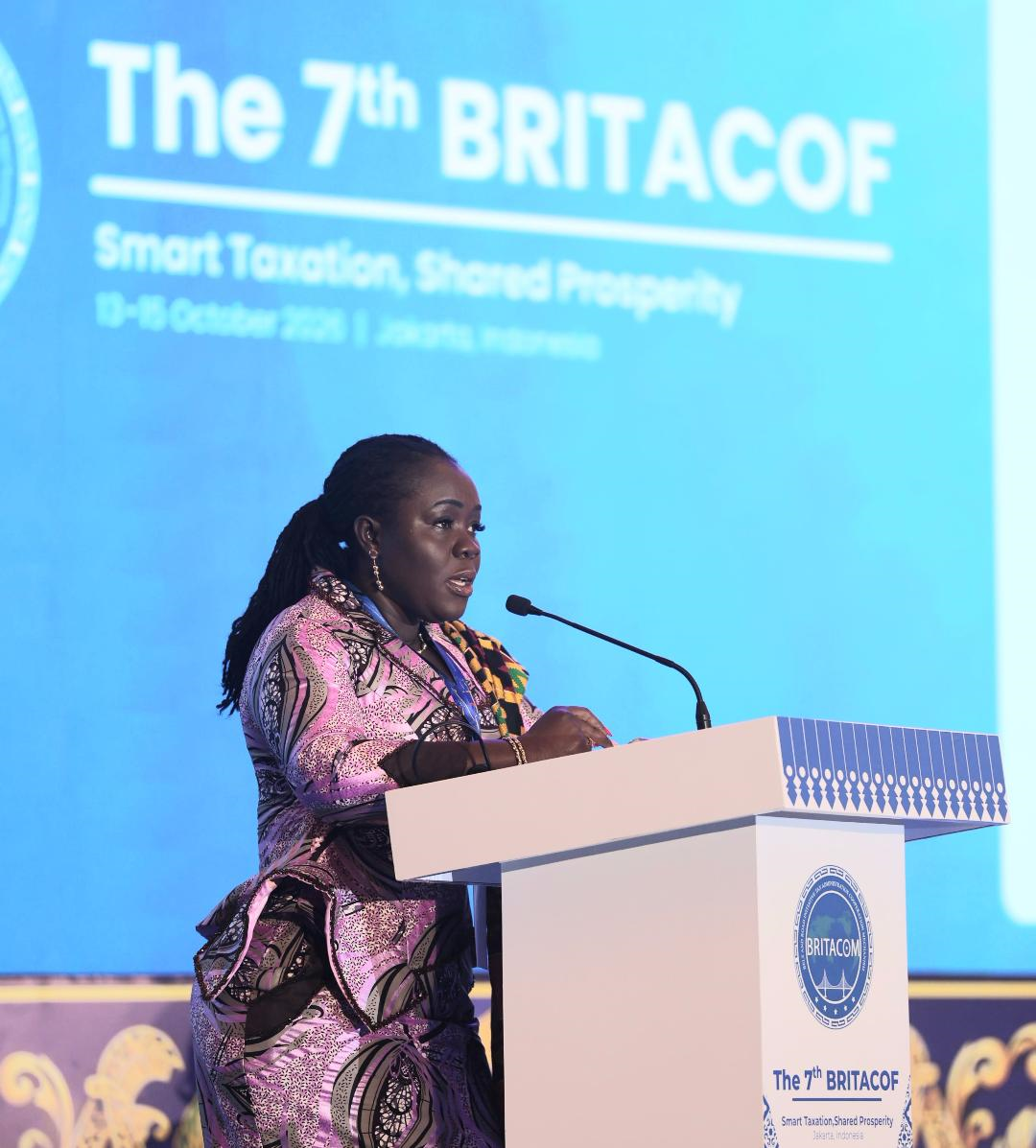
The Ghana Revenue Authority (GRA) has showcased its digital tax administration reforms at the 7th Belt and Road Initiative Tax Administration Cooperation Forum (BRITACOF) in Jakarta, Indonesia, highlighting the use of artificial intelligence (AI), integrated taxpayer identification and mobile technology to improve revenue mobilisation and compliance.
The forum, hosted by Indonesia’s Directorate General of Taxes from October 13 to 15, 2026, brought together tax administrators and policymakers worldwide to explore digital transformation and cooperation among Belt and Road jurisdictions.
Leading Ghana’s delegation, Technical Adviser to the Commissioner-General of the GRA, Elsie Appau-Klu Esq, delivered a keynote address during a digital transformation panel on the theme, “From Tax Informatization to Smart Taxation: The Ghanaian Experience and Shared Paths for Belt and Road Jurisdictions.”
Other members of the delegation were Moses Koloni Yidana, Head of the Transfer Pricing Unit at the GRA, and Abdul Rauf Nasiru, Head of the Telecommunications and Services Large Taxpayer Office in the Audit Division.

Mrs. Appau-Klu said digital transformation must go beyond introducing technology to fundamentally reform governance and strengthen trust between tax authorities and taxpayers.
She outlined three major developments that have shaped Ghana’s transition: the adoption of the Ghana Card Personal Identification Number as the Tax Identification Number in 2021, the Integrated Customs Management System (ICUMS) introduced in 2020, and the Modified Taxation Scheme (MTS) launched in 2025 to bring informal-sector operators into the tax net.
The Ghana Card integration, she said, expanded the number of identity-linked taxpayers from about three million to more than 18 million, providing a common identification platform for tax administration.
ICUMS, meanwhile, unified customs operations across ports and borders, while the MTS enables eligible informal-sector operators to register using their Ghana Cards, file returns through a mobile application or the *880# short code, and pay a flat three per cent tax through mobile money.
She described the approach as combining a simple, accessible interface with sophisticated technology operating in the background, supported by continuous taxpayer education and engagement.
The GRA has also introduced electronic VAT invoicing (E-VAT), the Integrated Tax Administration System (ITAS) and Publican AI to strengthen monitoring, improve compliance and identify revenue leakages.
According to Mrs. Appau-Klu, Publican AI generated an additional GH¢1 billion in revenue in April 2026 alone by identifying customs undervaluation. Total GRA revenue reached GH¢182 billion in 2025, up from GH¢153 billion in 2024, with a target of GH¢310 billion by 2028.
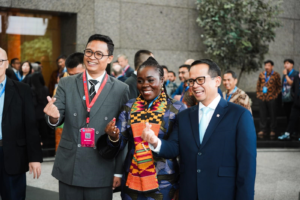
From right, Dr Bimo Wijayanto, Director-General of Taxes-Ministry of Finance, Indonesia, Technical Advisor to GRA-CG, Elsie Appau-Klu Esq and Vice Minister of Finance of Indonesia, Nurkholisoh Ibnu Aman
She stressed, however, that technology must be accompanied by investment in people, noting that the authority was retraining auditors to become data analysts and risk managers rather than replacing them with automated systems.
She added that AI was being deployed for fraud detection, audit case selection and customs valuation, while final decisions remained the responsibility of human officers.
On governance, she identified legal authority, data security, privacy protection, human oversight and taxpayers’ rights to object and appeal as essential safeguards for building confidence in technology-driven tax administration.
Mrs. Appau-Klu called on member jurisdictions to develop common standards for identity verification, electronic invoicing, secure application programming interfaces and AI governance under the Tax Administration Product Portfolio 2.0.
She also proposed a dedicated digital capacity-building programme and a shared repository of successful and unsuccessful reforms, offering Ghana’s informal-sector taxation model as a contribution.
She encouraged Ghana to learn from Brazil’s experience in taxing informal businesses, Indonesia’s electronic tax systems and China’s Golden Tax System, while strengthening cross-border data interoperability to improve tax compliance and trade facilitation.
Source: businesspostonline