

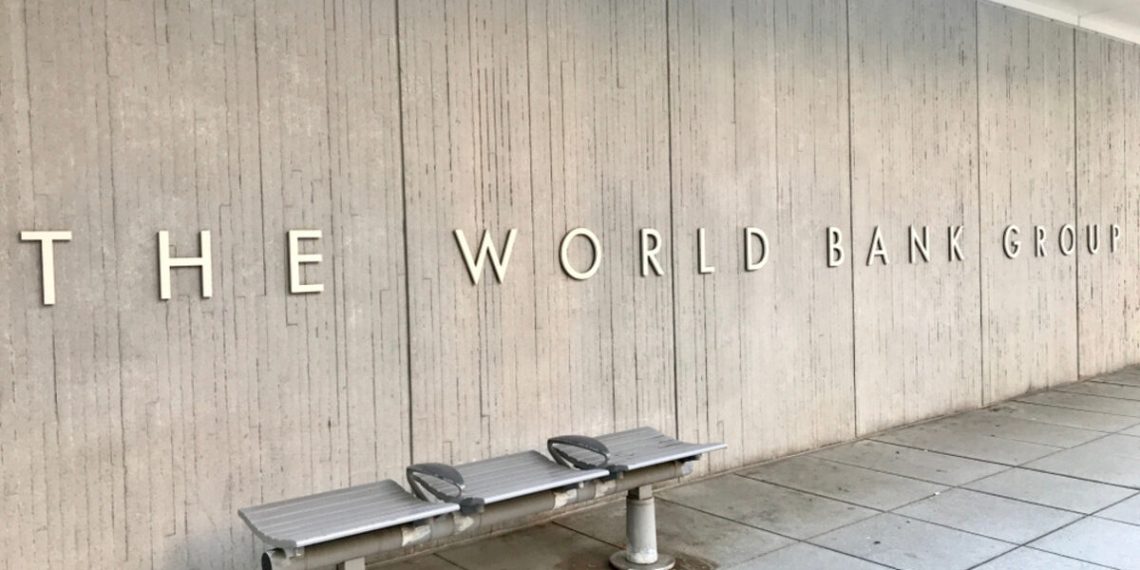
Ghana’s economy has staged a remarkable recovery from the 2022 crisis, recording its fastest growth in six years, sharply lower inflation and improved debt indicators, but sustaining those gains will require deeper structural reforms, stronger domestic revenue mobilization and accelerated investment in transport infrastructure, the World Bank has said.
Launching the 10th Ghana Economic Update (GEU) in Accra, World Bank Division Director for Ghana, Sierra Leone and Liberia, Robert Taliercio, described the country as being at a critical turning point where policy choices made now will determine whether recent economic progress becomes durable or remains vulnerable to future shocks.
The report, titled “Reset for Growth: Sustaining Macroeconomic Recovery and Unlocking Transport for Transformation,” notes that Ghana’s economy expanded by 6.0 percent in 2025, the fastest pace since 2019, and accelerated further to 6.4 percent in the first quarter of 2026.
Inflation also declined significantly, falling from 23.2 percent in February 2025 to 3.2 percent by March 2026, before edging up to 4.6 percent, still below the Bank of Ghana’s lower target band.

According to the World Bank, Ghana’s completion of its IMF Extended Credit Facility programme, together with a stronger-than-expected fiscal performance, has helped restore investor confidence and macroeconomic stability.
The report indicates that the country posted a primary fiscal surplus of 2.5 percent of GDP in 2025, exceeding the programme target of 1.5 percent, while public debt declined from 70.3 percent of GDP in 2024 to 49 percent at end-2025, reaching a key debt objective three years ahead of schedule.
International reserves have also strengthened, supported largely by a robust trade surplus and record earnings from gold exports.
Despite the encouraging macroeconomic indicators, the World Bank cautioned that Ghana’s recovery remains incomplete and faces significant structural weaknesses.
Taliercio noted that much of the fiscal improvement was achieved through expenditure compression, with capital spending reportedly falling 38% below budget, a strategy the report says cannot be sustained over the medium term.
The report argues that future fiscal consolidation must increasingly rely on enhanced domestic revenue mobilization rather than continued spending cuts.
It also highlights persistent social challenges, noting that 56.4 percent of Ghanaians remain in poverty, while regional inequalities continue to widen despite headline economic growth.
Another concern is the nature of growth itself. According to the report, expansion has been driven largely by sectors with relatively limited employment creation, raising concerns about the economy’s ability to absorb the growing number of young people entering the labour market over the next decade.
The World Bank projects economic growth of 4.8 percent in 2026, gradually converging to about 5 percent over the medium term, while inflation is expected to remain within target and debt levels stay sustainable.
However, the outlook depends heavily on maintaining fiscal discipline, completing external debt restructuring and sustaining momentum on reforms.
Among the risks identified are disruptions from the prolonged Middle East conflict, which could worsen global trade conditions and push up energy and production costs.
The report also warns that Ghana’s continued dependence on gold and cocoa exports leaves the economy exposed to commodity price fluctuations that could quickly reverse recent gains in the external sector.
Domestically, financial pressures in state-owned enterprises remain a concern. The World Bank estimates that delays in implementing the Energy Sector Recovery Programme cost the country approximately US$1 billion annually, while inefficiencies within COCOBOD continue to weigh on public finances and farmer incomes.
Climate-related shocks, including recent flooding incidents, were also flagged as evidence of the urgent need to integrate resilience measures into infrastructure planning.
A key feature of this year’s report is its focus on Ghana’s transport sector, which the World Bank describes as central to growth, competitiveness and job creation.
The report notes that of Ghana’s 94,200-kilometre road network, only 27 percent is paved, while more than half of all roads are in fair or poor condition.
The rail sector has experienced an even steeper decline, with operational rail infrastructure falling from 947 kilometres in 1960 to just 160 kilometres by 2020.
According to the World Bank, the economic cost of transport deficiencies is substantial. Road traffic crashes alone are estimated to cost about 2.1 percent of GDP annually, equivalent to roughly US$4.55 billion, exceeding the country’s annual education budget.
To address these challenges, the report outlines six priority reforms, including operationalising the Road Maintenance Trust Fund, developing a unified national transport strategy, revitalising freight rail corridors, improving road safety, embedding climate resilience into major infrastructure projects and expanding Ghana’s digital single-window system to additional ports and inland terminals.
The World Bank said it is supporting the agenda through the US$500 million Ghana Market Access and Connectivity Project, which aims to rehabilitate approximately 1,050 kilometres of feeder roads under performance-based maintenance contracts.
Taliercio stressed that while government’s ambitious “Big Push” infrastructure programme has strong potential, long-term returns will depend on accompanying reforms in maintenance financing, governance and institutional coordination.
“Building roads without maintaining them simply accelerates the cycle of degradation we are trying to break,” he said.
The World Bank reiterated its commitment to supporting Ghana’s efforts to secure a recovery that is more inclusive, resilient and capable of generating jobs at scale.
Source: businesspostonline