

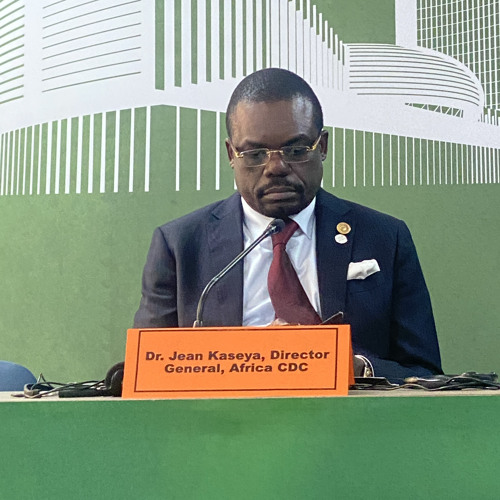
The Director-General of the Africa Centres for Disease Control and Prevention (Africa CDC), Dr Jean Kaseya, has expressed confidence that Africa will significantly strengthen its preparedness against Ebola by the end of 2026 through improved access to vaccines, therapeutics and diagnostic tools.
Speaking at a press conference in Accra on Wednesday July 22, on the sidelines of the Extraordinary Session of the African Union Assembly on Ending AIDS in Africa by 2030, Dr Kaseya said Africa CDC was implementing a comprehensive strategy to ensure the continent is better equipped to respond to future Ebola outbreaks.
“We are doing our best to ensure that African countries can say by December 2026 that, thanks to a strong continental organisation, we will not be afraid of an Ebola outbreak because we have all the medical countermeasures,” he said.
He disclosed that Africa CDC is leading clinical trials for Ebola therapeutics and preventive interventions, with a vaccine clinical trial expected to commence next month. The organisation is also coordinating continental efforts to improve access to diagnostics and treatment as part of its broader disease preparedness strategy.

Providing an update on ongoing Ebola outbreaks in the Democratic Republic of Congo (DRC) and Uganda, Dr Kaseya said Africa CDC had written to the United States Secretary of State requesting the removal of travel restrictions imposed on Uganda.
He stressed that the request was based solely on scientific evidence, noting that Uganda had demonstrated strong political commitment and achieved considerable success in containing Ebola and other infectious diseases, including Marburg virus disease.
“This is not an emotional decision; it is based on evidence,” he emphasised.
Dr Kaseya further announced that African countries had collectively mobilised about US$110 million from domestic sources to support responses to Ebola and other disease outbreaks, describing the development as a major milestone in strengthening Africa’s health security and reducing dependence on external assistance.
He commended governments across the continent for increasingly financing their own emergency health responses and expressed confidence that domestic resource mobilisation for public health interventions would continue to grow.
The Africa CDC Director-General said these efforts formed part of the continent’s broader pursuit of health sovereignty, which aligns with the African Union’s vision of building greater self-reliance in critical sectors, including healthcare.
He indicated that discussions among African leaders and development partners were focused on accelerating implementation of the health sovereignty agenda from 2027 to enable African countries to build resilient health systems capable of responding independently to future public health emergencies.
Dr Kaseya also praised Ghana’s Free Primary Healthcare policy, describing it as a model that other African countries could emulate in their quest to achieve universal health coverage.
According to him, the initiative has significantly expanded access to essential healthcare services, particularly for people living in rural and underserved communities.
“This is something we are proud of and we want to use it as an example for other African countries to learn from what Ghana has done, because that is one way to get to universal health coverage,” he said.
Ghana’s Free Primary Healthcare policy provides essential basic health services at no direct cost to patients at the point of care, with the aim of removing financial barriers to accessing healthcare and improving health outcomes nationwide.
Source: businesspostonline