

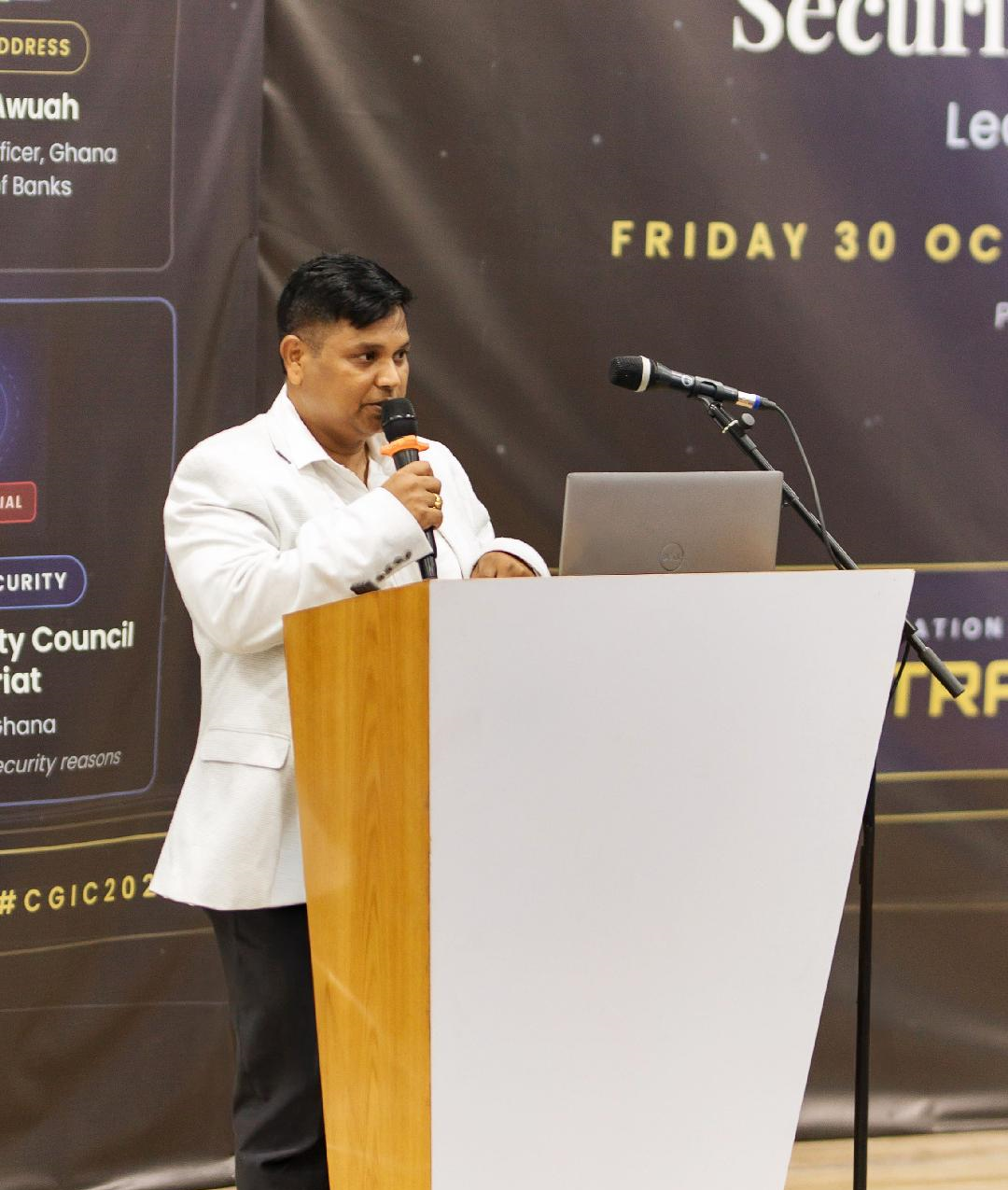
The Rector of SIIMT University College, Ghana, Dr Raju Sonavane, has called for collective responsibility in combating cyber threats, warning that growing dependence on digital technology is exposing individuals and organisations to increasing risks of online fraud, data breaches and financial scams.
He said cybersecurity must no longer be regarded as the exclusive responsibility of information technology professionals but as a shared obligation involving individuals, businesses, educational institutions and government.
Speaking at the maiden Cybersecure Ghana International Conference (CGIC) in Accra, Dr Sonavane said the widespread use of mobile phones for banking, the internet for education and digital platforms for business and communication had made cybersecurity an essential part of everyday life.
He cautioned that cyber incidents could expose sensitive personal information and disrupt the operations of entire organisations, making it imperative for users to adopt safer digital practices.

“Cybersecurity is no longer only an IT issue. It is everyone’s responsibility,” he said, urging the public to become more conscious of the risks associated with their online activities.
The conference, introduced by SIIMT University College as a cybersecurity awareness initiative, brought together officials of the Ministry of Communication, Digital Technology and Innovations, the Cyber Security Authority (CSA), industry professionals, academics and international delegates.
Dr Sonavane said the initiative reflected the institution’s belief that education must extend beyond the classroom to equip people with the knowledge and practical skills needed to address emerging real-world challenges.
The Deputy Director-General (Regulatory Operations) of the CSA, Dr Jamaldeen Tonzua Seidu, also underscored the importance of collaboration between academia, industry and regulators in strengthening the country’s cybersecurity resilience.
He identified educational institutions as important partners in awareness creation, capacity building and developing the skilled workforce needed to address Ghana’s cybersecurity requirements.

He noted that the education sector is among the country’s 13 designated Critical Information Infrastructure (CII) sectors, meaning cyberattacks on institutions within it could have wider implications for national security and socioeconomic development.
Dr Seidu said the Authority was working with the Ghana Tertiary Education Commission (GTEC) to regulate cybersecurity professional training and integrate basic cybersecurity and cyber-hygiene education into tertiary institutions’ curricula.
He urged educational institutions and other designated critical infrastructure operators to engage licensed and accredited cybersecurity professionals rather than rely solely on antivirus software and firewalls.
He further called for cybersecurity to be elevated to the level of corporate governance, with institutions establishing dedicated officers, policies and governance systems to manage cyber risks.
He stressed that organisations must prepare for attacks rather than assume they would never become victims, noting that the question was no longer whether an institution would be attacked, but when.
The conference also featured a simulation exercise designed to expose participants to practical crisis management and incident response, moving discussions beyond theoretical cybersecurity awareness.
Source: businesspostonline