

Ghana’s agreement with Russian aluminium producer RUSAL to develop the Nyinahin bauxite deposit and establish a 1.2-million-tonne alumina refinery is expected to create significant opportunities for industrialisation, employment, foreign-exchange generation and local enterprise development.
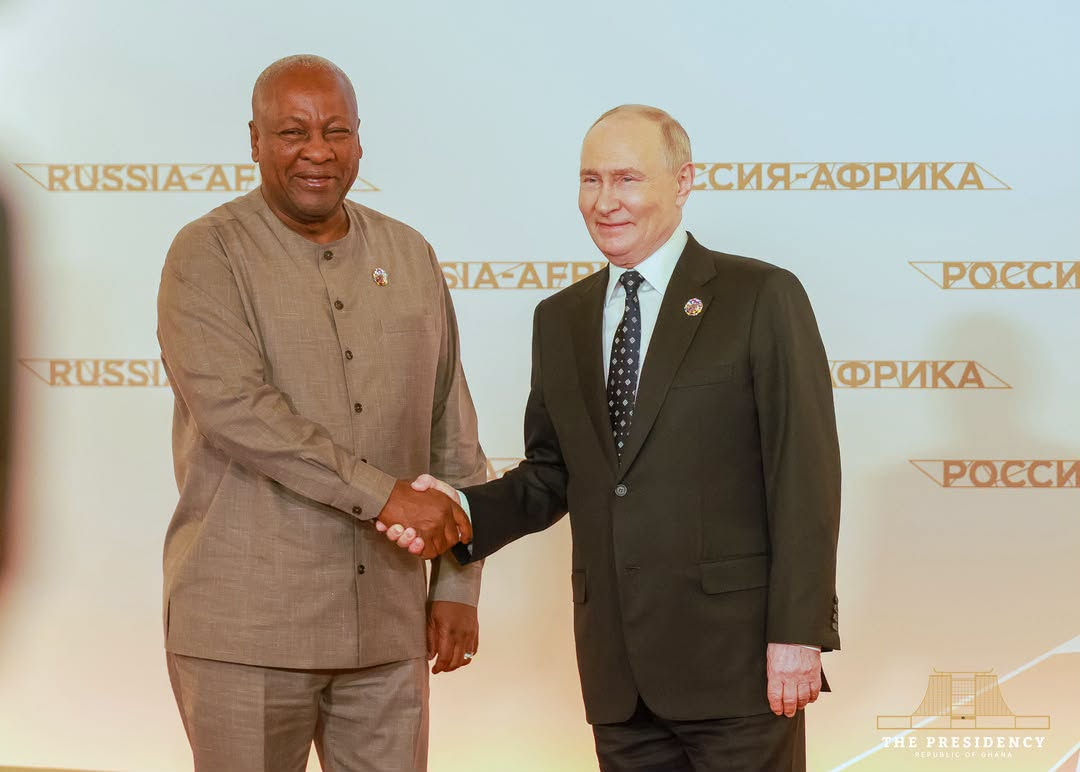
The agreement, signed between the Ghana Integrated Aluminium Development Corporation (GIADEC) and RUSAL in Moscow on October 29, 2026, during the Russia–Africa Forum, represents a major step towards the country’s long-standing ambition of developing an integrated aluminium industry.
Under the proposed arrangement, the mining operation is expected to produce up to five million tonnes of bauxite annually, while a refinery will process the ore into approximately 1.2 million tonnes of alumina annually.
The development is particularly significant for Ghana because it offers an opportunity to move beyond exporting relatively unprocessed bauxite towards capturing greater economic value through domestic mineral processing and manufacturing.

Currently, Ghana exports its mined bauxite without domestic refining, while the Volta Aluminium Company (VALCO) imports alumina for its smelting operations. Establishing local refining capacity could therefore reduce the country’s dependence on imported alumina, improve the competitiveness of domestic aluminium production and potentially generate additional export earnings from surplus production.
The agreement is structured around two joint ventures: Nyinahini Bauxite, which will develop and operate the mine, and Ghana Alumina Company, which will construct and operate the refinery. RUSAL will hold majority interests in both ventures, while the Ghanaian side will retain minority ownership, including at least the statutory 10 per cent non-dilutable participation.
For Ghana, the economic benefits could extend well beyond royalties and taxes generated by the mining and refining operations.
Under the country’s mining fiscal framework, government revenue is expected to include mineral royalties, corporate income taxes, dividend-related withholding taxes and other statutory payments. Mining operations are generally subject to a 5 percent mineral royalty and a 35 percent corporate income tax rate, subject to applicable fiscal arrangements.
The Ghanaian equity participation will also provide an opportunity for the country to share in the ventures’ financial returns, including dividends when the companies become profitable.
The projects could additionally generate substantial employment opportunities during construction and subsequent operations.
The development of the mine and refinery will require civil engineering contractors, equipment suppliers, transport operators, electrical and mechanical engineering companies, construction workers and specialist industrial service providers.
Once operational, the facilities will require mining contractors, geological and laboratory services, plant maintenance personnel, industrial chemicals, logistics, security, catering and environmental management services.
GIADEC Chief Executive Officer Reindorf Twumasi Ankrah has identified employment creation, infrastructure improvements and opportunities for Ghanaian businesses among the anticipated benefits of the agreement.
Domestic companies could also benefit from supplying goods and services to the two joint ventures, while universities and technical institutions could gain opportunities to provide research, professional services and specialised industrial training.
The development could stimulate the growth of a local industrial supply chain, particularly if Ghanaian businesses are deliberately integrated into procurement arrangements.
However, many domestic companies will require access to finance, specialised equipment, technical certification and capacity-building support to compete successfully for major industrial contracts.
Consequently, comprehensive local procurement and supplier-development programmes will be important in ensuring that the investment generates benefits across the wider economy rather than concentrating opportunities among a limited number of international contractors.
Infrastructure development represents another potentially significant benefit.
The proposed Huni Valley–Nyinahin railway connection could improve the transportation of bauxite and alumina, while investments in Takoradi Port’s storage, handling and loading facilities could strengthen Ghana’s mineral export capacity.
These infrastructure improvements could serve other businesses and industries beyond the immediate requirements of the RUSAL projects.
Nevertheless, the railway connection has yet to secure an awarded construction contract, while existing port facilities require expansion to accommodate the anticipated mineral volumes.
The refinery could also strengthen Ghana’s position in regional and international aluminium supply chains by providing a domestic source of alumina for further processing.
Ultimately, the agreement presents an opportunity to establish industrial capabilities, deepen local participation in mining, improve foreign-exchange earnings and create sustainable employment.
However, these benefits will depend on the successful financing and implementation of the projects, transparent commercial arrangements and adequate infrastructure.
For Ghana, the real measure of success will not simply be the volume of bauxite extracted, but how effectively the investment translates into domestic manufacturing capacity, stronger local businesses and lasting economic value.
By: Toma Imirhe / businesspostonline