

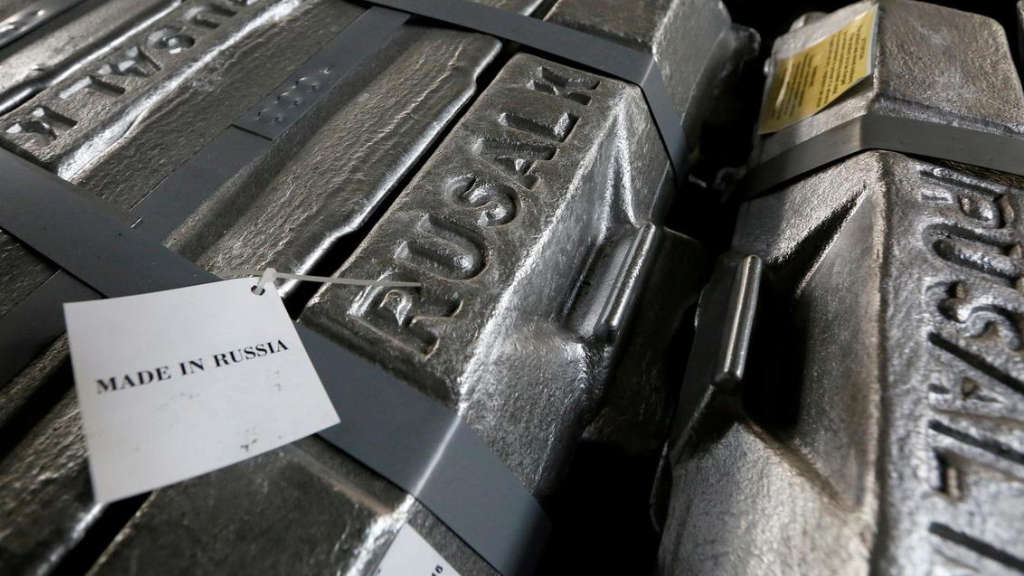
Ghana’s ambition to establish a fully integrated aluminium industry through its new agreement with Russian producer RUSAL faces significant financing and infrastructure challenges, with the availability of reliable and competitively priced energy, transportation and water supplies likely to determine the commercial viability of the proposed investments.
The agreement, signed between the Ghana Integrated Aluminium Development Corporation (GIADEC) and RUSAL in Moscow on October 29, 2026, provides for the development of the Nyinahin bauxite deposit in the Ashanti Region and construction of a refinery with an annual production capacity of 1.2 million tonnes of alumina.
The mining operation is expected to produce up to five million tonnes of bauxite annually.
Although the agreement marks an important step towards domestic mineral processing, neither party has disclosed detailed capital expenditure estimates for the mine, refinery and supporting infrastructure, or the financing structure underpinning the projects.

The absence of information on proposed debt and equity contributions, lending institutions, financing commitments and possible government participation leaves important questions about how the capital-intensive developments will be funded.
The two projects have substantially different investment requirements. While the mine will require extraction equipment, processing facilities and transportation infrastructure, the refinery will require extensive industrial installations, including digestion, precipitation and calcination facilities, electricity, natural gas, water systems and waste-management infrastructure.
An August 2026 assessment by the Natural Resource Governance Institute (NRGI), titled ‘Filling the Missing Middle: Ghana’s Alumina Refining Prospects’, highlights the financial difficulties associated with establishing a commercially viable alumina refinery in Ghana.
The assessment concludes that the refinery would struggle to achieve profitability without substantial government support, given the combined costs of energy, bauxite feedstock, caustic soda, financing and infrastructure.
Its modelling suggests that, without concessional financing, even relatively favourable government-support arrangements could require annual public assistance of approximately US$71 million to US$74 million over a project life exceeding 20 years, excluding infrastructure costs.
Blended financing could reduce the annual public support requirement by approximately US$22 million.
These estimates, however, are independent modelling scenarios and should not be interpreted as the actual financing requirements or agreed costs of the RUSAL projects.
Infrastructure and energy constraints
Transportation infrastructure is among the most immediate challenges.
The proposed Huni Valley–Nyinahin railway connection is expected to provide an efficient means of moving substantial quantities of bauxite and alumina. However, the Ministry of Lands and Natural Resources’ 2026–2029 development plan identifies the absence of an awarded construction contract for the railway as an outstanding constraint.
Using roads to transport millions of tonnes of minerals annually could significantly increase maintenance costs, road-safety risks and environmental pressures.
Takoradi Port is another critical component of the proposed export arrangements. Its existing bauxite stockpiling facilities are considered inadequate for the anticipated increase in mineral volumes, making additional storage, handling and loading infrastructure necessary.
Energy availability could prove even more consequential for the refinery.
Alumina production is highly energy-intensive, requiring substantial thermal energy and electricity. Although Ghana has an established electricity generation and transmission system, the availability of reliable, competitively priced power for an industrial operation of this scale cannot be assumed.
Natural gas supply is another concern. The refinery’s requirements for process heat could be comparable to Ghana’s existing non-power industrial gas consumption, according to the NRGI assessment.
This could create competition with other industrial users and place additional pressure on existing gas allocation arrangements.
Government may consequently have to consider dedicated gas supply agreements, additional generation capacity, transmission improvements and potentially captive combined heat and power facilities.
Water availability and environmental management also require attention. The NRGI assessment estimates that a refinery of the proposed scale could consume annually as much water as approximately 100,000 people.
The management of bauxite residue, industrial wastewater and emissions will therefore require significant investment in environmental protection infrastructure.
Implementation timetable and fiscal risks
RUSAL Director-General Evgeniy Nikitin has indicated that preparations for bauxite extraction could take three to four years, after which the refinery would proceed through its own design and construction stages.
This means commercial production remains some distance away, with detailed engineering, feasibility studies, environmental approvals, land acquisition, financing and infrastructure development still necessary.
The ownership structure also requires greater transparency. RUSAL will hold majority interests in the two joint ventures, while Ghana retains minority participation, including at least a 10 per cent non-dilutable stake.
However, the precise equity percentages, valuation of contributions, governance arrangements and distribution of profits have not been disclosed.
Government must also ensure that transactions between the mine and refinery are transparently valued to prevent transfer-pricing practices from undermining the country’s royalty and tax revenues.
More importantly, Ghana must carefully assess the fiscal implications of supporting the projects, particularly if substantial public expenditure or guarantees are required.
The country needs to ensure that railway, port, energy and other infrastructure investments deliver wider economic benefits rather than becoming costly obligations undertaken solely to support a private commercial venture.
For Ghana, the challenge is therefore to convert the RUSAL agreement into a commercially sustainable industrial investment without exposing public finances to excessive liabilities or open-ended subsidies.
The success of the proposed aluminium industry will ultimately depend not only on the availability of bauxite and RUSAL’s technical expertise, but also on credible financing, reliable infrastructure and transparent arrangements that protect Ghana’s long-term economic interests.
By: Toma Imirhe / businesspostonline