

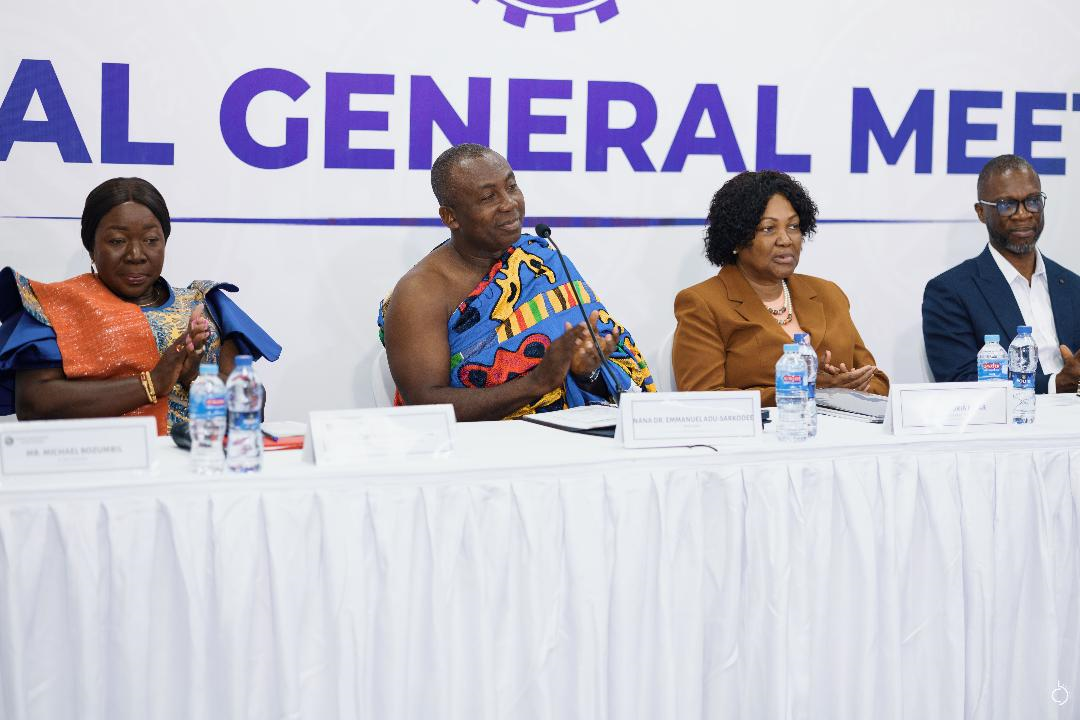
The Ghana Employers’ Association (GEA) has called for a policy predictability compact between government and the private sector to reduce uncertainty, strengthen business confidence and encourage long-term investment in productive assets.
The Association said stable and predictable policies on taxation, regulation, utility costs and administrative procedures were essential to enabling businesses to plan effectively, expand operations and invest in technology and machinery.
The proposal formed part of recommendations presented at the GEA’s 66th Annual General Meeting in Accra, where the Association’s President, Nana Dr Emmanuel Adu-Sarkodee Afriyie appealed to government to introduce comprehensive tax reforms and targeted incentives to improve the competitiveness of local enterprises.
“Businesses also need policy predictability. Enterprises invest in new technology and machinery on the basis of expectations about the future,” he stated.

Dr Adu-Sarkodee Afriyie called for meaningful consultation between government and the private sector before major business-related policies were introduced, arguing that such engagement would reduce uncertainty and create a more supportive environment for investment.
“We therefore propose a policy predictability compact between government and the private sector. Such a compact will promote meaningful consultation on major business-related policies before they are rolled out,” he noted.
The president acknowledged government’s efforts to maintain macroeconomic stability but said additional measures were needed to sustain the recovery and protect businesses from persistent domestic challenges and external shocks.
According to him, government must use the 2027 Budget to build adequate fiscal buffers against global economic and geopolitical uncertainties, particularly disruptions in international markets that could affect domestic businesses.
The Association also stressed the need for a competitive tax regime that supports local enterprises, improves their capacity to withstand economic pressures and creates room for business expansion.
It said a more predictable policy environment, combined with fiscal discipline and targeted support, would help sustain investor confidence and promote growth.
Beyond economic policy, the GEA expressed concern about recurring labour agitations, warning that prolonged industrial disputes could disrupt operations, undermine productivity and discourage investment.
It called on government, employers and organised labour to strengthen dialogue under the tripartite framework and resolve workplace disagreements through established institutions and good-faith negotiations.
“Industrial peace is an economic asset. Disagreements can be resolved through established institutions, dialogue and good-faith negotiations rather than long disruptions, because it doesn’t help labour and it doesn’t help employers,” the Association said.
The GEA further advocated a national policy on human-centred automation and the future of work to guide technological adoption while protecting workers in strategic occupations.
Responding to the concerns, the Minister of Trade, Industry and Agribusiness, Ofosu Agyare, reaffirmed government’s commitment to supporting businesses through initiatives designed to improve access to opportunities and expand markets for Ghanaian enterprises.
Source: B&FT