

Ghana has called for a bold and coordinated regional effort to transform West Africa’s rice sector, urging investors and policymakers to move from dialogue to tangible financing that will reduce the region’s heavy reliance on imports.
Speaking at the 2026 West Africa Rice Investment Roundtable in Accra, Deputy Minister for Finance, Thomas Nyarko Ampem, said the region must confront a long-standing paradox: while rice is a staple across West Africa, billions of dollars are spent annually importing it.
According to him, West Africa spends an estimated $3–4 billion each year on rice imports, placing significant pressure on foreign exchange reserves and exposing economies to global supply shocks.
“The real Jollof competition before us is not whose rice tastes better. It is whether West Africa can finally produce enough rice to feed itself competitively,” he said.

The Roundtable brought together senior government officials, development partners, investors, and industry leaders.
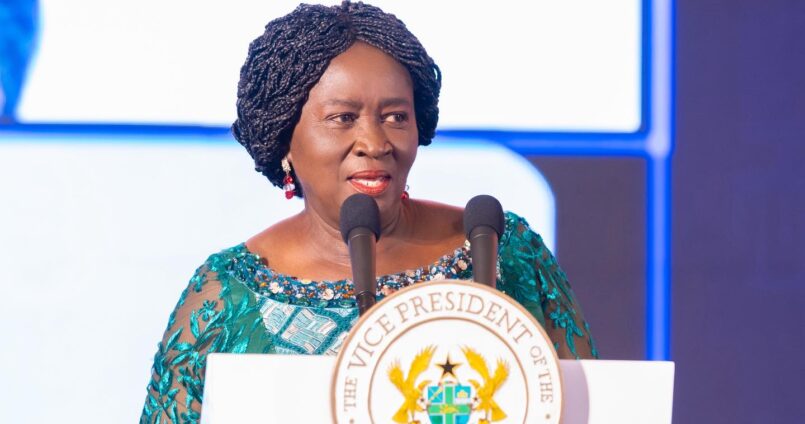
Among dignitaries present was Vice President Professor Naana Jane Opoku-Agyemang, alongside representatives from ECOWAS, the World Bank, and the African Development Bank.
Mr Ampem stressed that the region’s dependence on imports is “economically unsustainable and strategically untenable,” noting that it drained resources, weakened domestic agriculture value chains, and limited job creation.
Despite this, he highlighted that West Africa possesses the necessary fundamentals—fertile land, water resources, and a large farming workforce—to become self-sufficient in rice production.
The Deputy Minister emphasized that unlocking the sector’s potential requires more than conventional financing.
He called for “transformational capital”—long-term, risk-tolerant investment capable of supporting irrigation systems, storage infrastructure, milling and processing facilities and logistics and distribution networks.
“What we have lacked, for far too long, is sufficient transformational capital capable of unlocking this potential at scale,” he stated.
He further noted that investors must adopt a regional outlook, focusing on a unified West African rice economy rather than fragmented national markets.
Mr Ampem used the platform to highlight Ghana’s renewed economic strategy following recent macroeconomic challenges.
Under President John Dramani Mahama’s administration, the government is repositioning agriculture—especially strategic crops like rice—as a cornerstone of economic transformation.
He outlined measures being implemented to improve the investment environment, including strengthening agricultural value chains, enhancing market coordination, supporting price stability mechanisms, expanding agro-processing opportunities and improving macroeconomic stability.
“We are doing the policy work; we are strengthening the enabling environment; we are creating the conditions for long-term capital to thrive,” he told investors.
Mr Ampem stressed that West Africa did not lack demand but instead needed bankable investment pipelines that could attract large-scale financing.
He noted that developing the rice sector had broader economic benefits beyond food security, including job creation, especially for youth and women, improved trade balances, currency stability and regional economic resilience.
“The time for talking about West Africa’s rice potential is over. The time for financing it is now,” he declared.
The Deputy Minister also highlighted the importance of the ECOWAS Rice Roadmap, calling for stronger alignment across member states in agricultural policies, trade frameworks, infrastructure development and financing mechanisms.
He stressed that success would depend not only on the amount of capital mobilised but also on how effectively regional systems are integrated.
Mr Ampem expressed optimism that the Roundtable would deliver concrete outcomes, including investment commitments and actionable partnerships.
“Let us turn West Africa’s rice gap into West Africa’s rice gain,” he urged.
The event is expected to pave the way for increased private sector participation and regional cooperation in building a competitive rice economy across West Africa.
Source: businesspostonline