

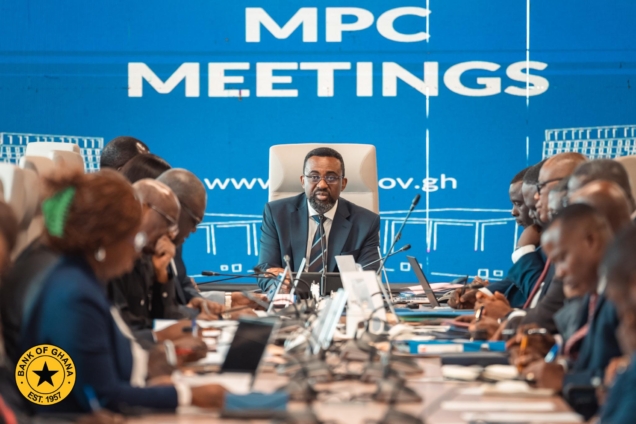
All six voting members of the Monetary Policy Committee (MPC) of the Bank of Ghana unanimously supported the decision to keep the benchmark policy rate unchanged at 14 percent during their latest meeting held from May 18 to 20, 2026.
Details contained in the MPC Decision Report revealed that members were largely influenced by concerns over the inflation outlook, particularly the potential impact of ongoing tensions in the Middle East on global commodity prices and domestic inflationary pressures.
The unanimous vote reflects a rare consensus among committee members, with all six reaching the same conclusion on the appropriate monetary policy stance amid prevailing economic uncertainties.
While members acknowledged that Ghana’s economy remains on a relatively strong footing following recent macroeconomic improvements, several expressed concern that inflation could accelerate again in the months ahead and potentially rise above 10 percent by the end of the year if external risks persist.

As a result, some policymakers opted to adopt a cautious “wait-and-see” approach, preferring to monitor incoming economic data and global developments before considering any further adjustments to the policy rate.
The report also highlighted concerns about possible domestic factors that could drive inflation higher, including anticipated increases in utility tariffs, transportation fares and import-related costs.
Although committee members generally expressed confidence in the current state of the economy, they warned that the outlook remains vulnerable to external shocks, particularly if geopolitical tensions in the Middle East continue for an extended period.
The MPC consists of seven members and is chaired by the Governor of the Bank of Ghana, Johnson Asiama. However, the Governor only votes when there is a tie among members, meaning he did not cast a vote during the latest policy deliberations.
The decision to maintain the policy rate at 14 percent signals the central bank’s determination to preserve recent gains in inflation control while remaining vigilant against emerging risks that could threaten Ghana’s macroeconomic stability.
Source: businesspostonline