

The African Development Bank (AfDB) Group has unveiled a new digital platform designed to track and accelerate progress toward expanding electricity access across the continent, as part of its ambitious “Mission 300” initiative.
The platform, known as the Mission 300 Progress Tracker, was launched during the Bank’s Annual Meetings in Brazzaville, Republic of Congo.
The publicly accessible tool provides real-time data on electricity access projects funded under Mission 300, a joint initiative aimed at connecting an additional 300 million Africans to electricity by 2030.
The tracker enables governments, investors, development partners, and citizens to monitor progress at country and project levels.

According to the AfDB, the tracker offers detailed insights into operational projects, including data on electricity connections, financing levels, project status, and geographic coverage.
At the launch, the platform reported that 5.2 million people have already been connected to electricity through active AfDB-supported Mission 300 operations.
It also shows 74 ongoing energy access projects across the continent.
The current portfolio is expected to deliver electricity access to an additional 35 million people, backed by a total of USD 9 billion approved for Mission 300 aligned operations, including USD 6 billion from African Development Bank resources.
The tracker further indicates that 30 National Energy Compacts—framework agreements designed to guide countries in expanding energy access—have been endorsed so far.
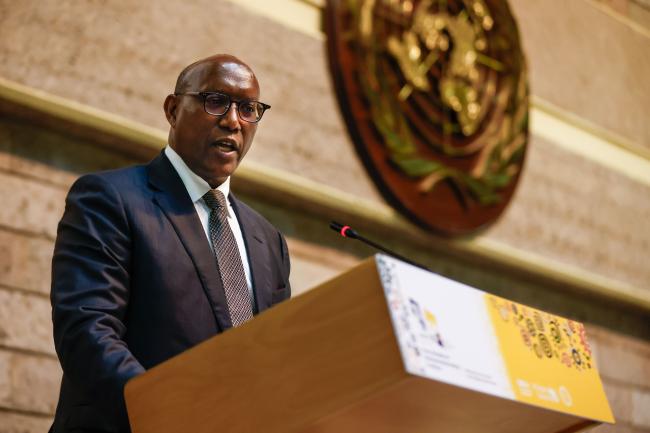
Dr. Kevin Kariuki, AfDB Vice President for Power, Energy, Climate and Green Growth, said the new platform is intended to enhance transparency and strengthen accountability in the delivery of electricity access projects.
“The Mission 300 Progress Tracker allows governments, partners, investors, and citizens to see in real time how the Bank is helping expand electricity access across Africa, and where additional effort is still needed,” Kariuki said.
He added that collaboration between the African Development Bank and the World Bank had already yielded significant results, with more than 50 million people reached since the initiative began.
“This demonstrates what is possible when financing, policy reform, and implementation are aligned around a shared goal,” he noted.
The platform highlights a range of projects that illustrate the scale and diversity of electrification efforts underway.
In Kenya, the Last Mile Connectivity Project has delivered electricity connections to over 815,000 people, significantly expanding household access.
In Sierra Leone, the Bo-Kenema Distribution System project has connected nearly 196,000 people to the grid.
Regional integration projects also feature prominently. The Rusumo Falls Hydropower Project supplies electricity to Burundi, Rwanda, and Tanzania, demonstrating cross-border cooperation in energy infrastructure.
Meanwhile, the CLSG transmission interconnector has contributed to expanding power access across West Africa, including nearly 7,000 beneficiaries in Côte d’Ivoire.
Accelerating Africa’s energy transition
By consolidating project-level data into a single digital platform, the AfDB aims to improve monitoring, enhance coordination among stakeholders, and accelerate the delivery of electricity access.
Energy access remains a critical development challenge across Africa, where hundreds of millions of people still lack reliable electricity.
Initiatives such as Mission 300 are seen as central to unlocking economic growth, improving living standards, and supporting industrial development.
The launch of the tracker marks a step toward data-driven decision-making in the sector, providing stakeholders with a clearer picture of progress and gaps.
As African governments and development partners intensify efforts to close the energy access gap, the AfDB says the platform will serve as a key tool in ensuring that commitments translate into measurable impact on the ground.
Source: businesspostonline