

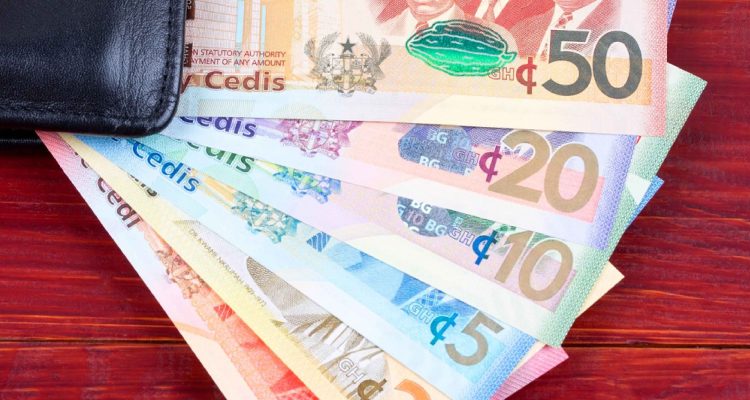
The Ghana cedi remains under renewed depreciation pressure, but the Bank of Ghana (BoG) has signalled it will allow the currency to adjust within a managed float regime, as long as volatility remains contained.
Speaking at the 130th Monetary Policy Committee (MPC) press briefing, Governor Dr. Johnson Asiama acknowledged that the local currency had weakened in recent weeks, driven largely by external shocks, seasonal demand patterns, and heightened foreign exchange (FX) demand.
The Governor said the central bank does not operate a fixed exchange rate system and has no intention of defending a specific level of the cedi. “The cedi is expected to move. It can depreciate or appreciate. Our concern is to avoid excessive volatility,” he stated.
This stance reinforces the BoG’s commitment to a managed float regime, where market forces largely determine the exchange rate, with the central bank intervening only to smooth sharp fluctuations.

The cedi is estimated to have depreciated by about 8.4% in the first five months of the year, raising concerns among businesses and investors about currency stability, even as macroeconomic fundamentals improve.
Dr. Asiama pointed to a combination of global and domestic factors behind the recent currency weakness.
These factors include rising global uncertainties, especially the ongoing geopolitical tensions in the Middle East, which have resulted in higher oil prices, increased cost of imports and greater demand for foreign exchange.
“The same volume of crude oil is costing more in foreign exchange terms,” the Governor noted, highlighting how global shocks are feeding into local currency pressures.
- Seasonal FX demand
The months of April and May typically coincide with:
- Corporate financial reporting cycles
- Dividend repatriation by foreign investors
These activities create spikes in demand for dollars, putting short-term strain on the cedi. “When dividends are repatriated, they are not sent in cedis but in U.S. dollars—and that affects the exchange rate,” he explained.
Stronger demand for imports
Increased economic activity and trade flows are also contributing to higher demand for FX, amplifying depreciation pressures. Despite the weakening trend, the BoG insists that Ghana’s external position remains strong, underpinned by a steady buildup of foreign reserves.
According to the Governor:
- •Net International Reserves (NIR) rose from about 12.43 billion currently
“We have the buffers. We are building them on a daily basis,” Dr. Asiama stressed.
The central bank believes these reserves will help it manage excessive volatility and provide confidence to the market, even if the cedi continues to fluctuate.
The BoG’s messaging suggests that aggressive FX interventions are unlikely, unless volatility becomes disorderly.
Instead, the bank appears focused on:
- Maintaining macro stability
- Strengthening liquidity management tools
- Allowing market-based adjustments
This reflects a broader shift toward policy credibility and reserve preservation, rather than short-term currency defence. The cedi’s performance remains closely linked to inflation dynamics. A weaker currency typically raises import costs, which can feed into domestic price pressures.
However, the MPC has opted to hold the policy rate at 14%, partly due to concerns that external shocks—including exchange rate movements—could reverse recent gains in inflation control. Dr. Asiama emphasized that fluctuations should not be interpreted as instability. “It is an endogenous variable. It is supposed to be flexible,” he reiterated.
Source: businesspostonline