

Ghanaian exporters are increasingly repositioning themselves to take advantage of opportunities under the African Continental Free Trade Area, with a growing number of businesses moving into value-added manufacturing and processed goods for continental markets.
The transition marks a significant shift in Ghana’s export strategy, as enterprises seek to reduce dependence on traditional markets in Europe and North America while leveraging preferential access to Africa’s integrated market.
According to officials, Ghana’s participation in the AfCFTA Guided Trade Initiative (GTI), launched in 2022, has accelerated commercial trade with countries outside West Africa. Under the initiative, Ghanaian firms have exported goods under preferential tariff arrangements to markets including Kenya, Rwanda, Egypt, Cameroon and South Africa.
Government officials say businesses are increasingly investing in packaging, branding, standards certification and logistics to comply with AfCFTA rules of origin and quality standards.

More than 700 Ghanaian products have already secured approval under the Guided Trade Initiative. These include processed foods, garments, cosmetics, pharmaceuticals, beverages and agro-processed products.
Trade experts note that AfCFTA is encouraging African economies to move beyond commodity exports toward industrialization and regional value chains.
Several Ghanaian firms operating in food processing, textiles, pharmaceuticals and personal care products have reportedly begun exporting to East and Southern African markets under the framework.
Officials from the Ministry of Trade, Agribusiness and Industry disclosed that around 30 Ghanaian companies are currently exporting under AfCFTA arrangements, while at least 14 firms are directly participating in the Guided Trade Initiative.
The government has also intensified institutional support for exporters through the National AfCFTA Coordination Office, which is providing assistance in customs documentation, export financing referrals, market intelligence and standards compliance.
Exporters are additionally being encouraged to adopt the Pan-African Payment and Settlement System (PAPSS), which allows intra-African trade payments without relying heavily on foreign currencies.
President John Dramani Mahama recently announced the Accelerated Export Development Programme (AEDP), aimed at tripling the number of Ghanaian firms certified under AfCFTA rules of origin while expanding export readiness training for SMEs, youth-led enterprises and women-owned businesses.
Speaking during the Ghana roadshow for the 2025 Intra-African Trade Fair, AfCFTA Secretary-General Wamkele Mene emphasized the importance of industrialization and value addition in making continental trade commercially meaningful.
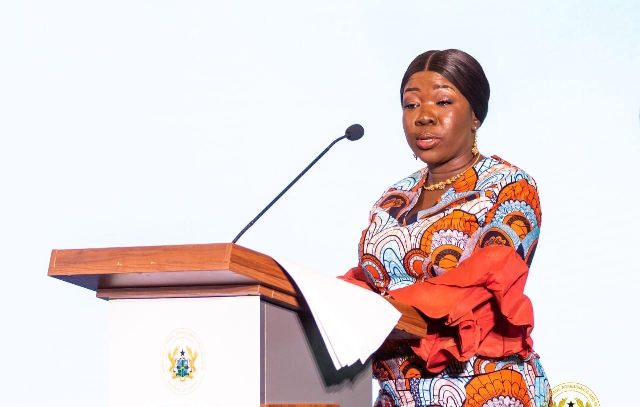
Ghana’s Minister for Trade, Agribusiness and Industry, Elizabeth Ofosu-Adjare, said government policy remains focused on creating an enabling environment through improved infrastructure, financing and market access support for exporters.
By: Toma Imirhe / businesspostonline