

Ghana’s import profile in the fourth quarter of 2025 remained heavily tilted toward energy products and second-hand vehicles, highlighting persistent structural dependencies in the economy despite a strong overall trade surplus.
According to the latest data from the Ghana Statistical Service, the country’s top five import products were led by motor spirit (super petrol), which alone accounted for GH¢6.4 billion, representing 10.4 percent of total imports in the period.
This was followed by gas oil (diesel) at GH¢4.5 billion (7.4 percent), reinforcing the dominant role of refined petroleum products in Ghana’s import basket. Together, these two fuel categories contributed GH¢10.9 billion, underscoring Ghana’s continued reliance on imported energy despite domestic crude production.
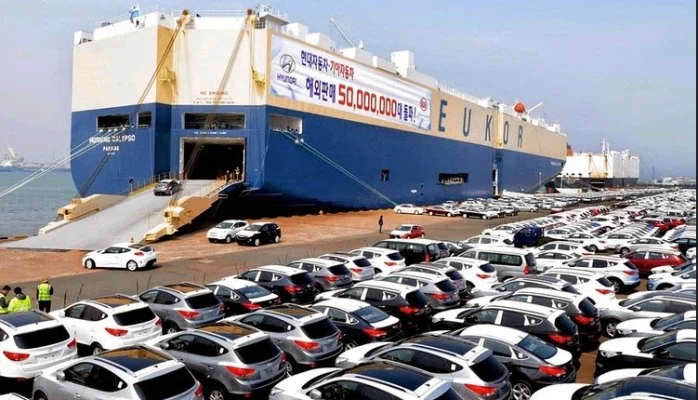
The third-largest import category was used vehicles with engine capacity between 1500cc and 3000cc, valued at GH¢3.1 billion (5.0 percent). This was followed by crude petroleum imports at GH¢2.3 billion (3.8 percent), suggesting ongoing gaps in local refining capacity.

Rounding out the top five were used vehicles with engine capacity between 1000cc and 1500cc, which recorded GH¢1.0 billion in imports, accounting for 1.6 percent of the total.
Looking at cumulative figures for the full year (Q1–Q4 2025), gas oil emerged as the leading import product, totaling GH¢28.5 billion and making up 11.2 percent of all imports. Motor spirit (super petrol) followed with GH¢23.2 billion (9.2 percent), confirming that fuel imports remain a central feature of Ghana’s trade structure.
Used vehicles in the higher engine category ranked third annually at GH¢9.3 billion, reflecting sustained consumer demand for imported cars, particularly in the second-hand market. Meanwhile, crude petroleum imports reached GH¢5.8 billion, and cement clinkers, a key input for the construction industry completed the top five at GH¢4.8 billion.
The data points to a dual challenge for policymakers: reducing dependence on imported fuel while managing the economic and environmental implications of high used-vehicle imports. The figures strengthen the case for investment in domestic refining capacity and transport sector reforms.
While Ghana recorded a strong trade surplus overall in Q4 2025, the composition of imports suggests that critical sectors particularly energy and transport remain vulnerable to external supply shocks and global price fluctuations.