

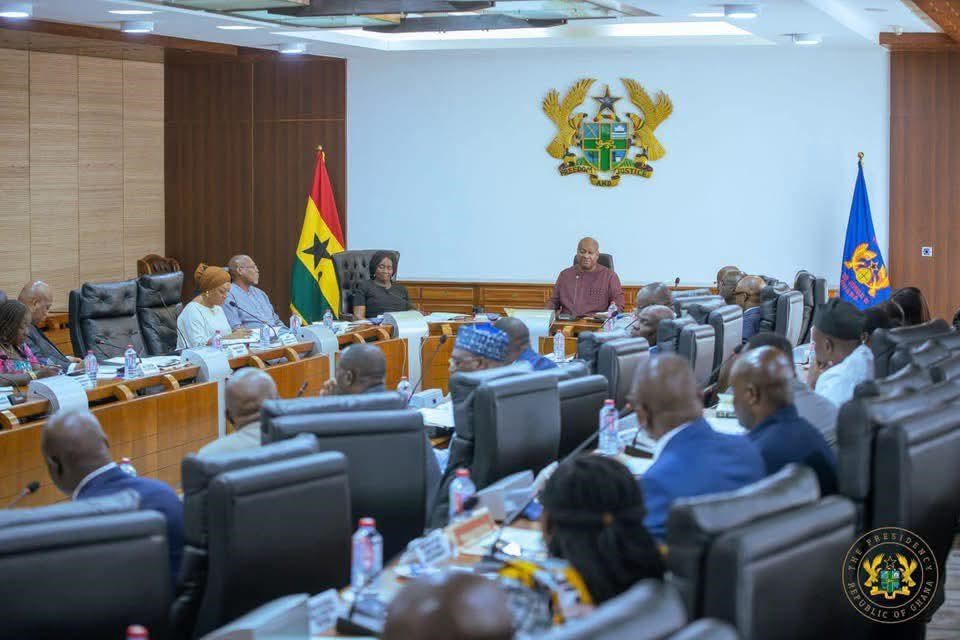
An emergency Cabinet meeting has directed immediate interventions aimed at cushioning Ghanaians against the rising cost of fuel, as government responds to pressures from global crude oil price movements linked to tensions in the Middle East.
At the end of the high-level session, Cabinet instructed the Ministers of Finance and Energy to take steps to ensure a reduction in fuel prices at the pump in the next pricing window.
This will be achieved through the temporary suspension of selected taxes and pricing margins within the petroleum pricing framework.
According to the Cabinet outcomes, details of the specific taxes and margins to be suspended will be formally announced at the next pricing window.

The relief measures are expected to last for an initial four-week period, after which they will be reviewed in line with developments in the Middle East conflict and trends in international crude oil prices.
The decision signals government’s intent to use fiscal levers in the short term to mitigate the impact of external shocks on domestic fuel prices and broader cost-of-living pressures.
In a parallel move to address transport costs, Cabinet has directed the Minister for Transport to expedite the deployment of 100 recently acquired Metro Mass Transit buses.
The buses are to be rolled out quickly on major high-traffic routes, adding to the existing fleet currently in operation.
Cabinet further instructed that fares on Metro Mass Transit buses must remain lower than those charged by private commercial transport operators.
This measure is expected to provide commuters with more affordable transport options and help moderate fare increases driven by fuel price volatility.
The Ministry of Transport has also been tasked with ensuring that the expanded fleet is properly maintained to guarantee reliability and safety on the roads.
As part of broader cost-control and leadership-by-example measures, Cabinet reaffirmed the President’s directive on the cancellation of fuel allocations and fuel allowances for political appointees.
All ministers and senior government appointees have been ordered to comply strictly with the directive, with no exemptions. The move is intended to reduce government expenditure and demonstrate shared sacrifice at a time of economic pressure.
Government officials say the interventions are designed as short-term relief measures while authorities closely monitor global developments affecting energy markets.
Cabinet emphasized that the situation remains fluid, warranting continuous assessment and possible adjustments to policy responses.
The next fuel pricing window is expected to provide clearer details on how the temporary tax and margin suspensions will translate into pump price reductions for consumers.
By: Christian Akorlie / businesspostonline