

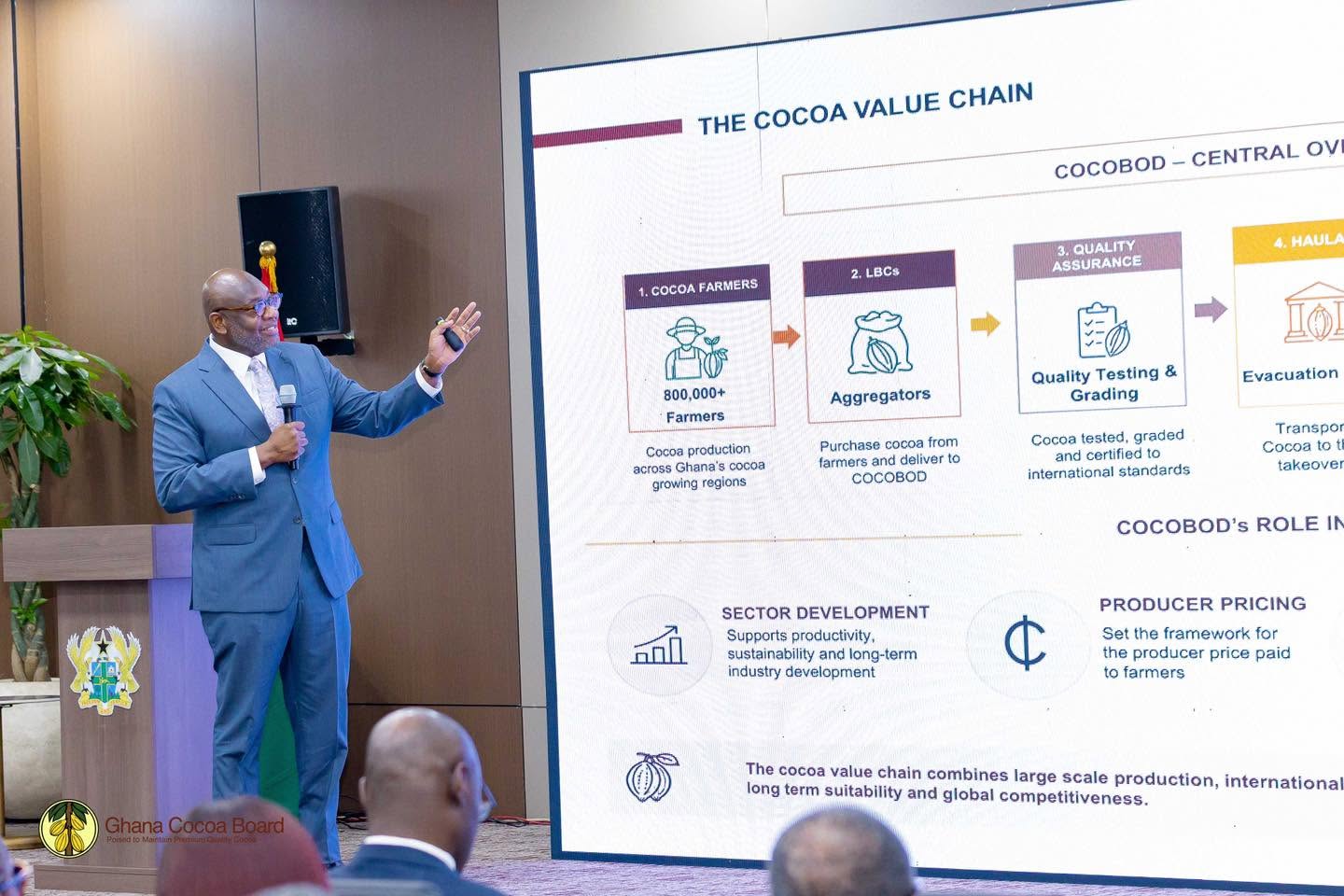
Cocoa Capital PLC, a special purpose vehicle established by the Ghana Cocoa Board (COCOBOD), is seeking to raise up to GH¢16.3billion through a new domestic note programme aimed at financing seasonal cocoa purchases and refinancing existing cocoa-related obligations.
The programme marks a significant shift in the financing model of Ghana’s cocoa sector, moving away from the offshore syndicated loan structures that supported cocoa purchases for more than three decades and toward funding sourced from the domestic capital market.
According to an investor presentation for the programme, the issuance will comprise a combination of commercial paper with tenors of up to 270 days and bonds with maturities of up to five years, to be listed on the Ghana Fixed Income Market (GFIM).
New funding model

The transaction is structured around Cocoa Capital PLC, incorporated in August 2026 as a dedicated financing vehicle wholly owned by COCOBOD.
The SPV will issue the securities and hold assigned cocoa export receivables that are expected to provide the primary source of repayment for investors.
Under the proposed structure, approximately GH¢14billion will be raised through commercial paper to support cocoa purchases during the crop season, while GH¢2.3billion will be used to refinance eligible cocoa bonds.
The programme introduces what COCOBOD describes as a domestic capital market platform capable of providing recurring financing for the cocoa sector while reducing reliance on international borrowing.
Export receivables underpin repayment
A key feature of the transaction is the assignment of export receivables generated from selected forward cocoa sales contracts.
COCOBOD, through its marketing operations, will identify eligible export contracts and assign the resulting receivables to Cocoa Capital PLC. Collections from these receivables will be channelled into ring-fenced transaction accounts and applied through a predefined payment waterfall.
The structure also incorporates several investor protections, including a minimum receivables coverage ratio of 1.2 times debt service obligations, controlled collection accounts, trustee oversight and a dedicated bond debt-service buffer account.
The issuer has been assigned an indicative A (Stable) rating, while the commercial paper is rated ST1 (Stable).
Cocoa sector recovery strengthens outlook
The programme comes at a time when COCOBOD is reporting a substantial improvement in its financial performance.
The investor presentation shows that total operating revenue rose to GH¢48.6billion in FY2025, more than three times the GH¢15.8billion recorded in FY2024. Total assets increased to GHS30billion, while net profit margin improved to 10.4 percent from a negative 35.1 percent the previous year.
The turnaround was supported by stronger cocoa prices and a recovery in production. Cocoa output increased by 33.1 percent to 603,840 tonnes in FY2025, while the achieved FOB cocoa price rose sharply to US$5,174 per tonne.
COCOBOD notes that provisional production data for FY2026 has already reached approximately 771,000 tonnes, exceeding its original forecast of 650,000 tonnes.
The presentation projects continued improvements in production volumes and gross FOB revenues over the medium term, supported by ongoing sector reforms and favourable cocoa prices.
Reforms underpin strategy
The note programme forms part of broader reforms being implemented across the cocoa sector.
These measures include strengthening financial management, eliminating quasi-fiscal spending, establishing a cocoa sector debt sinking fund and leveraging domestic market liquidity to finance cocoa purchases.
COCOBOD says the reforms are intended to improve the sector’s financial sustainability, reduce debt burdens over time and enhance the institution’s credit profile.
Investor appeal
The programme is being marketed to banks, pension funds, insurance companies, stockbrokers, high-net-worth individuals and other institutional investors.
Investment highlights presented to investors include exposure to one of Ghana’s most strategic export sectors, repayment supported by identified export receivables, robust structural protections and diversified fixed-income investment opportunities.
Ghana’s cocoa sector remains one of the country’s leading foreign exchange earners, generating between US$3billion and US$4billion annually and supporting more than 800,000 cocoa farming families.
With the launch of the Cocoa Note Programme, COCOBOD is positioning domestic capital markets at the centre of cocoa financing, creating what it describes as a more sustainable funding framework for the country’s most iconic agricultural export sector.
Source: businesspostonline