

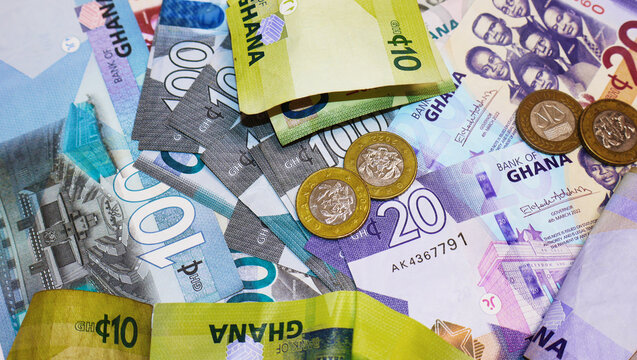
The Ghana cedi continued its downward trend against major international currencies over the past two weeks, as strong demand for foreign exchange outweighed substantial market support from the Bank of Ghana.
The local currency weakened to GH¢11.85 per US dollar on the interbank market, compared with GH¢11.63 during the previous review period. It also depreciated against the British pound and the euro, which traded at GH¢15.85 and GH¢13.66 respectively, up from GH¢15.62 and GH¢13.49.
The retail market reflected a similar pattern, with the cedi losing 0.81 percent against the dollar, 1.83 percent against the pound and 1.40 percent against the euro. It closed the period at average mid-market rates of GH¢12.30 to the dollar, GH¢16.35 to the pound and GH¢14.30 to the euro.
The latest decline comes despite the Bank of Ghana’s intervention of approximately US$1.1 billion in May 2026 to support liquidity in the foreign exchange market and moderate excessive volatility. Data shows that the cedi depreciated by an average of 4.18 percent between April and May 2026, higher than the 3.23 percent decline recorded in the previous month.

Market analysts attribute the pressure on the local currency to persistent demand for dollars amid relatively limited foreign exchange supply. According to Databank Research, bearish market sentiment and elevated demand for hard currencies continue to drive adjustments in exchange rates across the market.
The research firm noted that rising global crude oil prices have increased import costs, forcing central banks and market participants in several economies to seek additional dollar liquidity to finance imports and external obligations.
Looking ahead, Databank expects the cedi to remain under pressure despite the Bank of Ghana’s decision to increase its forex support programme to US$1.2 billion for June 2026.
While the additional foreign exchange supply is expected to help contain speculative activity, analysts believe corporate demand for dollars could intensify as multinational companies enter the peak dividend and profit repatriation season during the second quarter of the year.
“We expect the dollar-cedi exchange rate to weaken beyond GH¢11.85 on the interbank market as foreign exchange demand rises during the period of dividend and profit transfers by multinational firms,” the report said.
At the start of the new week, the cedi was trading at approximately GH¢12.40 to the dollar at forex bureaus, extending recent losses against the US currency.
Market observers will be monitoring whether the central bank’s enhanced forex interventions, coupled with Ghana’s strong reserve position, will be sufficient to ease demand pressures and stabilize the currency in the coming weeks.
Source: businesspostonline