

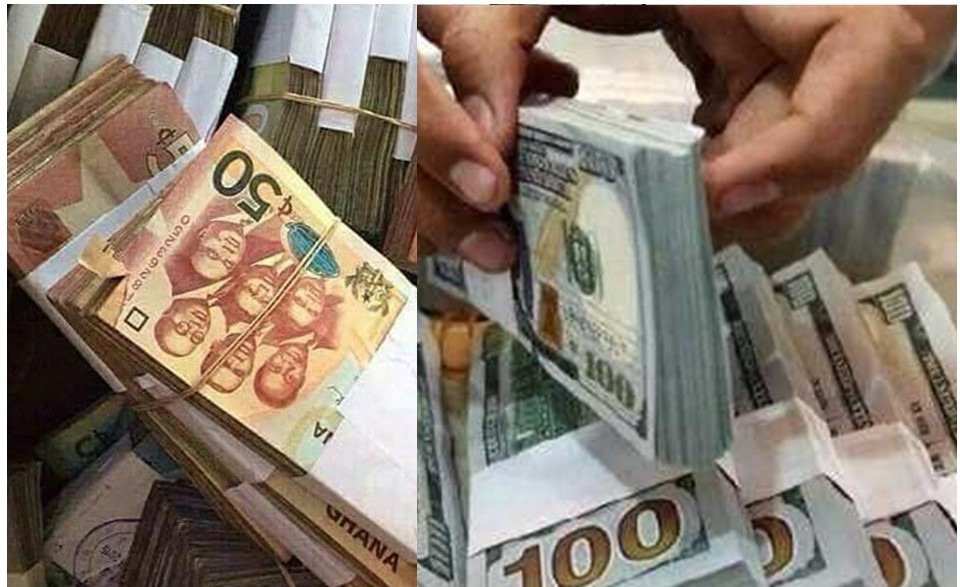
The Bank of Ghana (BoG) has increased its foreign exchange support to the market for June 2026, announcing plans to auction up to US$1.2 billion to commercial banks as the cedi faces renewed depreciation pressures.
The allocation represents a 20 percent increase over the US$1 billion sold under the central bank’s Forex Intermediation Programme in May and signals the Bank’s readiness to ensure adequate foreign exchange liquidity in the market.
Although the central bank did not directly link the higher allocation to the recent weakening of the cedi, market observers believe the move is aimed at easing pressure on the local currency and supporting orderly market conditions.
Cedi under pressure

The cedi has experienced a notable decline in recent weeks, with data from the Bank of Ghana showing a year-to-date depreciation of 10.91 percent against the US dollar.
The current performance contrasts sharply with the same period in 2025, when the local currency had appreciated by more than 20 percent following strong foreign exchange inflows and improving investor confidence.
According to the central bank, the recent weakness is largely the result of seasonal foreign exchange demand rather than any deterioration in the country’s economic fundamentals.
Officials point to heightened demand from the energy sector and increased dividend repatriation by multinational companies as the primary drivers of current market pressures.
Rising oil import bill fuels dollar demand
A key factor behind the growing demand for foreign exchange is the sharp increase in Ghana’s petroleum import bill.
Figures contained in the Bank of Ghana’s latest Summary of Economic and Financial Data show that the country’s oil import expenditure rose from US$1.6 billion in April 2025 to US$2 billion in April 2026.
The increase has been driven by higher global crude oil prices following geopolitical tensions in the Middle East, which have disrupted energy markets and raised the cost of fuel imports worldwide.
As Ghana relies heavily on imported refined petroleum products, the increase has significantly boosted demand for dollars by bulk importers and energy sector participants.
In addition, many multinational firms operating in Ghana are currently entering their annual dividend payment period, resulting in increased foreign exchange purchases for profit repatriation.
Together, these factors have intensified pressure on the local currency.
New forex framework takes effect
The Bank of Ghana disclosed that its market operations will now be guided by a newly approved Foreign Exchange Operations Framework designed to strengthen transparency, support reserve accumulation and improve the effectiveness of interventions.
Under the framework, the central bank will continue to provide foreign exchange through competitive auctions while retaining the flexibility to intervene when necessary to address excessive market volatility.
The framework also complements the Bank’s foreign exchange intermediation activities linked to the Domestic Gold Purchase Programme, which has become a significant source of reserve growth.
In a circular issued to banks, the central bank indicated that future monthly auction volumes will be determined by prevailing market conditions.
The Bank emphasized that all foreign exchange sales conducted in May were executed through transparent, twice-weekly auctions accessible to all licensed commercial banks and clarified that no direct interventions were undertaken during the month.
Strong reserves provide comfort
Despite current market pressures, the Bank of Ghana maintains that the country remains well-positioned to manage foreign exchange demand.
Gross international reserves stood at approximately US$14.42 billion at the end of May 2026, providing a substantial buffer against external shocks and seasonal demand fluctuations.