

Ghana is emerging as a global leader in digital identity infrastructure, with its national identification system now ranked among the world’s most advanced and fully integrated, according to Moses Kwesi Baiden Jnr., Founder and Chief Executive Officer of Margins ID Group.
Speaking at the 2026 ID4Africa Annual General Meeting in Abidjan, Côte d’Ivoire, Mr. Baiden said Ghana had moved beyond a traditional ID card programme to build a robust digital public infrastructure underpinning key sectors of the economy.
“The objective was never just to issue cards. Ghana designed interoperability into the system from day one,” he said during a keynote address on linking the Ghana Card across national platforms.
His remarks position Ghana within a narrow group of countries — including Estonia, India, Singapore and the United Arab Emirates — that have built highly integrated identity ecosystems capable of supporting digital economies at scale.

With approximately 19.4 million citizens enrolled and adult coverage exceeding 92 percent, the Ghana Card has reached near-universal national scale.
More significantly, over 262 institutions — spanning banking, telecommunications, healthcare, taxation, transport and social protection — are now integrated with the platform.
This level of integration has transformed the Ghana Card into a foundational layer of the country’s digital infrastructure, enabling identity verification, service delivery and secure transactions across both public and private sectors.
“Every citizen now effectively has a digital identity through which they interact with services and institutions,” Mr. Baiden noted.
Industry analysts say the system’s breadth mirrors developments in advanced economies where national ID platforms function as gateways to financial inclusion, e-government services, healthcare access and digital commerce.
The financial sector has been one of the biggest beneficiaries of the Ghana Card ecosystem. Its integration into Know Your Customer (KYC) frameworks has streamlined onboarding processes, strengthened verification protocols and significantly curtailed identity-related fraud.
Beyond banking, the platform is deeply embedded in major public institutions, including the National Health Insurance Authority (NHIA), the Ghana Revenue Authority (GRA) and the Driver and Vehicle Licensing Authority (DVLA).
Economists say the expanding integration is improving efficiency in service delivery while enhancing transparency, data integrity and accountability across government systems.
Globally, digital identity is increasingly recognised as critical economic infrastructure — on par with roads, electricity and telecommunications — given its role in supporting secure transactions, targeted social interventions and effective tax administration.
While highlighting Ghana’s gains, Mr. Baiden stressed that successful interoperability went beyond technology, requiring strong governance frameworks, legal identity systems, cybersecurity safeguards and institutional coordination.
“A trusted identity begins with a legal identity,” he said, warning that weak governance can expose digital systems to vulnerabilities.
“Interoperability without trust is simply risk exposure,” he added.
Ghana’s model operates under a public-private partnership between the National Identification Authority (NIA) and Margins ID Group, through its subsidiary Identity Management Systems II.
Under this arrangement, the NIA retains sovereign oversight over governance, regulation and data protection, while Margins is responsible for designing, financing and operating the technical infrastructure.
Observers at the ID4Africa forum described the model as a standout example of African-designed and African-operated digital infrastructure functioning successfully at national scale.
Mr. Baiden also underscored Africa’s potential to leapfrog legacy systems that have slowed digital transformation in more developed markets.
“Africa has the opportunity to build identity ecosystems designed for today’s realities, not yesterday’s constraints,” he said.
The sentiment reflects a broader shift among African technology leaders, who increasingly see the continent as capable of leading in next-generation digital public infrastructure — provided investments are matched with strong governance.
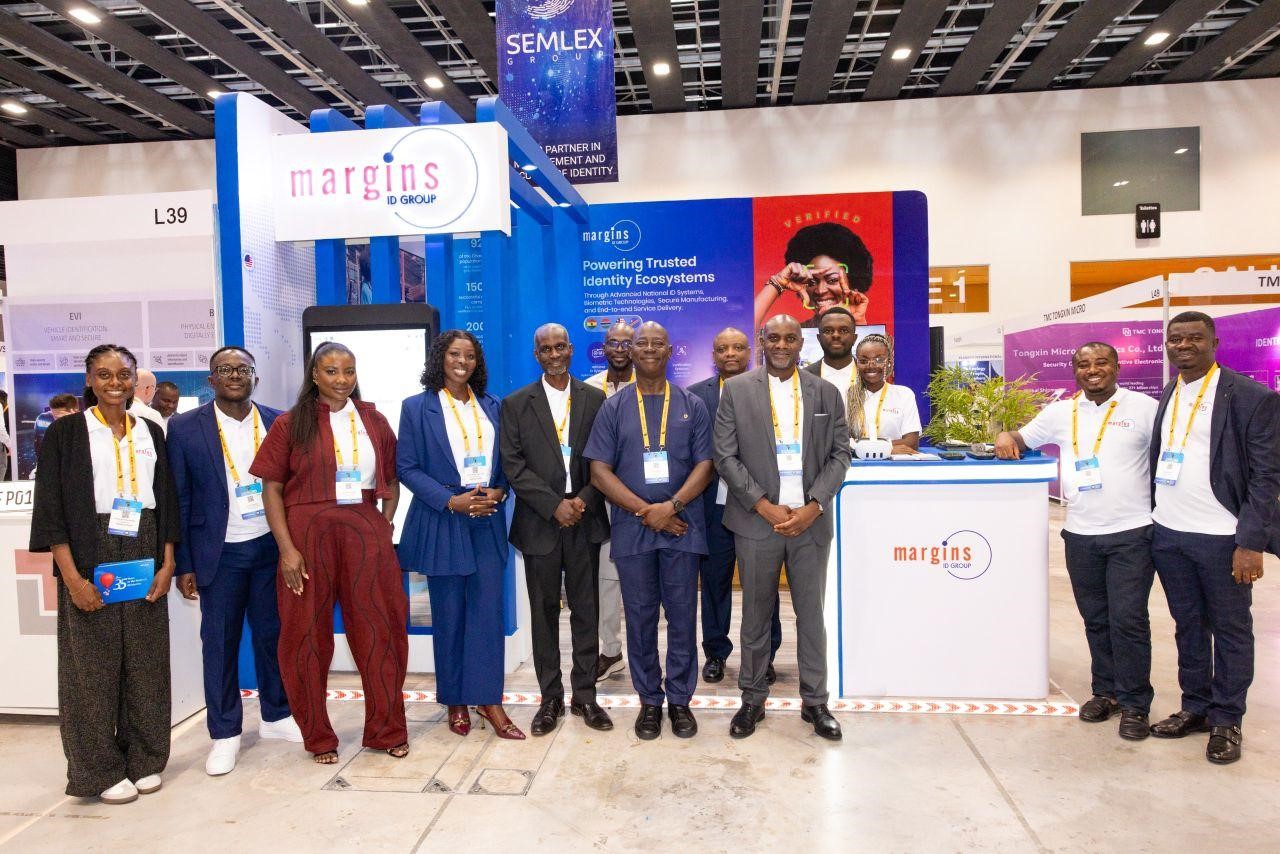
Margins ID Group reinforced its position at the conference with a major exhibition, showcasing biometric technologies, secure manufacturing and integrated identity solutions to delegates from over 100 countries.
Ghana’s presence at ID4Africa 2026 further cemented its rising reputation as a continental leader in trusted digital systems.
For decades, Africa has largely been a consumer of imported identity technologies. Ghana’s model, however, signals a shift — demonstrating that African firms can design, finance and operate complex national infrastructure systems.
Analysts believe the Ghana Card could become one of the country’s most consequential digital transformation projects, with implications extending far beyond identity management into financial services, governance and economic inclusion.
As governments globally accelerate investment in digital economies, Ghana’s interoperable identity ecosystem is positioning the country not just as a participant — but as an emerging leader in the global digital infrastructure space.
Source: businesspostonline