

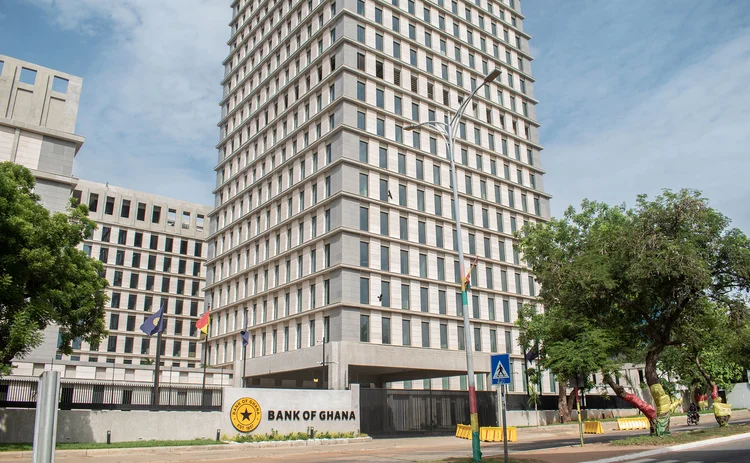
The Bank of Ghana is expected to report another year of financial losses in its 2025 accounts, reflecting the cost of measures taken to stabilize the economy during a challenging macroeconomic period.
Governor Johnson Asiama has acknowledged that the forthcoming accounts will show the financial impact of interventions aimed at maintaining price stability and supporting financial markets.
“These actions carry financial implications, but they were essential in the broader national interest,” he said during a recent engagement.
The expected losses follow a pattern established in recent years. Under former governor Ernest Addison, the central bank recorded historically large deficits, driven largely by participation in the domestic debt exchange programme and foreign exchange interventions.

Indeed, the expected losses in the 2025 accounts will inevitably invite comparisons with the tenure of the immediate past Governor, Dr Ernest Addison, under whom the Bank recorded historically large losses of GH¢60.86 billion in 2022 and GH¢10.50 billion in 2023.
Economists note that such outcomes are common for central banks during periods of economic stress. Liquidity support operations, exchange rate stabilization efforts and high interest rate environments often lead to accounting losses, even when policies are effective.
In Ghana’s case, several factors are expected to weigh on the central bank’s balance sheet. These include continued liquidity injections into the banking sector, costs associated with defending the cedi, and interest rate mismatches between assets and liabilities.
Additionally, the residual impact of domestic debt restructuring continues to affect the central bank’s financial position.
The result is a prolonged period of negative equity for the central bank, raising questions about its capital adequacy and the need for recapitalization by the government.
Officials at the Ministry of Finance have acknowledged ongoing discussions around restoring the central bank’s capital base, though any such move must be aligned with fiscal consolidation efforts under the International Monetary Fund programme.
Despite these challenges, experts emphasize that central banks can operate effectively even with negative equity, provided they maintain policy credibility and strong institutional backing.
Globally, central banks including the Bank of England have faced similar pressures in recent years.
The key issue, analysts say, is ensuring that losses are clearly explained and accompanied by credible plans for restoring financial buffers over time.
Although the release of the 2025 accounts has been delayed, the central bank has indicated that publication is imminent. When released, the report is expected to provide insight into both the costs of stabilization policies and the outlook for the institution’s financial position.
For now, attention remains focused on how the central bank balances its financial sustainability with its core mandate of maintaining economic stability.
By: Toma Imirhe / businesspostonline