

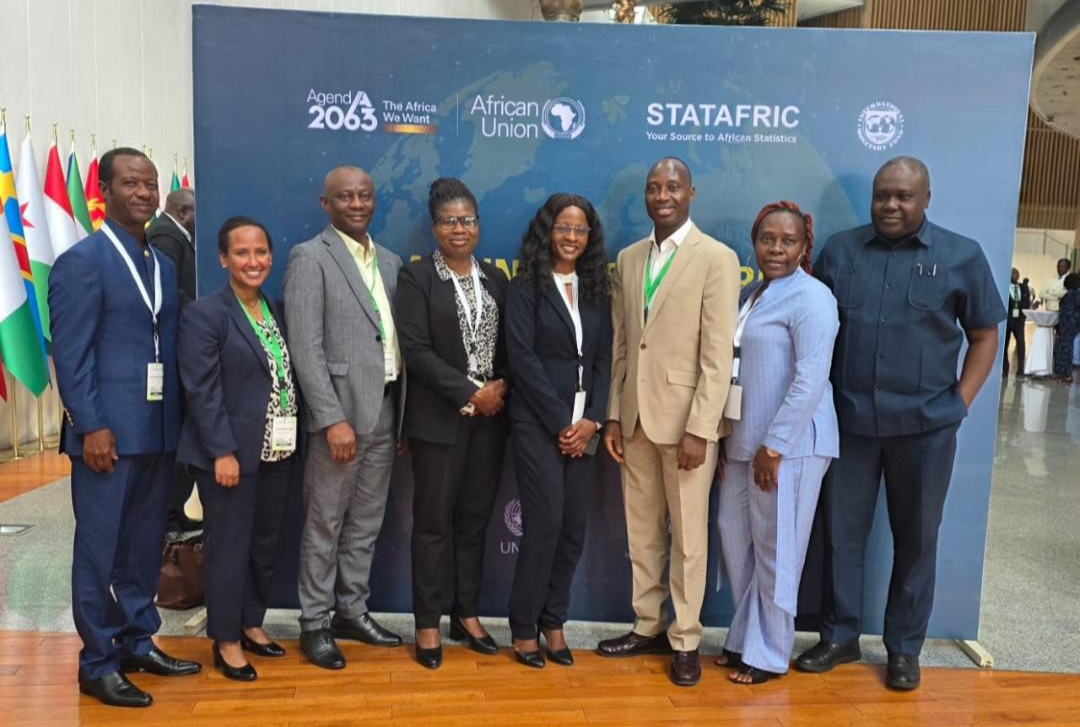
Government Statistician, Dr. Alhassan Iddrisu, has called for a fundamental reset of Ghana’s economic measurement systems as the country prepares for the implementation of the System of National Accounts 2025 (SNA 2025) and the Balance of Payments Manual 7 (BPM7)—new global standards expected to significantly redefine how economies are measured.
In a post following a high‑level engagement involving Statistician‑Generals, Central Bank leaders and international development partners, Dr. Iddrisu warned that reliance on outdated statistical frameworks risks undermining effective economic governance.
“The economy has changed, and our statistics must catch up,” he said. “If we measure wrong, we govern wrong.”
Dr. Iddrisu noted that Ghana’s current GDP measurement framework, largely based on SNA 2008, no longer adequately captured the structure of a modern economy.

He explained that economic activity had shifted toward areas such as the digital economy, mobile money, informal sector participation, global financial flows and natural resource use, many of which remained under‑measured or invisible in existing datasets.
According to him, SNA 2025 and BPM7 will move countries beyond a narrow focus on output toward a broader assessment of real value creation, risk and sustainability.
“These reforms are not about rebasing GDP alone,” Dr. Iddrisu said. “They are about understanding who benefits from growth, how sustainable that growth is, and what risks are building beneath the surface.”
Drawing on lessons from the implementation of SNA 2008 and BPM6, Dr. Iddrisu cautioned against treating the new standards as a compliance exercise.
He identified persistent challenges that undermined past reform efforts, including weak inter‑institutional coordination, outdated statistical and IT systems, underinvestment in human and data infrastructure, and a ‘tick‑box’ approach to implementation.
“Without strong coordination and sustained investment, reforms remain cosmetic,” he said.
Dr. Iddrisu emphasised that successful adoption of SNA 2025 and BPM7 would require deliberate national leadership and careful planning.
He outlined key success factors, including the development of a clear national implementation roadmap, early and sustained stakeholder engagement, and investment in people, systems and data integration.
He also stressed the importance of clear communication, noting that major statistical revisions could have implications for public perception, debt ratios and investor confidence.
“When numbers change, trust matters,” he said. “We must explain not just what has changed, but why.”
For Ghana, Dr. Iddrisu said the transition presents a strategic opportunity to strengthen policymaking and improve economic credibility.
Better measurement of the informal and digital economy, he noted, would provide a more accurate picture of employment, productivity and household activity.
He added that integrating environmental and natural resource accounting into national statistics would support more sustainable fiscal and development planning.
“We are moving from measuring output to measuring value,” he said. “That includes recognising data as an asset, understanding inequality, and accounting for the depletion of our natural resources.”
While acknowledging the readiness of development partners to support the transition, Dr. Iddrisu stressed that ownership must remain firmly with national authorities.
“Global partners are ready to support, but countries must lead,” he said. “This is ultimately about national priorities and national accountability.”
The engagement concluded with a shared view that high‑quality statistics are not merely technical tools, but a foundation for economic transformation.
“Better data leads to better decisions, and better decisions lead to better lives,” Dr. Iddrisu said.
As Ghana moves toward the adoption of SNA 2025 and BPM7, stakeholders agree that resetting how the economy is measured will be critical to shaping effective policy and long‑term development outcomes.
“Let’s get this right,” Dr. Iddrisu urged. “Let’s measure Ghana right.”
Source: businesspostonline