

The Ghana Statistical Service (GSS) has, for the first time, released comprehensive national data on mobile and open‑space businesses as part of Phase I of the 2024 Integrated Business Establishment Survey (IBES I).
The new reports expand the country’s official business statistics to include enterprises that operate outside fixed structures, a segment long recognised in daily economic activity but largely absent from formal records.
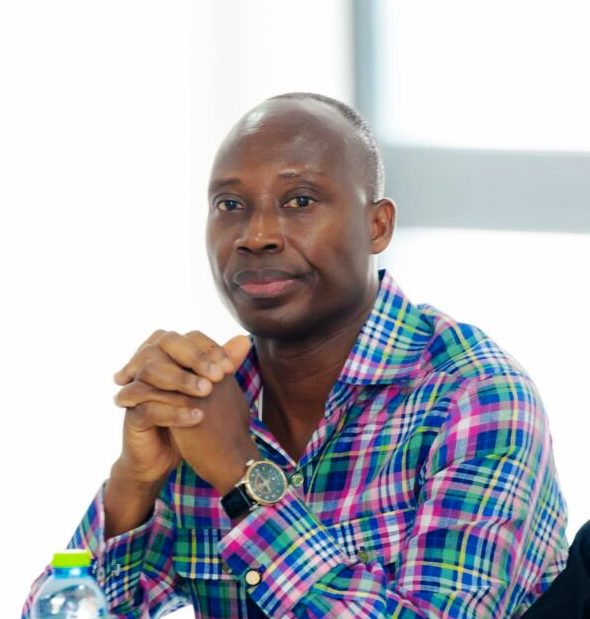
Presenting the findings in Accra, the Government Statistician, Dr. Alhassan Iddrisu, said the data “extends the boundary of official statistics” to capture the full spectrum of business operations nationwide.
He said the inclusion of mobile and open‑space businesses provided critical insights for policy formulation, employment planning and economic development.

The IBES I recorded 2.64 million businesses in total, made up of 1.87 million fixed establishments (70.6 percent), 693,748 open‑space businesses (26.2 percent), and 82,920 mobile businesses (3.1 percent).
The findings showed that nearly one-third of businesses in Ghana operate informally in open or mobile environments.
The report identified 82,920 mobile operators, with women representing 77.5 percent (64,237) of the total.
Youth aged 15 to 35 years formed almost 60 per cent, confirming mobile trading as a major source of income for young people.
Greater Accra and Ashanti regions accounted for 50.4 percent of all mobile operators. District‑level data showed Accra Metropolitan recording 5,321 operators, followed by Kumasi Metropolitan with 3,792.
The GSS expressed concern over the involvement of 2,087 children aged 10 to 14, 80 percent of whom were girls, in mobile trading.
The Service urged stronger enforcement of child protection laws and support systems to keep children in school.
The study also revealed that more than a third of mobile traders work nine hours or more per day, yet 57 percent earn less than GH₵100 daily, with most dealing in food items.
The IBES I counted 693,748 open‑space businesses, employing 922,177 workers across the country. Women dominated both ownership and labour, forming 84 percent of business owners and 79.5 percent of workers.
The majority of the businesses—68.4 percent—operate in food and beverage trade, with non‑food retail accounting for 15.5 percent and services 16.0 percent.
About 53,000 open‑space businesses operate as mobile money agents.
Regionally, Greater Accra hosts 23.5 percent of open‑space enterprises, followed by Ashanti (17.1 percent) and Central (10.7 percent).
Most businesses have operated for an average of 73 months, or roughly six years, indicating long‑term resilience.
The data showed that six per cent of mobile operators were non‑Ghanaian, with concentrations highest in border regions such as Upper West (15 percent), Volta (10.7 percent), North East (10.4 percent), and Northern (10.1 percent). The GSS said these patterns reflect active cross‑border trade and mobility of goods and services.
Key challenges and policy relevance
Despite their significant contribution to livelihoods and local commerce, mobile and open‑space businesses continue to face challenges, including limited access to finance, harsh weather conditions, inadequate infrastructure, and income instability.
Dr. Iddrisu called for increased investment in market infrastructure, microcredit expansion, digital payment systems, business training and youth entrepreneurship programmes.
He also urged strict enforcement of child labour laws.
The 2024 IBES I forms part of Ghana’s national economic census aimed at producing timely and accurate data on the structure of businesses and employment.
The country was mapped into 10,240 Enumeration Zones using the 2021 Population and Housing Census framework. Data collection was conducted using Computer‑Assisted Personal Interviewing (CAPI) technologies with built‑in validation systems.
Source: businesspostonline