

The Bank of Ghana (BoG) has cautioned that escalating geopolitical tensions in the Middle East could undermine Ghana’s recent inflation gains, despite strong signs of domestic economic stabilisation.
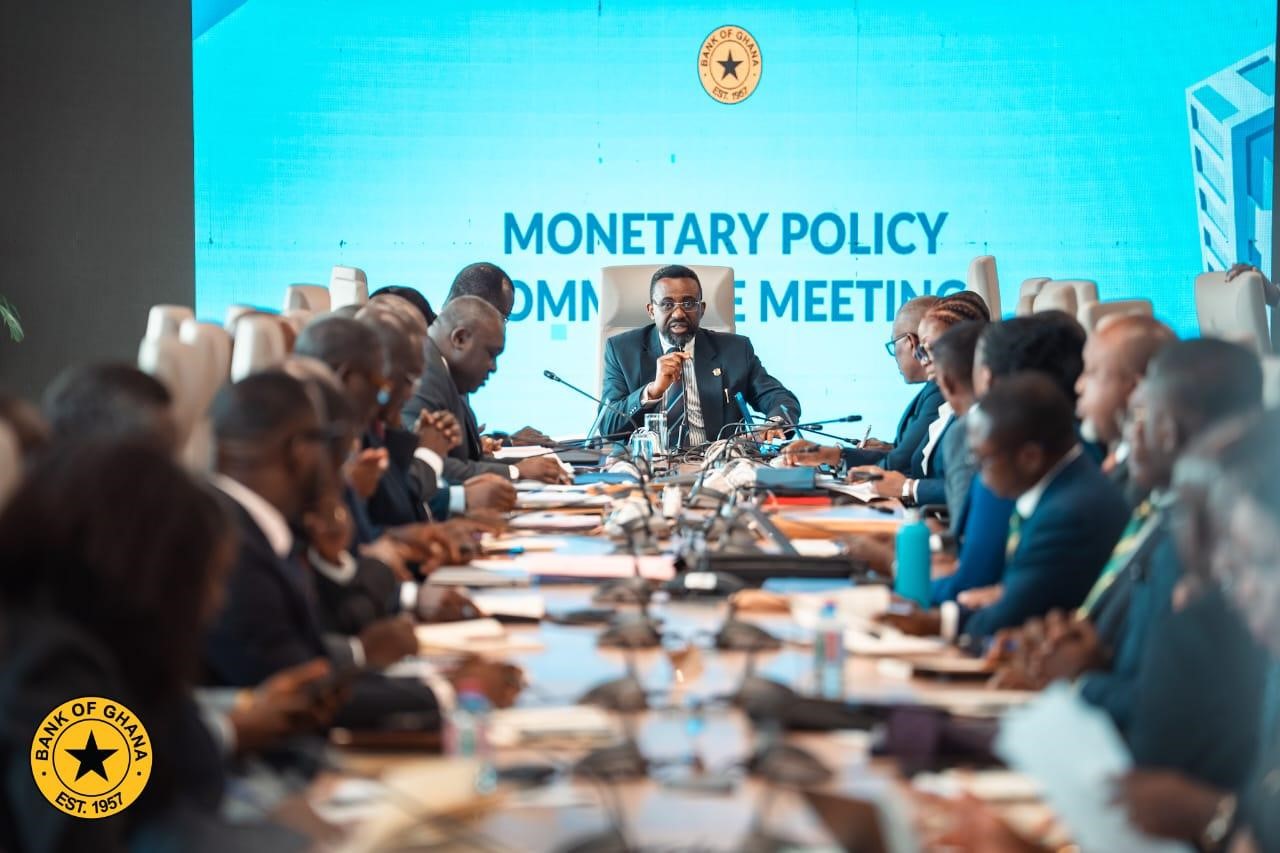
Opening the 129th Monetary Policy Committee (MPC) meeting in Accra on Monday, the Governor of the Bank of Ghana, Dr. Johnson Pandit Asiama, said the external environment had become more uncertain since the Committee last met in January, with rising risks to global energy prices and inflation.
Dr. Asiama noted that while Ghana’s macroeconomic indicators had improved significantly, developments in the Middle East were disrupting key energy and shipping corridors, increasing volatility in global oil markets and posing a renewed threat of imported inflation.
“For Ghana, the spillover channels are clear,” he said. “Sustained oil price increases raise the risk of imported inflation, which could necessitate policy tightening with implications for financial conditions.”

The Governor explained that although geopolitical uncertainty often supported higher gold prices, which could benefit Ghana’s trade balance, the overall balance of risks from the current external shock remained inflationary.
Dr. Asiama said recent data pointed to faster-than-expected economic stabilisation.
Headline inflation declined to 3.3 percent in February 2026, marking the fourteenth consecutive monthly decline and bringing inflation below the Bank’s medium-term target band.
“These are numbers that, not long ago, would have been considered aspirational,” he said. He added that external buffers had also strengthened, with gross international reserves rising to about US$14.5 billion, equivalent to 5.8 months of import cover, compared to about US$13.8 billion at the time of the January MPC meeting.
The real sector continued to show improved momentum. The Composite Index of Economic Activity grew by 8.4 per cent year-on-year at the start of 2026, supported by stronger bank credit, industrial output, trade activity and household consumption. Consumer and business confidence also improved in February, reflecting easing inflationary pressures.
Dr. Asiama said the improved domestic conditions had made the policy decision more complex, as the Committee now had to balance internal progress against heightened external risks.
“When we met earlier this year, the question before us was whether stabilisation was taking hold,” he said. “Today, the question is how we sustain these gains while navigating a more uncertain global environment.”
He urged members of the Committee to consider carefully the geopolitical risk channel and its implications for monetary policy calibration, noting that the external shock facing Ghana today differed from the conditions prevailing in January.
The Governor also highlighted the Government’s newly announced Ghana Accelerated National Reserve Accumulation Programme (GANRAP), which aims to raise international reserves to 15 months of import cover by 2028, from the current level of about 5.8 months.
While strengthening external buffers was important for macroeconomic resilience, Dr. Asiama said the initiative raised issues relating to liquidity conditions, the Bank’s balance sheet and the interaction between reserve accumulation and monetary policy operations.
He further noted that the banking sector remained sound, profitable and well-capitalised, with improving asset quality, which supported effective monetary policy transmission to the real economy.
Dr. Asiama stressed that the MPC’s task was not only to manage crises but also to manage success, ensuring that recent gains were sustained under different global scenarios.
“The question before this Committee is not whether conditions have improved — they have,” he said. “It is how we respond to that improvement when the conditions that enabled it are under pressure.”
He expressed confidence that the Committee’s deliberations would result in a policy decision capable of withstanding evolving global uncertainties.
Source: businesspostonline