

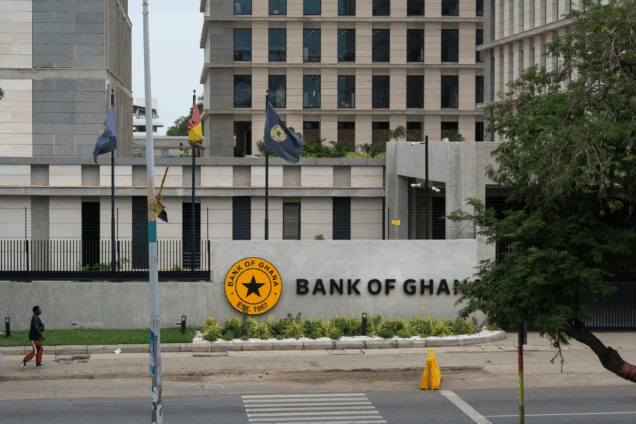
Governor of the Bank of Ghana (BoG), Dr. Johnson Pandit Asiama, has signalled growing concern over escalating global economic uncertainties, particularly the prolonged Middle East conflict, as the Monetary Policy Committee (MPC) considers whether to maintain or cut the policy rate.
Addressing the opening of the committee’s latest meeting, Dr. Asiama noted that while domestic economic conditions remain stable and broadly positive, external developments continue to present significant risks that could influence the central bank’s policy stance.
“The committee’s task during this meeting is to judge whether the balance of risk has shifted enough to warrant a different policy response, or whether there remains a case for still maintaining the policy rate at its current level,” he said.
According to the Governor, the dominant issue facing the global economy remains the Middle East crisis, which has entered its seventh month and continues to evolve in ways that could have far-reaching economic consequences.

He disclosed that Brent crude oil prices, which stood above US$85 per barrel when the MPC last met, had risen sharply to around US$107 per barrel as of last week – the highest level in four months. The increase, he noted, comes amid declining global oil inventories, raising concerns about inflationary pressures worldwide.
For Ghana, Dr. Asiama described the global environment as a “double-edged sword”.
On one hand, higher gold prices are supporting export earnings, reserve accumulation and government revenue. On the other hand, rising energy and fertiliser import costs could quickly feed into transportation expenses, production costs and consumer prices.
“These opposing channels will require close monitoring as the committee assesses the implications for domestic inflation and growth,” he stated.
Despite mounting external risks, the Governor said Ghana’s domestic macroeconomic conditions remain resilient.
Headline inflation stood at 5 percent in August, remaining well below the Bank of Ghana’s target range of 8–10 percent. He attributed this performance largely to exchange rate stability, which has helped contain imported inflation and moderate inflation expectations across households, businesses and financial market participants.
“The domestic position affords policy space indeed, but the external position determines how much of it can safely be used,” Dr. Asiama remarked, stressing that rebuilding net foreign reserves must remain a key priority heading into the fourth quarter of the year.
The Governor identified three critical issues that will shape discussions during the MPC meeting.
The first concerns the inflation outlook. While inflation remains below the target band, it has increased from a low of 3.2 percent in March to 5 percent in August – a cumulative rise of 1.8 percentage points over five months.
Although the current level remains benign, he said policymakers must determine whether the recent increase represents a temporary adjustment or signals the beginning of more persistent inflationary pressures that could affect expectations.
“The question before this committee is whether the expected rise over the coming months will be a one-off adjustment or the start of more persistent pressure that could unsettle expectations,” he explained.
The second issue relates to Ghana’s external position. Dr. Asiama pointed to a weaker current account balance, declining foreign reserves and a pause in gold exports by GoldBod since August as factors requiring close attention.
These developments, he warned, come at a time when demand for foreign exchange typically rises in the final quarter of the year, underscoring the need for stronger reserve buffers.
“Rebuilding reserves will be a key priority for the bank in the coming months,” he said.
The third issue centres on fiscal developments and their interaction with monetary policy. According to the Governor, increased government spending for the remainder of the year could lead to a higher share of short-term domestic borrowing. At the same time, progress on external debt restructuring could result in rising debt service obligations.
Both developments, he indicated, could have implications for liquidity conditions and exchange rate stability.
As deliberations continue, Dr. Asiama said the central question before policymakers remains whether the current 14 percent policy rate continues to provide an effective anchor for inflation expectations amid competing domestic and external pressures.
“The question before us, colleagues, as it was in July, is whether the current policy rate of 14 percent remains the appropriate anchor for inflation expectations, given this balance of forces, and whether any adjustment is warranted at all,” he concluded.
The MPC’s decision is expected to provide a key signal on how the central bank intends to navigate rising global uncertainties while preserving Ghana’s recent gains in inflation control and macroeconomic stability.
Source: businesspostonline