

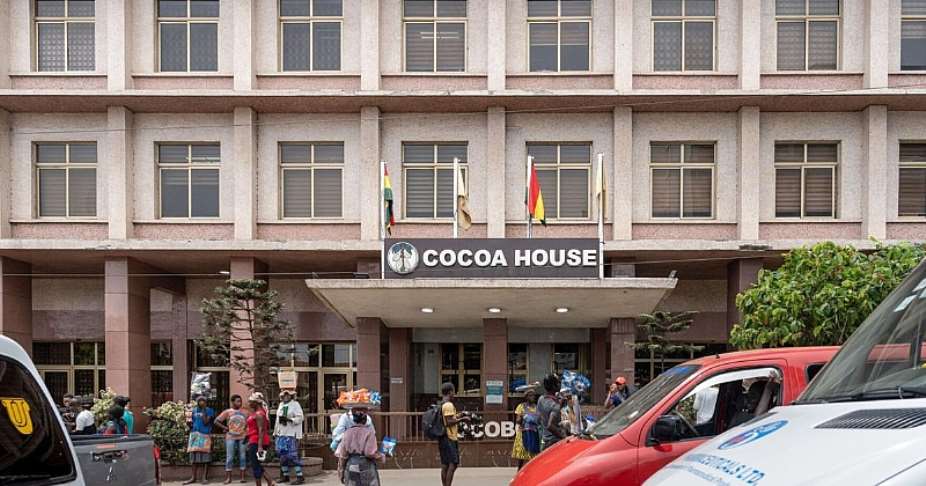
The Deputy Minister of Finance, Thomas Ampem Nyarko, has attributed the Ghana Cocoa Board’s (COCOBOD) outstanding debts to fertiliser and agrochemical suppliers to longstanding financial and structural challenges within the cocoa sector.
Speaking in Parliament, Mr. Ampem Nyarko explained that the liabilities accumulated between 2021 and 2024 stem from procurement commitments that consistently exceeded approved budget allocations during successive crop seasons.
According to him, COCOBOD procured agrochemicals worth US$455.7 million during the 2021/2022 crop season, despite having budgeted only US$312.8 million for that purpose.
He noted that the financial burden deepened in subsequent years as the Board continued to procure fertilisers and agrochemicals even though payments for previous supplies remained outstanding.

“The agrochemicals procured for the 2021/2022 season were not paid for, yet COCOBOD continued to procure additional quantities in 2022, 2023 and 2024, with spending exceeding the approved budgets each year,” he told Parliament.
Mr. Ampem Nyarko further revealed that the gap between budgeted expenditure and actual procurement widened significantly during the 2023/2024 crop season. While COCOBOD allocated US$76.5 million for agrochemical purchases, it entered into procurement contracts worth approximately US$668.6 million.
He also questioned the effectiveness of the increased spending, pointing out that cocoa production declined despite the substantial rise in purchases of fertilisers and agrochemicals.
“While expenditure on these inputs continued to increase, cocoa output was falling, raising legitimate questions about their utilisation,” he stated.
The Deputy Finance Minister stressed that COCOBOD’s indebtedness should be viewed as part of broader inherited financial difficulties confronting the cocoa industry rather than as an isolated problem.
He said government has initiated reforms to restore the Board’s financial sustainability, improve procurement practices and strengthen payment systems to ensure suppliers are paid promptly and consistently.
According to him, the reforms are intended to rebuild COCOBOD’s financial capacity, enhance transparency and accountability, and place Ghana’s cocoa sector on a more sustainable footing.
“Our objective is to create a system where suppliers are paid predictably, transparently and on time, while ensuring the long-term viability of the cocoa industry,” he added.
The comments come amid heightened public scrutiny of COCOBOD’s financial position and renewed calls for stronger oversight of procurement and expenditure within the cocoa sector.
Source: businesspostonline