

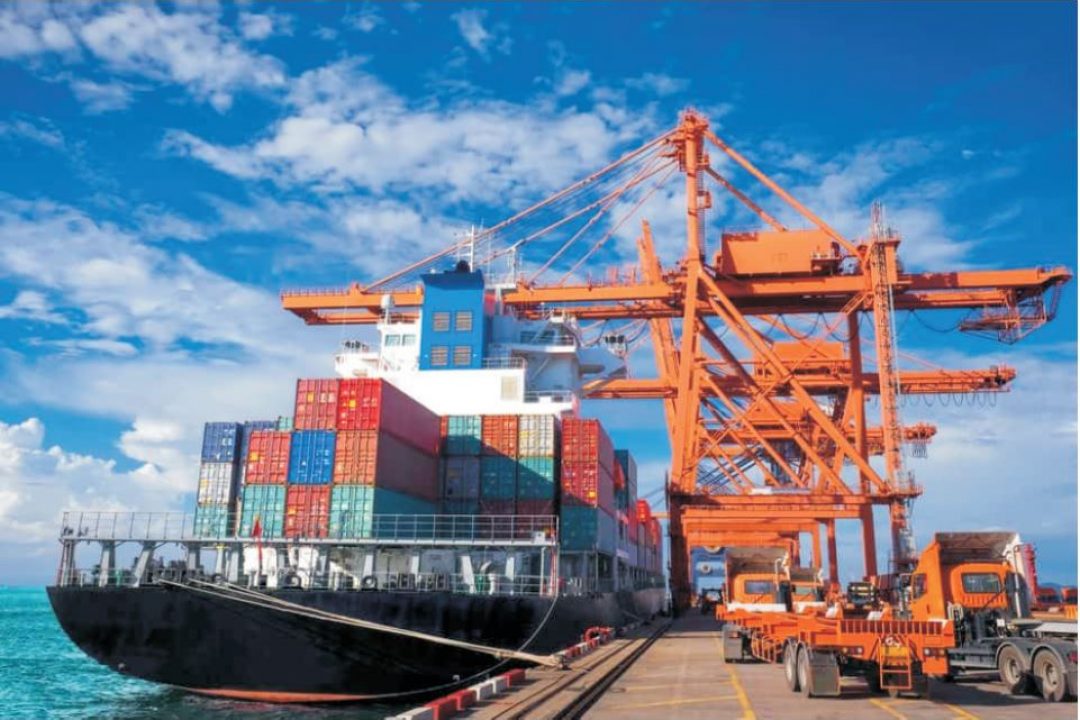
Ghana recorded a strong trade performance in the first quarter of 2026, posting a trade surplus of GH¢46.1 billion (US$4.3 billion) as export earnings continued to outpace import expenditure, according to insights from the Ghana Statistical Service (GSS) 2026 First Quarter Trade Newsletter.
The country’s exports reached GH¢110.3 billion (US$10.2 billion) during the period, while imports stood at GH¢64.2 billion (US$5.9 billion). The figures indicate that for every GH¢100 earned from exports, Ghana spent approximately GH¢58 on imports, reflecting a favourable trade balance.
Government Statistician Dr. Alhassan Iddrisu described the results as a strong position that the country should seek to consolidate.
“The first quarter trade performance demonstrates Ghana’s capacity to generate substantial foreign exchange earnings and maintain a positive trade balance,” the newsletter noted.

Gold remains dominant export driver
Despite the impressive surplus, the report highlighted significant structural weaknesses within Ghana’s export sector, particularly the heavy reliance on a few commodities.
Gold remained by far the country’s leading export, generating GH¢63.7 billion (US$5.9 billion) during the quarter. The report further revealed that the top five export products accounted for 86.5 percent of total exports, underscoring the narrow base of Ghana’s export earnings.
The concentration extends beyond products to markets. According to the GSS, India and Switzerland jointly absorbed more than one-third of Ghana’s exports during the review period.
“When earnings depend on so few products and markets, a single price swing reaches the whole economy,” Dr. Iddrisu observed.
The Government Statistician used the report to reiterate the need for Ghana to broaden its export base and strengthen value addition across key sectors.
According to Dr. Iddrisu, the country’s long-term trade resilience will depend on reducing reliance on raw commodity exports such as gold, crude petroleum and cocoa beans, while expanding the production and export of processed and higher-value goods.
“The evidence points one way: diversify what we export, add value here at home, and deepen regional value chains,” he stated.
He further urged businesses and policymakers to leverage opportunities presented by the African Continental Free Trade Area (AfCFTA), positioning regional markets as a strategic priority for future export growth.
Building resilience through value addition
The GSS believes that sustainable trade growth will require greater investment in industrialisation, manufacturing and value-added processing.
Such measures could help Ghana capture more value from its natural resources, create jobs and reduce exposure to global commodity cycles.
Dr. Iddrisu emphasised that trade becomes truly resilient only when it is not dependent on “a handful of commodities and a handful of partners.”
While Ghana’s first-quarter trade numbers provide an encouraging outlook for foreign exchange earnings and economic stability, the report suggests that the next phase of growth will depend on how effectively the country can diversify exports, deepen regional trade integration and expand its industrial base.
By: Christian Akorlie / businesspostonline