

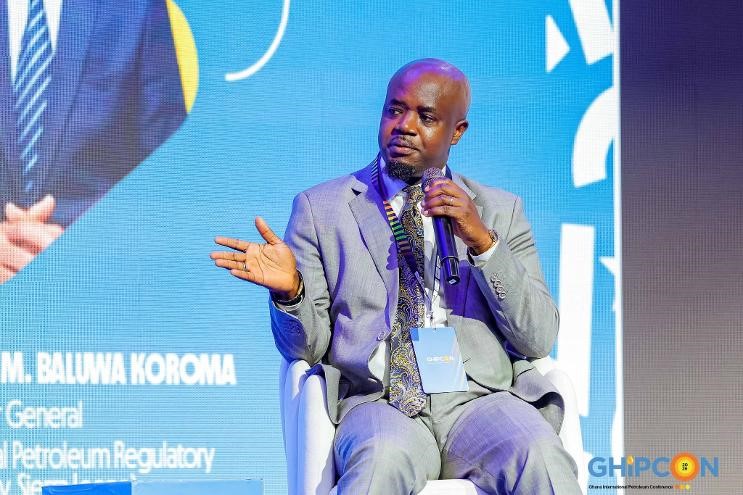
More than 1,500 policymakers, regulators, investors and energy industry leaders from over 25 countries converged in Accra last week for the 2026 Ghana International Petroleum Conference (GhIPCon), where discussions centred on strengthening Africa’s downstream petroleum industry against global market disruptions while positioning Ghana as a regional petroleum hub.
The two-day conference, held on July 16 and 17 at the Palms Convention Centre of the La Palm Royal Beach Hotel, brought together key stakeholders under the theme “Building a Resilient Downstream: Policy, Innovation and Investment for Growth.” The event concluded with the second Ghana Downstream Awards and Gala Night at the Kempinski Gold Coast City Hotel on July 18.
Organised by the National Petroleum Authority (NPA) in collaboration with the Chamber of Bulk Oil Distributors (CBOD) and the Chamber of Oil Marketing Companies (COMAC), under the auspices of the Ministry of Energy and Green Transition, the conference reinforced Ghana’s growing influence in shaping energy policy and investment discussions across Africa.
Government outlines refining ambitions

A major highlight of the conference was government’s renewed commitment to expanding domestic refining capacity as part of efforts to reduce dependence on imported petroleum products.
Delivering the keynote address on behalf of President John Dramani Mahama, Minister for Energy and Green Transition, Dr. John Abdulai Jinapor, announced government’s target of producing 70 percent of Ghana’s refined fuel requirements locally through the expansion of both the Tema Oil Refinery (TOR) and the privately-owned Sentuo Oil Refinery.
He disclosed that government had already allocated one million barrels of Jubilee crude oil to local refineries to support domestic processing, describing the move as part of a broader strategy to transform Ghana from a crude oil exporter into a value-added petroleum economy.
According to the Minister, the expansion of local refining capacity will reduce fuel imports, improve foreign exchange management, strengthen energy security and create employment opportunities throughout the petroleum value chain.
The Tema Oil Refinery, which resumed operations in December 2025 after years of inactivity, currently processes about 28,000 barrels of crude oil per day against an installed capacity of 45,000 barrels. Meanwhile, Sentuo Oil Refinery, which commenced operations in January 2024, currently processes about 40,000 barrels daily and is expected to increase capacity to 100,000 barrels per day following a US$200 million expansion programme.
Dr. Jinapor also announced encouraging developments in the upstream sector, revealing that crude oil production at the Jubilee Field has risen to about 95,000 barrels per day following renewed investment and improved field management. He further disclosed that negotiations on the long-awaited Petroleum Hub project in the Jomoro Municipality are nearing completion.
Building resilience beyond fuel supply
Opening the conference, Chief Executive of the National Petroleum Authority, Godwin Edudzi Tamakloe, stressed that resilience in the downstream petroleum industry extends beyond maintaining adequate fuel supplies.
According to him, building a resilient sector requires investments in infrastructure, stronger institutions, operational efficiency and policies capable of responding effectively to changing global market conditions.
He noted that geopolitical tensions, supply chain disruptions, technological advancements and the global transition towards cleaner energy continue to reshape the petroleum landscape, making resilience more important than ever.
“This year’s theme could not be more timely or relevant. Recent geopolitical tensions make this year’s conference even more important as we seek innovative solutions to attract investment and create buffers against external shocks in the fuel supply chain,” he said.
Mr. Tamakloe also called for accelerated adoption of digital technologies, automation, smart logistics and data-driven regulation, while urging both government and the private sector to sustain investments in modern infrastructure and human capital.
He reiterated that the downstream petroleum sector contributes about 10 percent of Ghana’s Gross Domestic Product, making it one of the country’s key economic pillars.
Platform for policy and investment
GhIPCon 2026 provided an opportunity for regulators, policymakers and industry players to deliberate on key issues affecting Africa’s downstream petroleum industry.
Among the major issues discussed were regulatory reforms, energy security, infrastructure financing, regional trade under the African Continental Free Trade Area (AfCFTA), local content development, environmental sustainability and technological innovation.
Participants also examined proposed reforms to Ghana’s petroleum regulatory framework, including plans to repeal the National Petroleum Authority Act, 2005 (Act 691), and introduce a new local content policy aimed at increasing Ghanaian participation in the downstream industry.
The conference also attracted representatives from regional organisations, including Zambia’s Energy Regulation Board, who participated to exchange experiences and benchmark regulatory best practices across the continent.
Strong industry participation
The event drew several prominent personalities from Ghana’s petroleum industry and across Africa.
Among them were NPA Chief Executive Godwin Edudzi Tamakloe and his deputy Dr. Sheila Addo, Chief Executive of the Chamber of Bulk Oil Distributors Dr. Patrick Ofori, Chief Executive of the Chamber of Oil Marketing Companies Dr. Riverson Oppong, Chief Executive of the African Refiners and Distributors Association Anibor O. Kragha, Chief Executive of CITAC Africa Gary Steel, former Minerals Commission Chief Executive Tony Aubynn and former NPA Chief Executive Mustapha Hamid.
Leading financial institutions, including Fidelity Bank Ghana, also supported the conference as corporate sponsors.
Recognising industry excellence
The conference concluded with the 2026 Ghana Downstream Awards, which celebrated innovation, operational excellence and outstanding performance across the petroleum value chain.
Sentuo Oil Refinery received the Refining Company of the Year award, while Star Oil emerged as Oil Marketing Company of the Year.
Other winners included J.K. Horgle Transport & Company as Transporter of the Year, Duah Bochie Training & Transport Company as Emerging Transporter of the Year, Matrix Gas Ghana Limited as Emerging Company of the Year, Juwel Energy Limited as Bulk Distributor of the Year, and Moari Oil Company as Emerging Oil Marketing Company of the Year.
Petroleum Warehousing and Supplies Limited (PWSL) also received a special recognition award for its contribution to Ghana’s downstream petroleum industry.
Looking ahead
As Africa seeks to strengthen energy security amid growing geopolitical uncertainties and the global energy transition, GhIPCon 2026 underscored Ghana’s ambition to become a leading regional petroleum hub.
The conference demonstrated growing consensus among policymakers and industry leaders that achieving this goal will require sustained investment, regulatory reforms, stronger regional cooperation and accelerated adoption of technology to build a competitive and resilient downstream petroleum sector capable of supporting long-term economic growth.
Source: businesspostonline