

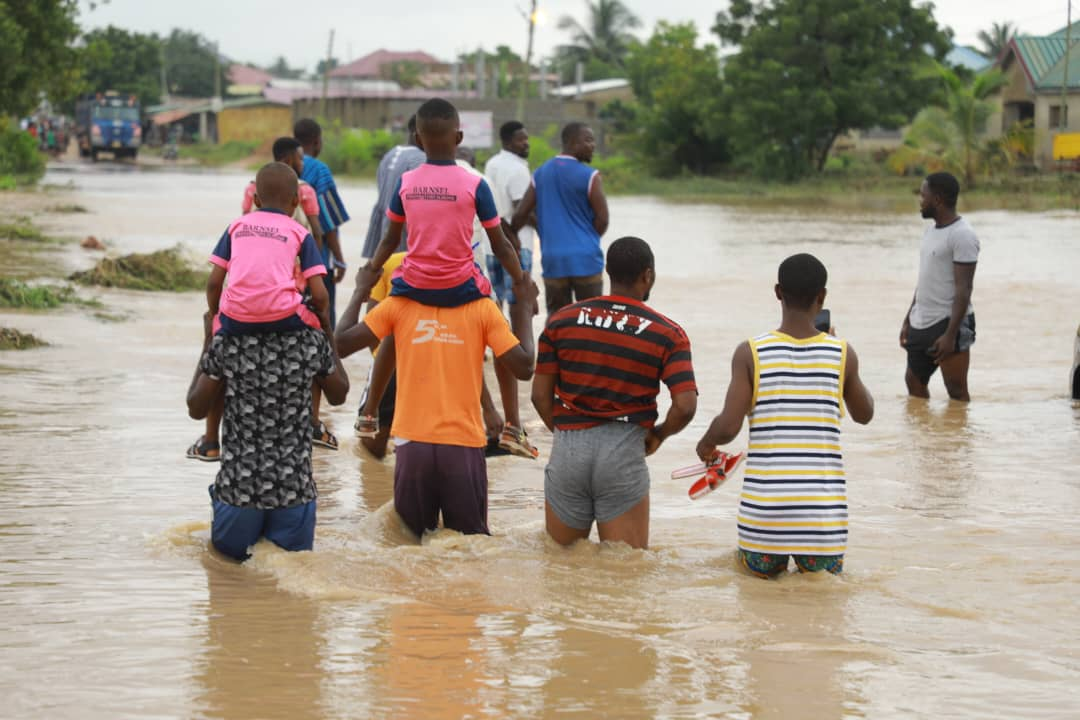
Growing concern over persistent flooding, sanitation challenges, and urban resilience in Ghana’s capital has triggered renewed calls for a comprehensive impact evaluation of roughly US$655 million in World Bank-supported projects implemented over the past 15 years.
The funding, largely structured as loans, was intended to strengthen flood management systems, improve sanitation infrastructure, and enhance climate resilience across the Greater Accra Metropolitan Area (GAMA).
However, stakeholders say the time has come to rigorously assess whether these investments have translated into measurable outcomes on the ground.
Between 2013 and 2024, Ghana secured multiple financing packages under two flagship programmes:

- 2013 — Greater Accra Metropolitan Area Sanitation and Water Project: US$150 million
- 2019 — Greater Accra Resilient and Integrated Development (GARID) Project: US$200 million
- 2020 — GAMA Additional Financing: US$125 million
- 2023 — GARID Additional Financing: US$150 million
- 2024 — GAMA Second Additional Financing: US$30 million
These projects were designed to tackle perennial flooding—especially in low-lying communities—while addressing solid waste management, stormwater drainage, and urban planning deficits.
Despite the layered financing, Accra continues to experience seasonal flooding, often with devastating consequences for households and businesses. Flood events in Accra remain a recurring challenge, with informal settlements, poor drainage maintenance, and rapid urbanisation cited as key risk drivers.
Urban policy analysts argue that while infrastructure interventions have been implemented—including drainage channels, retention basins, and improved waste collection systems—the scale of impact relative to investment remains unclear.
“There is visible work in some areas, but the broader question is whether these projects have fundamentally reduced flood risk across the metropolis,” said an urban governance researcher familiar with donor-funded programmes.
Experts are now calling for a shift beyond expenditure tracking to results-based impact evaluation.
Such an assessment would examine reduction in flood incidence and severity, improvements in sanitation access and waste management efficiency and cost-effectiveness of investments, sustainability of infrastructure and maintenance systems as well as institutional capacity gains within metropolitan assemblies.
Critically, analysts want to establish whether the projects have delivered long-term resilience rather than short-term fixes.
The call for evaluation is also tied to Ghana’s broader fiscal pressures. With a significant portion of the financing structured as loans, questions are being raised about value for money and the returns on public borrowing.
“Every borrowed dollar must show tangible benefit,” said a public finance advocate. “At a time of fiscal consolidation, the country cannot afford projects where outcomes are unclear or underwhelming.”
Preliminary assessments by sector observers point to potential bottlenecks affecting impact:
- Fragmented coordination among multiple agencies
- Encroachment on waterways and flood plains, undermining infrastructure effectiveness
- Maintenance gaps in drainage systems
- Delays in project execution and procurement processes
- Community compliance issues, particularly with waste disposal practices
These structural challenges may have diluted the effectiveness of otherwise well-funded interventions.
Civil society organisations are also advocating for greater transparency in project reporting, including public access to performance data and independent audits.
“Citizens need to see the linkage between financing and real improvements in their communities,” one civil society leader noted.
Policy experts suggest that an independent, comprehensive impact review—potentially involving multilateral partners, academia, and local stakeholders—could identify gaps in implementation, inform redesign of future urban resilience projects, strengthen accountability mechanisms and guide better allocation of limited public resources.
As climate risks intensify and urban populations expand, the stakes for effective infrastructure investment are rising.
Source: businesspostonline