

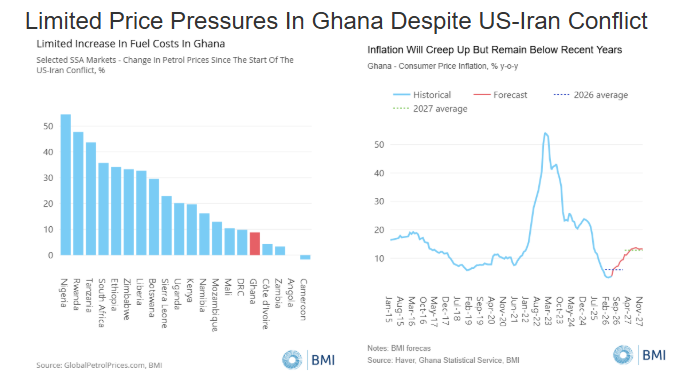
Ghana’s inflation is expected to average 12.8 percent in 2027, up sharply from a projected 6.0 percent in 2026, as easing exchange rate gains, weather-related risks and external economic pressures push consumer prices higher, according to Fitch Solutions.
In its latest assessment of Ghana’s economy, the UK-based research firm warned that the anticipated rise in inflation would erode household purchasing power and weigh on private consumption next year.
It noted that one of the major downside risks stems from the possibility of a tighter-than-expected monetary policy stance by the US Federal Reserve in response to persistent inflation in the United States.
According to Fitch Solutions, higher US interest rates could dampen global gold prices, reducing Ghana’s export earnings and placing renewed pressure on the cedi.

“This would put pressure on the cedi, resulting in higher inflation than we currently forecast and a corresponding drag on household consumption and broader economic activity in the second half of 2026 and into 2027,” the report stated.
The firm observed that Ghana’s relatively low inflation environment in early 2026 has been supported largely by the cedi’s appreciation, which helped reduce imported inflation by lowering the cost of imported goods.
However, it cautioned that this favourable effect is unlikely to persist as the statistical base from the cedi’s sharp appreciation in early 2025 fades during the second half of 2026.
Fitch Solutions also identified weather-related risks as another key driver of inflation. It expects the emergence of the El Niño weather pattern later this year to reduce rainfall and increase temperatures, leading to lower agricultural output and higher food prices.
The report added that adverse weather conditions could also affect cocoa production and reduce water levels at the Akosombo Dam, potentially disrupting electricity generation.
Meanwhile, Ghana’s inflation rate edged up to 3.7 percent in May 2026 from 3.4 percent in April, largely reflecting seasonal food supply constraints and less favourable base effects.
Soyurce: businesspostonline