

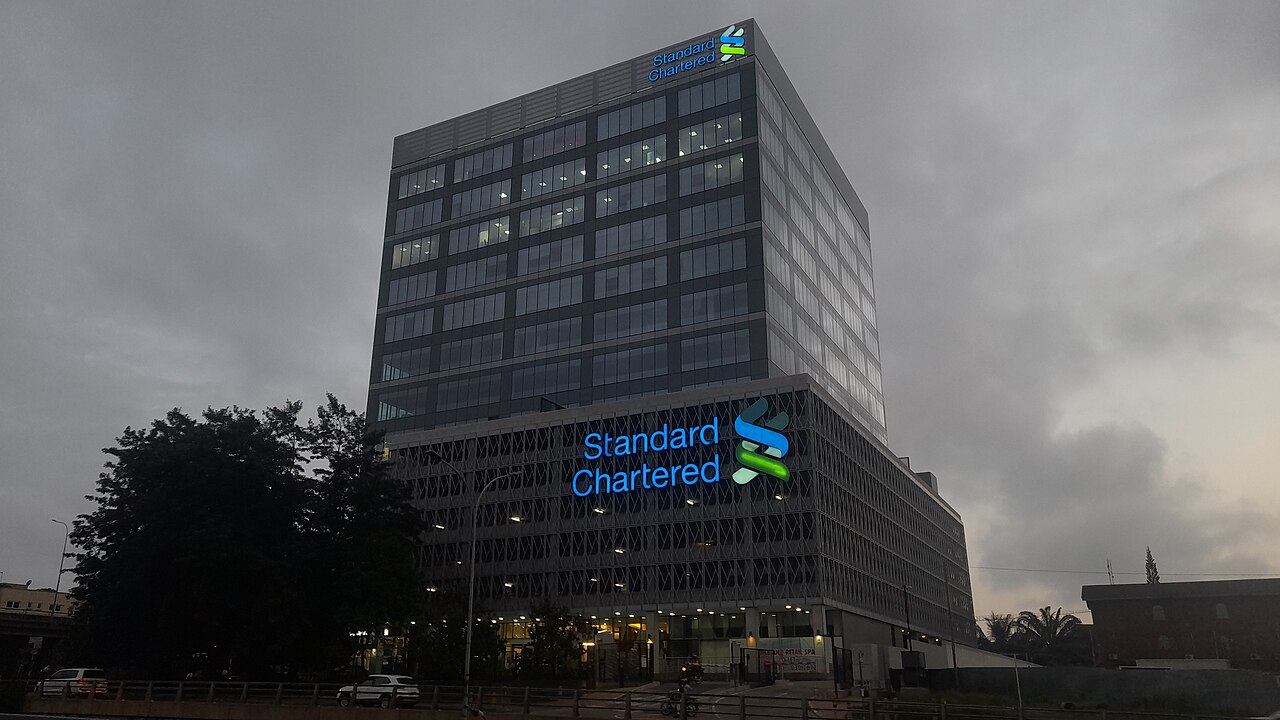
Standard Chartered PLC has announced plans to explore the sale of its Wealth and Retail Banking (WRB) business in Ghana, as part of a broader strategy to streamline operations and concentrate on higher-return segments aligned with its international footprint.
The London-listed banking group said the move forms part of its ongoing portfolio review aimed at sharpening its focus on business lines and client segments where it enjoys scale and a distinct competitive edge.
The proposed divestment will not affect the bank’s Corporate and Investment Banking (CIB) operations in Ghana, which the Group says will remain central to its presence in the market. The CIB business is expected to continue leveraging Standard Chartered’s global network, cross-border capabilities, and sector expertise to drive growth.
In a statement, Xorse Godzi, Chief Executive Officer and Head of Coverage at Standard Chartered Ghana, described the WRB business as a “strong franchise” with a solid client base and experienced workforce.

“We believe that it is well-positioned to continue to succeed under new ownership,” he said. “We are focused on the next phase of our growth by prioritising businesses where we have a strong competitive advantage and a distinctive cross-border proposition.”
He reaffirmed the bank’s long-term commitment to Ghana, noting that the country remains an integral part of Standard Chartered’s global network, with opportunities driven by trade, infrastructure investment, and capital flows.
The transition, if a deal is reached, is expected to be phased over an 18- to 24-month period, subject to regulatory approvals. During this time, the bank pledged to maintain normal operations for customers while ensuring a smooth and orderly handover.
“It will be business as usual for clients, with continued engagement to ensure minimal disruption,” Mr Godzi added.
The planned exit from retail banking in Ghana underscores Standard Chartered’s broader strategy to pivot towards cross-border banking and affluent client segments—a focus reiterated during the Group’s 2025 full-year financial results.
Bongiwe Gangeni, Head of Wealth and Retail Banking for Europe, the Middle East and Africa, said the decision reflects a disciplined approach to capital allocation.
“We continue to actively review our portfolio to ensure capital is deployed where it delivers the strongest returns and strategic impact,” she said. “We remain committed to supporting our clients through this transition, with a clear focus on continuity and client outcomes.”
She added that the Group’s Africa strategy is increasingly centred on key hubs such as Kenya and Nigeria, where its wealth and retail banking operations are achieving scale, while complementing its corporate and investment banking franchises.
“This is about being more focused and impactful in Africa,” she noted.
Despite the planned divestment, Standard Chartered emphasised its continued commitment to the continent. Over the past five years, the bank has invested approximately US$300 million in technology and Africa-based ventures, underscoring its long-term growth ambitions.
In 2025 alone, the Group financed US$5 billion in infrastructure projects across Africa. This included participation in major sustainability and development transactions such as the US$200 million Clean Cooking Outcome Bond issued by the World Bank, which unlocked US$30.5 million in climate financing for Ghana.
The bank was also involved in a US$504 million sustainability-linked loan in Côte d’Ivoire, reflecting its growing role in supporting green and transition finance across emerging markets.
Industry recognition has followed, with Standard Chartered earning accolades including “Best Investment Bank for Infrastructure Finance” by Global Finance, further validating its strategic shift towards specialised, high-impact banking segments.
Standard Chartered Ghana, established in 1896, is one of the country’s oldest financial institutions and is listed on the Ghana Stock Exchange. The bank has long played a key role in supporting trade finance, corporate lending, and economic development.
While the potential exit from retail banking marks a significant shift in its local operations, analysts say it is consistent with a broader trend among international banks seeking to optimise capital, reduce operational complexity, and focus on areas of comparative advantage in emerging markets.
Any eventual sale of the WRB business will be subject to regulatory approvals, with further details expected as discussions progress.
Source: businesspostonline