

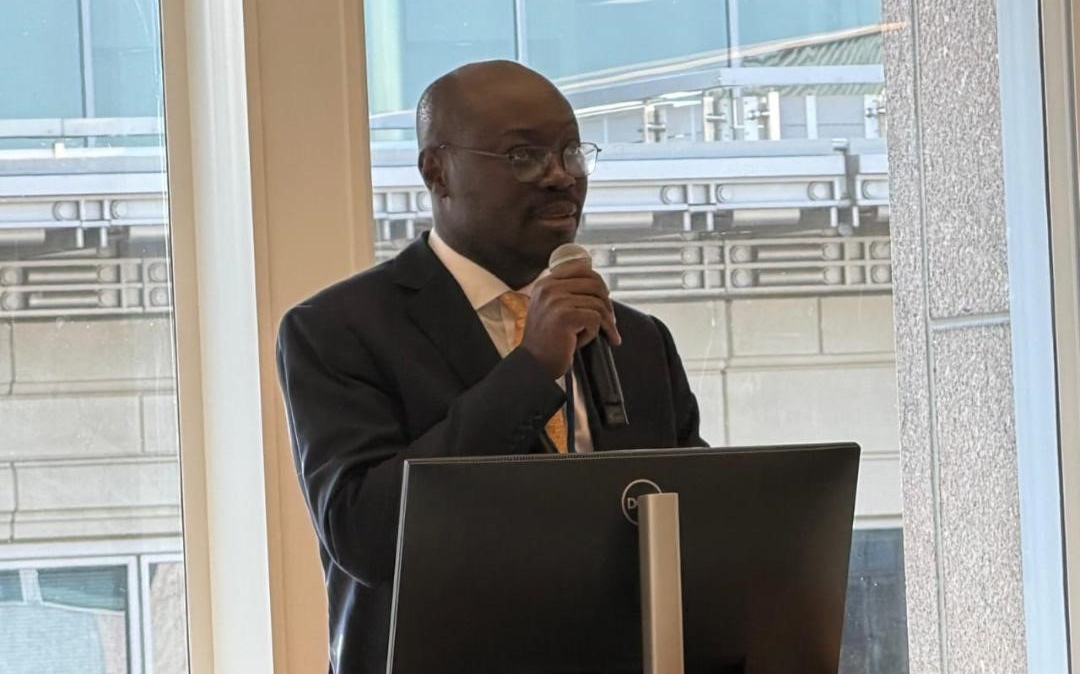
The Minister of Finance, Dr Cassiel Ato Forson says Ghana’s recent economic gains are the direct result of deliberate, legally entrenched reforms rather than short‑term policy fixes, assuring international investors that the country’s recovery is being driven by discipline, credibility, and institutional strengthening.
Speaking after concluding engagements with international investors on Ghana’s economic outlook and reform programme on the sidelines of the IMF/World Bank Spring meetings, the Minister noted that confidence is gradually returning because the reform agenda has been carefully sequenced and anchored in law.
“The gains we are seeing are not cosmetic. They are the outcome of deliberate, well‑sequenced reforms engraved in law and underpinned by strong policy discipline,” the Minister said.
According to the Minister, the government has taken difficult but unavoidable decisions to reset the economy, including reducing the size of government and enforcing mandatory commitment controls to prevent the accumulation of arrears and expenditure overruns.

A major milestone, the Minister explained, has been the amendment of the Public Financial Management (PFM) Act, introducing new fiscal rules to entrench discipline and restore confidence in fiscal governance.
As part of this framework, government has established an independent Fiscal Council to enhance oversight and accountability, alongside an Office of Value for Money aimed at eliminating waste and improving efficiency in public spending.
“These institutional reforms are critical to ensuring that the mistakes of the past are not repeated,” the Minister stressed.
The Finance Minister also highlighted reforms to the management of statutory funds, noting that the uncapping of these funds had created greater flexibility to align public spending with national development priorities.
In addition, petroleum revenues and mining royalties have been restructured to ensure more resources are directed towards infrastructure development.
Beyond fiscal reforms, the Minister said government has advanced wide‑ranging structural changes across key sectors of the economy, including tax administration, VAT compliance, customs operations, public payroll systems, energy sector reform, and the cocoa sector.
These reforms, according to the Minister, are already producing measurable results. Economic growth has exceeded programme expectations, inflation continues to trend downwards, and the cedi has stabilised after a period of significant volatility.
“Our external position has strengthened, reserve accumulation is ahead of programme targets, and yields have declined significantly, reflecting growing investor confidence,” the Minister stated.
He added that investor sentiment has improved markedly, with international investors expressing strong admiration for Ghana’s “reset agenda” and the progress achieved in restoring macroeconomic stability and policy credibility.
“One after the other, investors acknowledged the seriousness of our reform efforts and the progress made in rebuilding trust,” the Minister said.
Looking ahead, the Minister of Finance emphasised that government remains focused on consolidating these early gains rather than easing the pace of reform.
“Our commitment is to deepen reforms, strengthen institutions, and build a more resilient, inclusive, and growth‑oriented economy that can withstand shocks and deliver prosperity for all Ghanaians,” he concluded.
By: Christian Akorlie / businesspostonline