

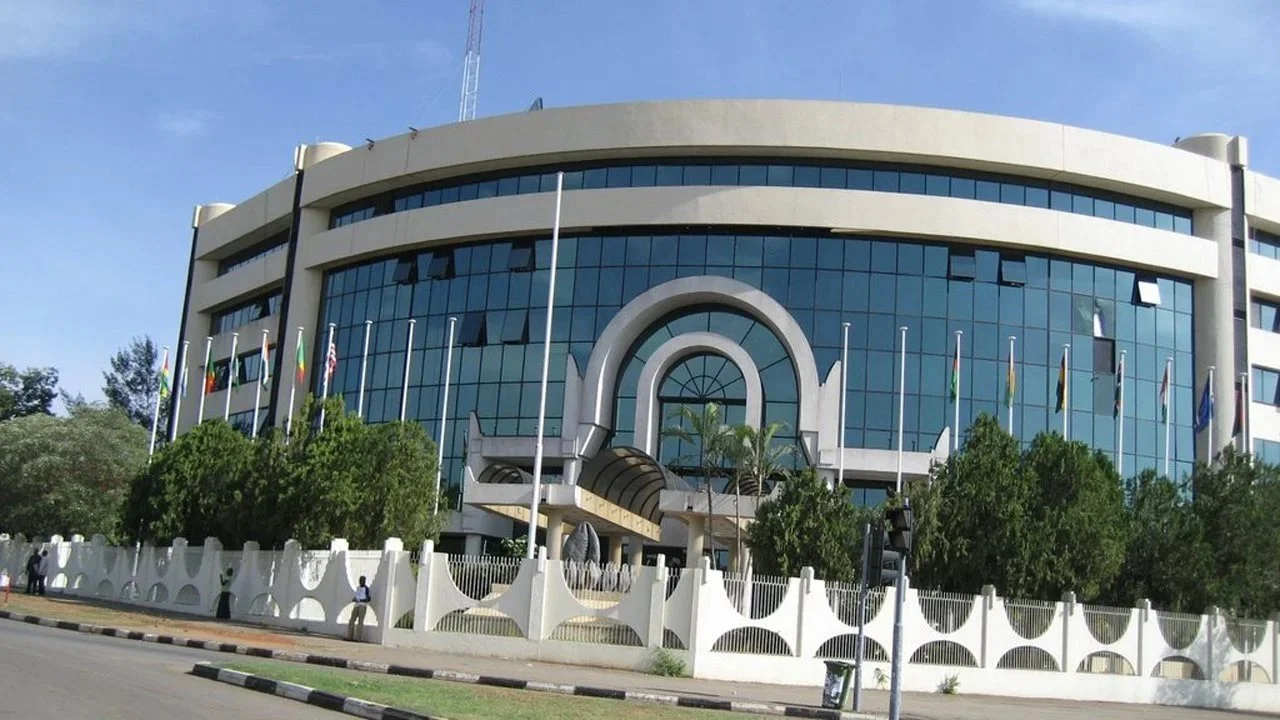
Ghana, Nigeria and Senegal are being considered to host key infrastructure for a proposed ECOWAS Payment and Settlement System (EPSS), an initiative expected to transform cross-border trade by enabling businesses to make payments and settle transactions in local currencies across West Africa.
Central Bank of Liberia Governor, Henry Saamoi, confirmed on November 18, 2026, that discussions among regional central bank governors to finalise the proposed three-country hosting arrangement were ongoing.
Under the proposal, Nigeria would host the regional instant payment switch, Senegal, which houses the headquarters of the Central Bank of West African States (BCEAO), would host the Real-Time Gross Settlement (RTGS) system, while Ghana would provide backup and disaster recovery infrastructure through the Ghana Interbank Payment and Settlement Systems (GhIPSS).
The arrangement follows a February 2026 mandate from regional central bank governors, which led the West African Monetary Agency (WAMA) to commission an independent feasibility study. The proposed distribution of infrastructure is intended to prevent operational dominance by any single country while strengthening the system’s resilience.

The EPSS is expected to connect national instant payment systems across the ECOWAS region, allowing businesses and individuals to transfer funds and settle cross-border transactions without relying extensively on third-party currencies such as the US dollar and euro.
According to the 2026 State of Inclusive Instant Payment Systems (SIIPS) report by the AfricaNenda Foundation, the initiative would connect the eight francophone countries of the West African Economic and Monetary Union (WAEMU), which already share a regional instant payment infrastructure, with Anglophone economies such as Ghana and Nigeria, as well as Portuguese-speaking Cape Verde and Guinea-Bissau.
For Ghana, the proposed system could significantly reduce the cost and delays associated with regional trade payments while encouraging more informal cross-border transactions to move through formal financial channels.
Currently, formal trade with other ECOWAS countries accounts for approximately 3.4 to five percent of Ghana’s total international merchandise trade, representing between US$1.8 billion and US$2.6 billion annually out of total trade of US$52.5 billion in 2025.
However, informal trade volumes are considerably higher. A July 2026 Ghana Statistical Service survey on Informal Cross-Border Trade found that unrecorded cash transactions with Togo, Burkina Faso and Côte d’Ivoire reached GH¢31 billion, equivalent to approximately US$2.49 billion, during the first nine months of 2025. This exceeded formal trade with the same countries, which amounted to GH¢20.1 billion.
Much of the informal activity is attributed to the high costs and delays associated with traditional correspondent banking arrangements, which often require businesses to convert local currencies into dollars or euros before making payments.
According to Afreximbank, businesses can lose between five and 20 percent of transaction values through currency conversion spreads, international transfer fees and intermediary bank charges. Such costs contribute to an estimated US$5 billion lost annually across Africa through cross-border payment inefficiencies.
The proposed EPSS could reduce these constraints by enabling direct local-currency settlement. Modelling of instant local-currency payment systems suggests that removing third-currency intermediaries could reduce transaction costs by 25 to 30 percent and cut settlement times from several days to under two minutes.
Although no official forecast has been provided on the precise economic gains Ghana could derive from the initiative, greater formalisation of regional commerce could improve recorded trade volumes, expand access to financial services and increase potential tax revenues.
The EPSS is also expected to complement the Pan-African Payment and Settlement System (PAPSS), which facilitates local-currency payments across the continent under the African Continental Free Trade Area (AfCFTA).
However, implementation faces significant challenges, including differences in national payment regulations, uneven technological readiness, cybersecurity requirements and currency liquidity management.
While Nigeria’s instant payment infrastructure and Ghana’s GhIPSS are relatively mature, some countries, including Liberia, are still developing basic domestic payment switches.
Central banks must also harmonise technical standards, anti-money laundering requirements and legal frameworks governing the finality of cross-border transactions.
Additionally, mechanisms will be required to manage liquidity across currencies such as the cedi, naira and leone without reverting to the dollar as an intermediary.
WAMA’s Project Implementation Unit has completed foundational technical assistance and procurement capacity-building with support from the African Development Bank.
Nevertheless, the hosting agreement, procurement processes and domestic payment infrastructure rollouts remain ongoing. Consequently, the system is expected to be deployed in phases, with no official operational commencement date yet announced.
Despite these challenges, the proposed regional payment infrastructure represents a significant step towards deeper financial integration and could strengthen intra-ECOWAS trade without requiring the immediate introduction of a common regional currency.
By: Toma Imirhe / businesspostonline