

Morocco has launched an ambitious strategic roadmap—dubbed the “Morocco Offer”—to establish an integrated national defence and security industry designed to generate approximately 50,000 direct and indirect jobs.
It also aims to cover 40 percent of domestic military and security equipment requirements, and derive more than 65 percent of its total turnover from exports by 2035.
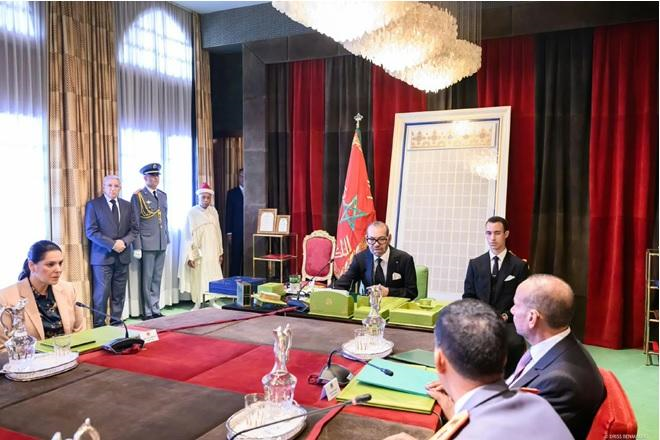
Unveiled on Wednesday, November 18, 2026, during a high-level working session at the Royal Palace in Rabat chaired by His Majesty King Mohammed VI—accompanied by His Royal Highness Crown Prince Moulay El Hassan—the initiative marks a decisive shift from isolated assembly projects to a comprehensive industrial and technological ecosystem covering the entire value chain, from research, development, and design to manufacturing, maintenance, testing, and storage.
The strategy seeks to leverage Morocco’s established manufacturing strengths and accumulated expertise in aerospace, automotive, and electronics to bolster strategic autonomy and position the Kingdom as a reliable industrial and technological partner in international markets.

To execute the 2035 roadmap, the Moroccan government is deploying a structured institutional and industrial framework built around four core pillars.
The architecture begins with the establishment of a dedicated strategic agency responsible for designing and coordinating the implementation of the national defence industry strategy, paired with the creation of a State industrial holding company serving as an investment arm to structure the domestic ecosystem, foster local industrial players, and mobilise public and private capital.
Alongside these governance bodies, the Kingdom will establish a specialised academy dedicated to skills development, scientific research, and innovation, while expanding its physical manufacturing footprint through two new defence industrial acceleration zones in Ben Guerir and Benslimane, complementing the two zones already launched in Sidi Yahya and Nouaceur.
In parallel, the roadmap prioritises high-value-added technological fields with strong growth potential, including unmanned aerial vehicles and autonomous systems, land and naval platforms, defence electronics, cyber defence, and artificial intelligence.
These priorities build directly on the regulatory foundations laid by Law No. 10.20, enacted in 2020, which has already catalysed several domestic industrial milestones.
Over the past several years, the Kingdom has initiated the manufacturing of WHAP 8×8 armoured vehicles in Berrechid alongside the production of 30 mm gun turrets at Nouaceur’s Midparc industrial zone, established medium- and large-calibre ammunition manufacturing in Sidi Yahya, and launched military drone production and maintenance in Benslimane alongside the development and integration of autonomous and counter-drone technologies.
Human capital development sits at the centre of the long-term execution plan. Through the newly announced specialised academy, Morocco plans to offer advanced training programmes in partnership with industrial operators, mobilising civilian and military professionals as well as Moroccan talent from the diaspora.
Early-stage talent identification and strengthened vocational training programmes will also be introduced to ensure a steady pipeline of qualified engineers and technicians capable of sustaining complex defence manufacturing.
At the conclusion of the Rabat working session, King Mohammed VI issued High Instructions to ensure the rapid and effective rollout of the roadmap, emphasising the urgent establishment of the new governance bodies, the formulation of a comprehensive financing plan, streamlined investment procedures, and the active mobilisation of the domestic private sector alongside strategic international partnerships.
By anchoring national security requirements in export competitiveness, private-sector participation, and regional industrial expansion, Rabat aims to transform its defence sector into a sustained engine of wealth creation, technological sovereignty, and international economic integration over the next decade.
Source: businesspostonline