

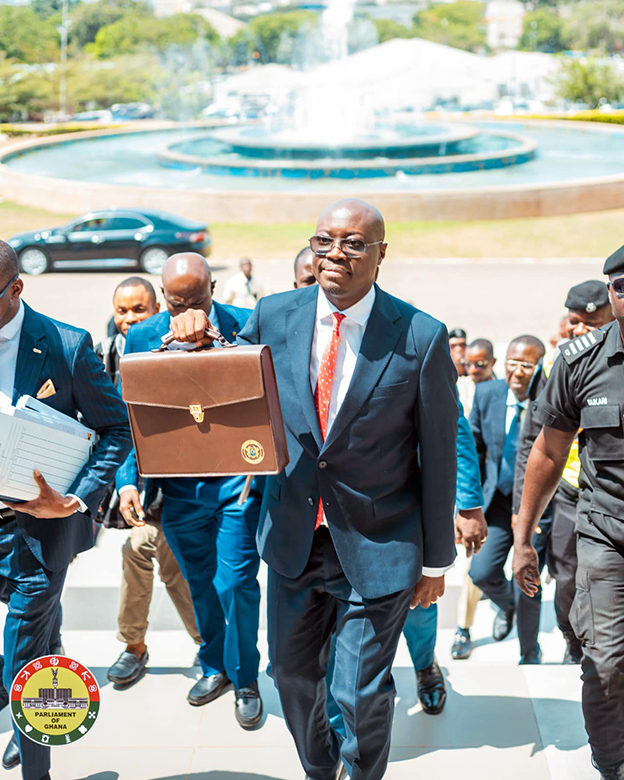
Ghana has recorded a significant improvement in its debt sustainability outlook, with government announcing that the country’s external and overall risk of debt distress has been upgraded from “High” to “Moderate” for the first time in more than a decade.
The development, disclosed by Finance Minister Dr. Cassiel Ato Forson during the presentation of the 2026 Mid-Year Fiscal Policy Review in Parliament, marks one of the strongest endorsements yet of the country’s ongoing fiscal consolidation and debt restructuring efforts.
According to the Minister, the improvement reflects substantial progress in restoring macroeconomic stability, reducing public debt and rebuilding confidence among investors and development partners.
“Mr. Speaker, for the first time since April 2014, Ghana’s external and overall risk of debt distress has improved from HIGH to MODERATE,” Dr. Forson told Parliament.

Government also highlighted a further milestone in the latest joint World Bank-IMF Debt Sustainability Analysis (DSA), which it says has moved Ghana from an “unsustainable” debt position in 2023 to a status described as “sustainable with room to absorb shocks.”
The Finance Minister described the latest assessment as an indication that Ghana has made considerable progress since the debt crisis that culminated in the sovereign default of December 2022.
The country’s debt difficulties triggered a comprehensive debt restructuring programme covering both domestic and external obligations, while also necessitating support under the International Monetary Fund’s Extended Credit Facility programme.
Government argues that the reforms implemented since early 2025 have strengthened fiscal credibility, improved expenditure control and put public debt on a more sustainable path.
A key driver of the improved outlook has been the rapid decline in Ghana’s debt-to-GDP ratio.
According to the Mid-Year Review, public debt declined from 61.8 percent of GDP at the end of 2024 to 44.7 percent at the end of 2025, before reaching 45 percent by June 2026.
Government says this means Ghana has already achieved its statutory debt target of 45 percent of GDP, years ahead of both the timetable established under the IMF programme and the target date contained in the Public Financial Management framework.
The achievement comes after government introduced a binding fiscal rule requiring a minimum annual primary surplus of 1.5 percent of GDP and a debt-to-GDP ceiling of 45 percent by 2034.
Authorities say improvements in debt sustainability are also reflected in lower debt servicing costs.
Debt service as a share of domestic revenue declined from 55.7 percent in 2022 to 28.8 percent in 2025, freeing up resources for spending on infrastructure, education, healthcare and other priority sectors.
Government also reported that borrowing costs have fallen sharply across the domestic market, contributing to savings of approximately GH¢4.2 billion during the first half of 2026.
Treasury bill rates and government bond yields have declined significantly over the past year, while investor appetite for government securities has continued to improve.
The improved debt outlook comes amid signs of renewed confidence in Ghana’s fiscal management.
Government says it has honoured all domestic debt exchange coupon payments on schedule and has paid more than US$2.1 billion in principal and interest to Eurobond holders since January 2025 without placing undue pressure on foreign exchange reserves.
In April 2026, Ghana successfully raised GH¢2.7 billion through its first seven-year cedi-denominated bond issuance since the sovereign default, a development the Finance Minister described as evidence that the country has regained the ability to secure long-term financing in its local currency.
Government also noted that Ghana’s Eurobond yields have declined by about 300 basis points since the beginning of the year, reflecting improving investor sentiment toward the economy. Despite the positive assessment, policymakers acknowledge that significant debt obligations remain ahead.
Government disclosed that domestic debt maturities of GH¢58 billion and GH¢53 billion are due in 2027 and 2028 respectively, prompting efforts to strengthen the Sinking Fund as a buffer against future repayment pressures. As of 22 July 2026, the Sinking Fund held GH¢15.6 billion, with government targeting GH¢30 billion by the end of the year to support upcoming debt repayments.
By: Christian Akorlie / businesspostonline