

Government has revealed that Ghana’s Sinking Fund has accumulated GH¢15.6 billion as part of a deliberate strategy to meet major domestic debt obligations falling due over the next two years.
The move is to reinforce investor confidence and avoid a recurrence of debt repayment pressures that contributed to the country’s recent economic crisis.
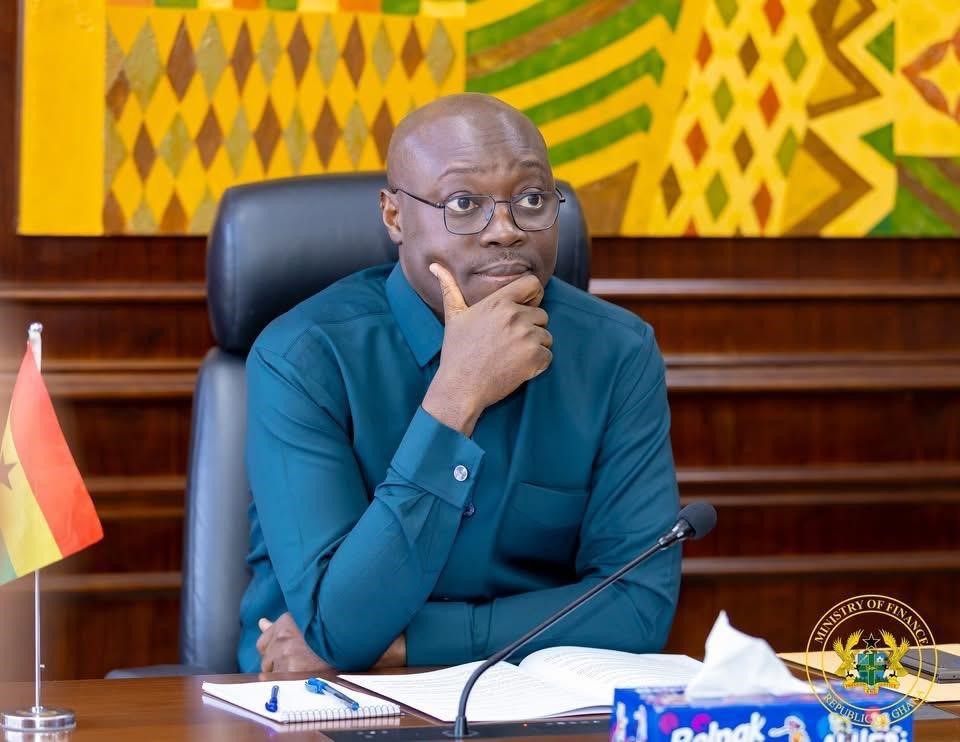
Presenting the 2026 Mid-Year Fiscal Policy Review to Parliament, Finance Minister Dr. Cassiel Ato Forson said the fund has become a central pillar of government’s debt management strategy as Ghana approaches substantial maturities arising from the Domestic Debt Exchange Programme (DDEP).
According to the Minister, Ghana faces repayment obligations of GH¢58 billion in 2027 and a further GH¢53 billion in 2028, bringing the total amount due over the two-year period to GH¢111 billion.

“In two years alone, Ghana has to repay GH¢111 billion,” Dr. Forson told Parliament, describing the scale of the upcoming obligations as one of the country’s most critical fiscal challenges.
The Finance Minister argued that while the debt restructuring exercise helped restore debt sustainability, it did not eliminate future repayment obligations.
He maintained that the restructuring process largely postponed debt repayments into future years, making it necessary for government to begin accumulating resources well ahead of maturity dates.
“Meeting obligations of this magnitude requires advance planning, not last-minute scrambling,” he said, explaining the rationale for strengthening the Sinking Fund mechanism.
To support the strategy, government committed under its 2026–2029 Medium-Term Debt Strategy to allocate 7 percent of non-oil tax revenues, alongside proceeds from domestic bond issuances, into the Sinking Fund Cedi Account.
The objective is to create a dedicated reserve that can be drawn upon when the large DDEP maturities begin falling due from next year.
Government says the fund has already made significant progress toward that goal.
As of 22 July 2026, the Sinking Fund held GH¢15.6 billion, according to figures disclosed by the Finance Minister.
Dr. Forson expressed confidence that the balance would almost double before the end of the year.
“We are on course to accumulate GH¢30 billion in the Sinking Fund by the end of 2026,” he told lawmakers.
If achieved, the amount would be sufficient to cover the roughly GH¢30 billion DDEP maturity falling due in February 2027, providing an important liquidity buffer for government.
The development is likely to be closely monitored by investors, bondholders and credit rating agencies seeking evidence that Ghana can meet post-restructuring debt obligations without creating new financing pressures.
Government believes the fund sends a strong message about its commitment to prudent debt management and sound public finances.
The Finance Minister described the Sinking Fund as a mechanism that demonstrates government’s intention to honour its obligations while avoiding the uncertainty that often surrounds large debt repayments.
“Brick by brick, cedi by cedi, we are building the wall that will meet the wave so that when 2027 and 2028 comes, Ghana will not scramble. Ghana will simply pay,” he said.
The accumulation strategy comes at a time when government is highlighting broader improvements in the country’s debt profile. Ghana’s debt-to-GDP ratio has reportedly declined to about 45 percent, while debt distress risk has improved from high to moderate, according to the Finance Minister.
The Sinking Fund update was delivered alongside a series of indicators suggesting improving investor confidence in Ghana’s debt management framework.
Government says borrowing costs have fallen sharply in 2026, yielding savings of approximately GH¢4.2 billion within the first six months of the year.
Treasury bill rates have declined significantly, while Ghana has also returned to longer-term domestic borrowing following a successful GH¢2.7 billion seven-year cedi bond issuance in April 2026.
The Finance Minister further disclosed that government has honoured all domestic and external debt obligations falling due since January 2025, including coupon payments under the DDEP framework and payments to Eurobond holders.
By: Christian Akorlie / businesspostonline