

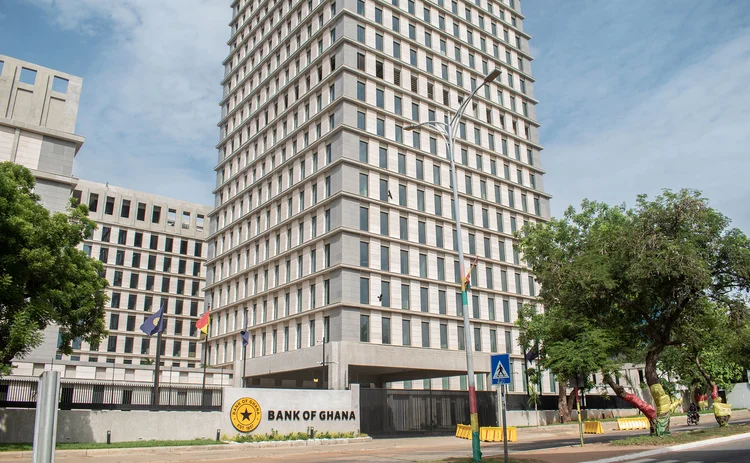
The Bank of Ghana is under increasing financial pressure following the release of its 2025 financial results, which show deepening losses and a sharp deterioration in its capital position—raising fresh concerns about its long-term policy sustainability.
The central bank reported a loss of GH¢15.63 billion for 2025, pushing its cumulative negative equity to GH¢93.82 billion. While the Bank maintains that it remains policy solvent, analysts argue that its position is far less secure than headline figures suggest.
Policy solvency—defined as the ability of a central bank to generate enough operating income to fund its monetary policy activities—remains at the centre of the debate. The Bank reported a surplus of about US$440 million. However, critics say this figure was largely driven by one-off income, particularly gains from gold reserve transactions.
Excluding such non-recurring items, some analysts estimate the Bank would have recorded a policy deficit of approximately US$326 million, raising questions about the structural sustainability of its operations.

The Bank’s financial challenges have been driven largely by the Domestic Debt Exchange Programme, which resulted in significant losses on restructured government securities, as well as rising costs from open market operations used to control inflation.
Despite these pressures, the Bank insists it remains operationally capable, noting that central banks can function with negative equity due to their ability to issue currency and operate with sovereign backing from the Government of Ghana.
However, economists warn that persistent losses could undermine monetary policy credibility if not addressed. A growing concern is the feedback loop in which operating losses inject liquidity into the economy, forcing the Bank to undertake costly sterilisation measures that further deepen losses.
To address the situation, the Bank and the Ministry of Finance (Ghana) have agreed on a recapitalisation programme spanning 2026 to 2032, aimed at restoring positive equity through a mix of cash injections and government securities.
The success of this plan, observers say, will depend heavily on fiscal discipline and macroeconomic stability, particularly as Ghana remains under scrutiny from the International Monetary Fund.
For now, the Bank’s position reflects a delicate balance: operationally functional, but financially strained, with its long-term policy credibility increasingly tied to the success of ongoing reforms.
By: Toma Imirhe / businesspostonline