

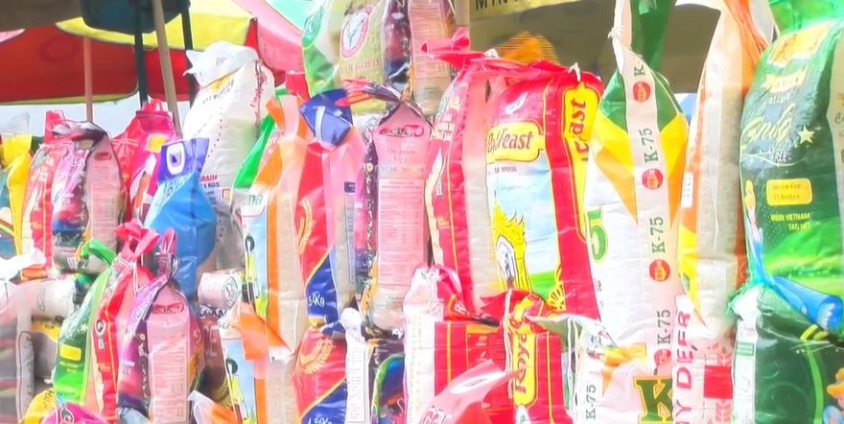
The United States Department of Agriculture’s (USDA) Grain and Feed 2025 Report, reveals that local consumer preference is contributing largely to the sustained interest in foreign rice consumption in the country.
The Department maintains that, rice has become a staple on most Ghanaian tables, yet the grains in many homes are probably from Asia than harvested locally.
As of 2025, Ghana relies on imports for approximately 60-70 percent of its rice consumption, with local production meeting roughly 30-40 percent of demand.
Per the report, seven out of every ten bags of rice sold in the country, are imported with Vietnam, India, and Thailand firmly dominating the market.

Indeed, urban households, in particular, have developed a strong taste for fragrant long-grain rice, a variety that is mostly imported.
The commodity is the second most consumed cereal, with annual demands expected to hit 1.8 million metric tonnes this year, due to the shift in diets, which have kept imports climbing.
Price trends
The USDA explained that pricing is a plausible factor in the patronage and consumption of foreign rice in Ghana.
The price trends between local and imported rice underlined the imbalance. For instance, in early 2025, a 25kg bag of Thai fragrant rice averaged GH¢690, Vietnamese rice sold at GH¢490, while local long-grain rice traded around GH¢535.
Though Ghana-grown rice was cheaper than Thai brands within the period, according to the USDA, it struggled against Vietnamese imports, which were not only less expensive but also often viewed as better processed.
For domestic producers, this creates a double disadvantage. They must battle consumer skepticism over quality while also competing among themselves for limited shelf space, as different local brands compete for visibility in supermarkets and open markets.
Campaigns urging Ghanaians to “eat local rice” though have receded, have boosted awareness in the past, but concerns over price and milling quality continue to tilt demand toward imports.
With dependence on foreign rice rising despite increase in domestic output, the USDA projects Ghana’s milled rice production at 900,000 metric tonnes in 2025/2026, up 18 percent from last year, on the back of better weather and stronger farmer participation.
Current interventions by government
President Mahama’s plan for rice production focuses on achieving self-sufficiency and reducing import dependency through the ‘Feed Ghana’ Programme.
Key initiatives include building a 30,000-metric-tonne capacity rice mill in the North East Region, directing schools to use only locally produced rice, and using the National Buffer Stock Company to purchase local output.
A modern rice mill in Jagida (North East Region), is planned to process 30,000 metric tonnes annually, creating over 2,000 jobs, particularly for young people and women.
The plan aims to cut the more than US$600 million annual rice import bill by boosting domestic capacity, with directives in the 2026 budget requiring schools to buy only Ghanaian rice, maize, and poultry.
Source: B&FT