

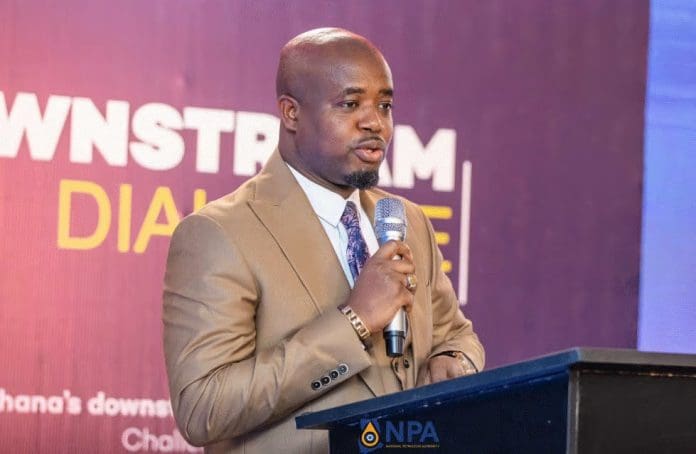
The Chief Executive Officer (CEO) of the National Petroleum Authority (NPA), Godwin Edudzi Tameklo, has commended the Authority’s staff for good performance during 2025, emphasizing that together they strengthened the regulatory mandate, enhanced collaboration across the downstream petroleum sector and laid foundations for sustainable growth and innovation.
Mr Tameklo stated that with unity of purpose, 2026 presents renewed opportunities to deepen efficiency across Ghana’s petroleum distribution chain while advancing reforms that improve service delivery to consumers and stakeholders. The message comes as the NPA prepares to build on momentum established during his first year leading the regulatory body.
Since assuming office as Acting CEO effective January 17, 2025, Mr Tameklo has undertaken a comprehensive stakeholder engagement strategy aimed at understanding operational difficulties faced by industry players across the country. His leadership approach prioritizes teamwork, fairness and inclusivity while pursuing dynamic reforms to transform the downstream petroleum sector in alignment with President John Dramani Mahama’s vision.
Among key achievements highlighted during 2025, the Authority maintained stability and transparency within the petroleum distribution chain despite global market volatility that affected fuel prices and supply patterns. Mr Tameklo emphasized the NPA’s commitment to ensuring Ghanaians secure a significant share of investments within the entire value chain of the country’s petroleum sector, with particular focus on the downstream industry.

The NPA intensified enforcement of local content policies throughout 2025, actively engaging with industry stakeholders to establish reliable and adequate supply of refined petroleum products to meet national needs. At a Downstream Dialogue organized by the Chamber of Oil Marketing Companies (COMAC), Mr Tameklo stressed the importance of adhering to Ghana’s local content policies for sector development.
One major initiative announced in December 2025 involves a new 6,000 metric ton (MT) liquefied petroleum gas (LPG) storage facility currently being developed by a private petroleum warehousing partner, expected for completion within the first quarter of 2026. Mr Tameklo explained that the additional storage capacity will significantly improve supply reliability and reshape industry dynamics, addressing one of the sector’s longstanding challenges of inadequate storage infrastructure.
Thankfully, with the support of the private sector, in the next one or two months, we should have another 6,000 metric ton cylinder LPG storage facility that the petroleum warehousing is putting together, and that will greatly change the dynamics in the industry, because the question of storage has always been an issue, he stated during the maiden National LPG Forum in Accra in mid December 2025.
The forum highlighted NPA’s concerns over alleged underweight cylinder sales, with Mr Tameklo revealing that the Authority is using mystery shopping to detect malpractice and promising strict sanctions including possible license withdrawal for offending stations. He addressed industry worries including suppliers’ premiums, subsidy targeting and financial pressures on bottling and cylinder manufacturing companies.
Mr Tameklo announced that the NPA Board will soon consider a framework to disburse the cylinder investment margin to ease industry burdens. What we want to do, and it’s something we are looking at with the economic regulation team, is that all the suppliers must bring to us in a table form, the things that go into the imports. So we want to interrogate the numbers and see whether the supplier’s premium really does reflect economic conditions at every point in time, he explained.
In May 2025, Mr Tameklo embarked on a working visit to the Western Region where he held productive engagement with tanker drivers and other stakeholders in the petroleum downstream sector at the Takoradi depot. During the interaction, he expressed appreciation for the critical role tanker drivers play in ensuring safe and efficient transportation of petroleum products nationwide.
Mr Tameklo acknowledged numerous challenges faced by transporters including poor road conditions, high operational costs and safety concerns at loading terminals. He announced that with board approval, the Authority will implement the Driver Remuneration Formula to address concerns about wages. He further announced plans to strengthen collaboration between the NPA and relevant government agencies to ensure timely resolution of infrastructural bottlenecks affecting tanker operations.
The engagement was warmly received by drivers who expressed optimism about the NPA’s renewed commitment under Mr Tameklo’s leadership. They urged the Authority to maintain consistent dialogue with transport unions and ensure that promises made translate into tangible improvements. The visit underscored the NPA’s resolve to build stronger relationships with frontline industry players and safeguard the integrity of Ghana’s petroleum supply chain.
Mr Tameklo has also emphasized the economic benefits of locally refining crude oil, arguing that domestic refining would project Ghana’s economy and ease pressure on the cedi by reducing dependence on imported refined products. Speaking recently, he made the point that revitalizing the Tema Oil Refinery represents a strategic priority that could transform Ghana’s energy security while generating employment and supporting industrial development.
With an extensive background in legal practice and governance, Mr Tameklo brings invaluable expertise to the NPA. He holds a Master of Laws (LLM) in Natural Resources specializing in Downstream Petroleum from the University of Ghana and completed the Professional Law Course at the Ghana School of Law before being called to the Bar in 2013.
As a Partner at Ayine & Partners Law Firm, he built a reputation in criminal, civil and commercial litigation spanning over a decade, providing strategic legal counsel to various entities while demonstrating keen analytical problem-solving capabilities. Beyond legal practice, Mr Tameklo served as Director of Legal Affairs for the National Democratic Congress (NDC), handling several high-profile cases including controversies surrounding disputed parliamentary seats.
Renowned for strong research, analytical and interpersonal skills, Mr Tameklo is described as a self-driven, open-minded and collaborative team player. His extensive expertise in litigation and strategic advisory roles highlights his commitment to excellence, societal progress and fostering positive change across institutions he leads.
Addressing NPA management and staff during his first day in office on January 27, 2025, Mr Tameklo reflected on his appointment, noting that President Mahama emphasized the need for dynamic and proactive leadership. The status quo is no longer sufficient, he said, stressing dedication to reforming the sector and aligning with national development goals.
Looking toward 2026, the NPA faces multiple priorities requiring focused leadership including completing LPG infrastructure improvements, implementing the Driver Remuneration Formula, strengthening enforcement of local content policies, addressing supply chain bottlenecks, enhancing consumer protection through mystery shopping programs and deepening collaboration with industry stakeholders to ensure transparent pricing mechanisms.
The Authority continues pursuing digital transformation initiatives aimed at improving service delivery, transparency and efficiency across regulatory functions. These include rollout of digital tracking systems to enhance fuel distribution transparency, updates to safety standards and loading
protocols at depots, and enhanced monitoring capabilities to detect non-compliance with industry regulations.
Mr Tameklo’s New Year message reflects growing confidence within the NPA that the foundations laid throughout 2025 position the Authority to deliver greater impact during 2026. With unity of purpose among staff, strong board support and collaborative relationships with industry stakeholders, the NPA aims to advance its regulatory mandate while contributing meaningfully to Ghana’s energy security and economic transformation objectives.
The petroleum downstream sector plays a critical role in Ghana’s economy, ensuring reliable supply of fuel products that power transportation, industry and households nationwide. The NPA’s effectiveness in regulating this sector directly impacts consumer prices, supply reliability, safety standards and environmental compliance, making strong leadership and institutional capacity essential to national development.