

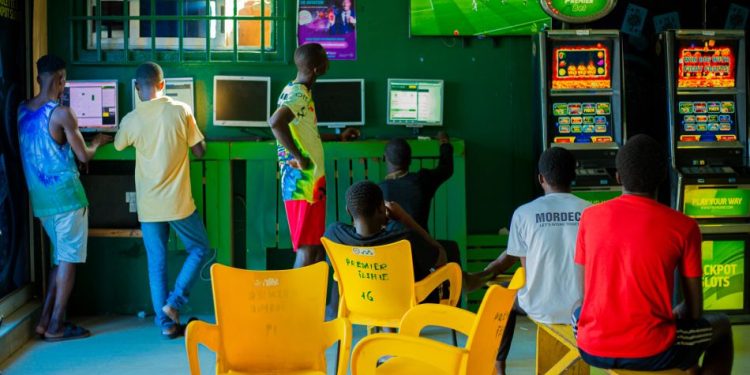
Sports betting has exploded across Ghana, transforming from casual entertainment into what health experts now describe as a public health crisis. Recent data from GeoPoll’s 2025 report shows that 71% of Ghanaians have placed bets, with young people comprising the majority of participants. The confluence of widespread smartphone access, mobile money platforms, and aggressive marketing has created conditions ripe for addiction among a generation already grappling with limited employment opportunities.
According to TGM Research, approximately 41.7% of Ghanaians have engaged in sports betting within the last 12 months, making the country one of the leading sports betting markets in sub-Saharan Africa. The industry has become impossible to ignore, with betting centers now as ubiquitous as food vendors in urban and rural areas alike. What concerns authorities most is the pace of this growth and its concentration among vulnerable populations.
The technology driving this boom operates with ruthless efficiency. Almost every young Ghanaian now carries a smartphone, typically affordable brands like Tecno, Infinix, or Samsung that handle betting applications smoothly even on limited data. Mobile money services from MTN, Vodafone, and Telecel have eliminated traditional banking barriers, allowing deposits and withdrawals in seconds. This frictionless access has transformed betting from an occasional activity into something far more consuming.
Football remains the primary betting focus, capitalizing on Ghana’s deep passion for the sport. GeoPoll’s 2025 survey found that 60% of respondents mainly bet on football matches, though newer options like Aviator, a fast-paced digital game, have rapidly gained popularity. The emotional connection to teams and players creates a psychological hook that betting companies exploit relentlessly through sponsorships and celebrity endorsements.

In May 2025, the Gaming Commission of Ghana partnered with the Mental Health Authority to launch awareness campaigns at universities, warning that irresponsible gaming is destroying lives and careers. The initiative brought together lawmakers, university administrators, and health professionals to address what they described as an urgent crisis. Even public figures have spoken out about their own struggles with betting addiction, lending credibility to warnings that previously fell on deaf ears.
A May 2025 initiative revealed that nearly 70% of young people participate in some form of gambling, often starting for entertainment or to cover daily expenses. The problem extends beyond casual participation. A cross-sectional study in the Volta region involving 403 participants found significant links between sports betting and psychological distress, particularly depression, anxiety, and stress. Males and individuals experiencing problematic gambling showed especially high rates of mental health challenges.
The human cost manifests in tragic ways. In 2020, a 16-year-old boy described as a betting addict allegedly committed suicide in the Kwabre East district of Ashanti Region. Students skip classes to visit betting centers, families experience financial strain, and traditional support systems buckle under the weight of gambling-related problems. Religious leaders note social disruption in their congregations, while schools report concerns about students whose families have been affected.
The industry generates substantial revenue, with Statista projecting Ghana’s sports betting market to reach approximately 87.61 million United States dollars in 2025. The Ghana Revenue Authority hopes to raise one billion Ghana cedis annually in direct taxes from the gaming industry. Betting companies have sponsored at least eight Ghana Premier League (GPL) teams over the past five years, positioning themselves as supporters of sports development.
However, the economic paradox is stark. While the industry provides tax revenue and employment, the hidden costs of gambling addiction may far outweigh these benefits through decreased productivity, increased healthcare costs, higher crime rates, and social service demands. Problem gamblers and their families often require government support, creating a cycle where short-term revenue gains fuel long-term social costs.
Spending patterns in Ghana show variety, with 43% reporting they spend less than ten United States dollars monthly, but concerning numbers emerge at higher tiers. Some individuals spend hundreds of dollars monthly, funds that might otherwise support education, business ventures, or family needs. The government introduced a 10% withholding tax on betting and lottery winnings in August 2023, attempting to curb participation and generate revenue, though its impact remains unclear.
Advertising regulation has become a flashpoint. Television gambling advertising features prominent Ghanaian athletes, football team shirts display gambling logos, and the gambling industry currently sponsors the Ghana Premier League. These tactics normalize betting for children and young people who see their idols promoting what health experts consider harmful products. In 2020, the Gaming Commission restricted betting firms from using celebrities as brand ambassadors, but enforcement has been inconsistent.
The Institute of Community Sustainability recently called for a complete ban on celebrity sports betting promotions, directing appeals to multiple government ministries and Parliament. The organization noted that Ghana has no dedicated treatment centers for gambling addiction despite a population exceeding 38 million. Only five psychiatric hospitals serve the entire nation, and none offer specialized treatment for gambling-related issues.
Studies in Ghana have found gambling linked to financial stress, including people incurring debts they cannot repay and stealing to stake bets, along with poor mental health, poor academic performance, and challenges in personal and social life including family breakdown and crime. The Gaming Act 2006 (Act 721) regulates betting through the Gaming Commission of Ghana, which works with the Ghana Association of Sports Betting Operators to supervise the market and promote responsible gaming.
Research gaps complicate policy responses. Ghana lacks comprehensive data on gambler profiles and which marketing strategies prove most effective at encouraging betting. What evidence exists paints a troubling picture of an industry that has grown faster than regulatory capacity to oversee it. Weak advertising regulations and poor operator monitoring have created favorable conditions for rapid expansion at the expense of public health, particularly among the most vulnerable.
Some individuals defend betting as a legitimate economic opportunity. Lucky winners occasionally emerge, turning small stakes into substantial payouts that provide temporary financial relief. In 2023, a Ghanaian bettor won 196,093.60 Ghana cedis on Sportybet, while another winner collected six million cedis. These stories circulate widely on social media, fueling dreams of transformation through the right bet. The reality for most participants looks starkly different.
The path forward requires comprehensive intervention. Health professionals emphasize that gambling addiction shares characteristics with substance abuse disorders, requiring professional treatment and long-term support. Cognitive behavioral therapy, addiction services, and online treatment courses represent evidence-based approaches, but these remain largely inaccessible to most Ghanaians. Awareness campaigns at universities and schools provide education, but awareness alone cannot address the structural factors driving betting participation.
Experts argue that Ghana must treat gambling addiction with the urgency and seriousness it deserves, viewing it as a public health crisis that demands immediate, comprehensive, and sustained action. This includes stricter regulation of advertising, particularly content targeting young people, enforcement of age restrictions, expansion of treatment options, and addressing the underlying economic conditions that make betting attractive. The alternative is watching a generation pursue illusory wealth while sacrificing education, mental health, and long-term economic prospects.
The betting industry will likely remain a fixture of Ghana’s economic landscape. The question confronting policymakers, parents, educators, and young people themselves is whether society can establish guardrails that preserve individual choice while protecting public health. That balance has proven elusive so far, with commercial interests often outpacing regulatory capacity and public awareness. As the crisis deepens, the cost of inaction grows more apparent with each young person who trades their future for the promise of a winning ticket.